Horse Hoof Care Basics Every Owner and Barn Family Needs to Know
If you are new to horses, horse hoof care basics will either be the first thing someone teaches you or the first thing you wish they had. The hoof is not a decorative foot. It is the foundation of every sound, working horse, and when something goes wrong down there, everything stops — the lessons, the shows, the whole plan. We learned that early. Standing at the rail, watching a horse come out of the paddock with a three-legged limp that turned out to be a subsolar abscess and not the catastrophe it looked like, you get a fast education in what hooves actually do and what they need.
The Riding Life is reader-supported. When you buy through links on our site, we may earn an affiliate commission at no extra cost to you.
This is not a veterinary guide. It is what we have picked up over years of barn life, talking to farriers, watching horses get their feet done every six weeks like clockwork, and reading everything we could find after a scare. If you are a lesson family just starting out or a new owner trying to get your footing, this is where to start.
Why Hoof Care Basics Matter More Than Most New Owners Expect
There is an old saying in horse circles: no hoof, no horse. It sounds like a bumper sticker until you are standing in the barn on a Tuesday night with a horse that cannot put weight on its left front and you are trying to decide whether to call the vet at midnight or wait until morning. The hoof bears the entire weight of the animal, absorbs concussion at every stride, and houses a complicated internal structure of bone, soft tissue, and blood supply. Neglect the outside and you eventually damage the inside.
Horses in the wild move constantly over varied terrain and wear their hooves down naturally. The horses we ride do not live that life. They stand in stalls, walk on arena footing, and need human intervention to keep their feet balanced and functional. That intervention comes in two forms: regular farrier work and daily hands-on care from you or the barn staff.
For a deeper look at how hoof health fits into the broader picture of keeping a horse well, our horse care basics for beginners guide is a good place to pair with this one. And if you want to go deeper on hoof-related health problems specifically, the team at The Horse publishes peer-reviewed veterinary content that is worth bookmarking.
The Farrier Schedule and What It Actually Costs You
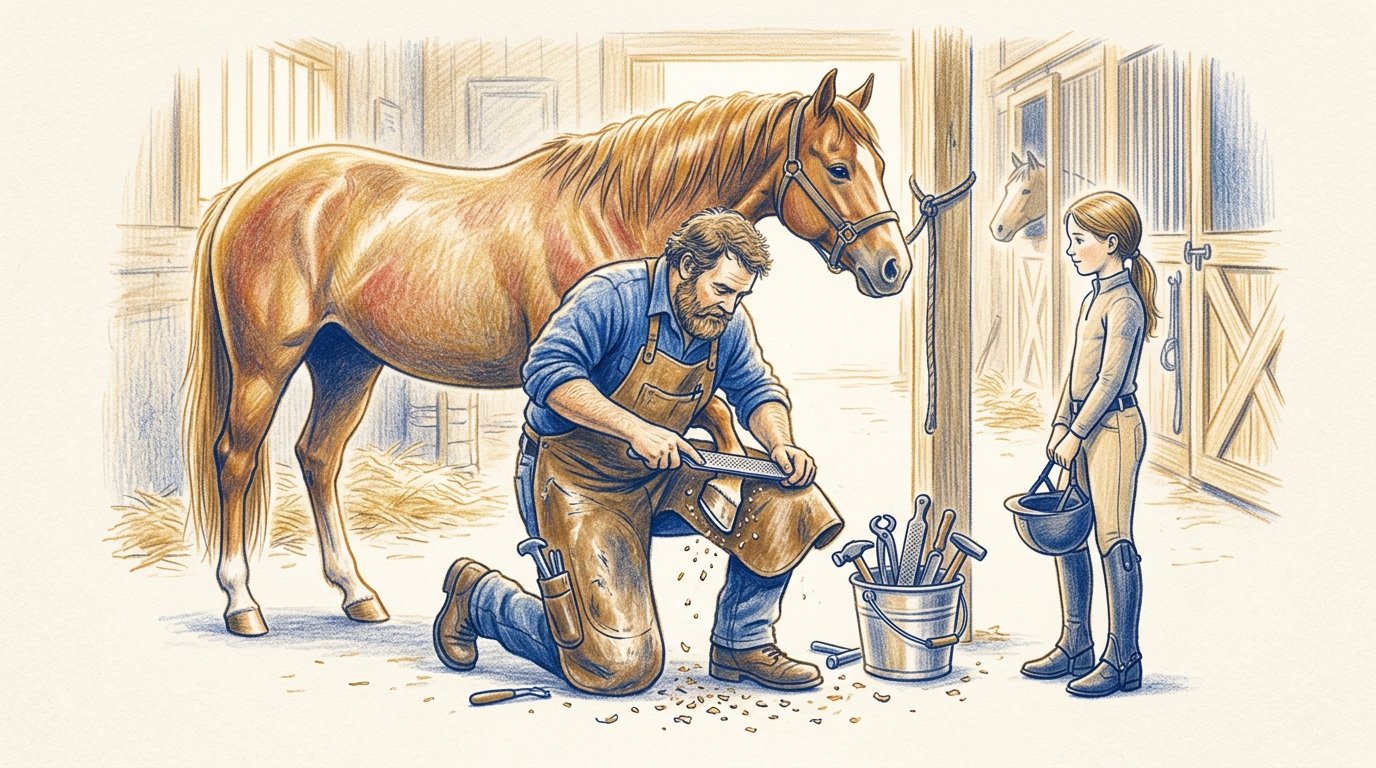
Plan on the farrier every six to eight weeks. Most horses on a regular schedule land at six weeks. Some horses with good feet on good footing can stretch to eight. Some horses with hoof issues, corrective shoeing, or heavy work need to be seen sooner. The farrier will tell you where your horse falls once they get to know the animal.
Trimming a barefoot horse runs roughly sixty to one hundred dollars per visit depending on your region. Shoeing — if your horse wears shoes, and many lesson and show horses do — runs higher, often one hundred fifty to two hundred fifty dollars for a full set of four shoes, again depending on your area, the farrier’s experience level, and whether any corrective work is involved. Pads, special shoes, or therapeutic work add cost on top of that.
What trips up new horse families is thinking of the farrier as an optional expense or something you call when there is a problem. The farrier is preventive care. Miss two or three appointments and you will be calling both the farrier and the vet, and that is always more expensive than staying on schedule. Put the farrier on a recurring calendar reminder. Treat it like a bill, because it is one.
Daily Hoof Picking and What You Are Looking For
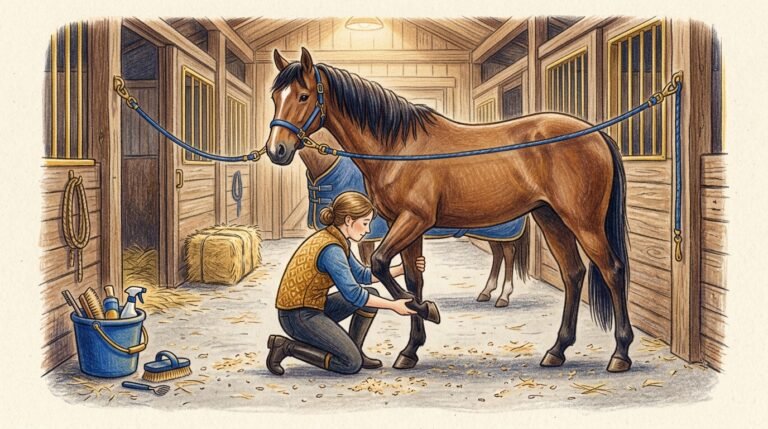
Picking hooves is one of the first things you learn to do at a barn and one of the things that matters most. Before and after every ride, pick out the hooves. It takes three minutes and it tells you a lot.
Use a standard hoof pick and work from heel to toe, clearing out packed dirt, manure, arena footing, gravel, and anything else wedged in there. Pay attention to the frog — the V-shaped, rubbery structure in the center of the hoof. It should be firm and intact, not soft, rotten-smelling, or crumbling. A frog that smells like something died in a ditch is almost certainly thrush, a bacterial infection that develops in wet, dirty conditions. Thrush is common, it is manageable, and if you catch it early it is not a crisis. If you let it go, it gets into sensitive tissue and becomes one.
Look at the hoof wall while you are at it. Cracks, chips, and flares are worth noting and mentioning to your farrier. A small superficial crack in dry weather is usually cosmetic. A crack that runs up toward the coronary band — the soft band of tissue at the top of the hoof where new hoof grows — is a different conversation.
Check for heat and pulse in the hoof, especially if a horse is moving stiffly or reluctantly. A hot hoof with a bounding digital pulse is a flag for laminitis, which is a serious condition and a vet call, not a wait-and-see situation.
Common Hoof Problems and How to Recognize Them
You do not need to be able to diagnose these things. You need to be able to recognize that something is wrong and make the right call — farrier, vet, or both.
Thrush is the most common thing you will see in a wet climate or a barn where stalls are not cleaned often enough. The treatment is straightforward: clean the hoof thoroughly, apply a thrush treatment like Thrushbuster directly into the affected grooves, and fix the underlying hygiene problem. Thrushbuster is inexpensive, it works, and most barns keep a bottle in the tack room.
Abscesses are the ones that send new horse families into a panic. A horse with an abscess can go from sound to completely three-legged lame overnight, and it looks alarming. An abscess is a pocket of infection trapped inside the hoof. It builds pressure, it hurts, and the horse acts accordingly. The farrier or vet will locate and open it to drain. After that the horse often improves dramatically within hours. It is not a pleasant process, but it is usually not dangerous if handled promptly.
Laminitis and founder are more serious and deserve their own article, but the short version is this: laminitis is inflammation of the laminae, the tissue connecting the hoof wall to the coffin bone inside. It can be triggered by diet, metabolic conditions, or other systemic illness. Chronic founder causes structural changes inside the hoof. Both require veterinary involvement and often long-term management changes. If you suspect either, do not wait.
For a broader look at health issues that show up at the barn, our common horse health issues guide covers the things you are most likely to encounter in a regular barn year.
Hoof Conditioners Moisture and Environment
Hooves crack in dry conditions and get soft and weak in wet ones. Most horses need some basic attention to hoof moisture depending on the season and climate. Hoof conditioners and dressings come in two categories: those that add moisture and those that seal it in. You generally want to add moisture first, then seal, not slather a petroleum-based product on a dry hoof and call it done.
Farnam Rainmaker is a solid, widely available hoof moisturizer that does what it says without a lot of fuss. Apply it to a clean hoof, focusing on the coronary band and the hoof wall. Your farrier can also advise you on whether your horse actually needs supplemental conditioning or whether it is unnecessary in your climate.
Diet plays a role in hoof quality too. Horses with chronically poor hoof quality — thin walls, frequent cracks, slow growth — often benefit from biotin supplementation. Talk to your vet before adding supplements, but biotin for hoof health is one of the better-supported options in the supplement world and is commonly recommended.
Winter brings its own set of hoof considerations, including the packed-snow problem for shod horses and the freeze-thaw cycle that affects hoof condition. Our winter horse care tips covers the seasonal picture in more detail.
If you want a trusted external source on nutrition and hoof care research, Practical Horseman publishes accessible, well-sourced content for working horse owners at every level.
Frequently Asked Questions
How often should a horse’s hooves be trimmed or shod?
Every six to eight weeks is the standard range for most horses. Some horses need attention closer to six weeks, particularly those in heavy work, with corrective shoeing, or with faster-growing feet. Your farrier will set the schedule based on your specific horse once they get a few visits in.
What does thrush smell like and what should I do about it?
Thrush has a distinctive foul, rotting smell that is hard to miss once you know it. The affected tissue in the frog grooves will look dark and may be soft or crumbly. Clean the hoof thoroughly, apply a topical thrush treatment, and improve stall cleanliness and turnout conditions. Mild cases respond quickly. If the frog looks significantly damaged or the horse is sore, call your farrier or vet.
Should I apply hoof oil or conditioner every day?
Not necessarily. Over-applying hoof dressing can actually interfere with the hoof’s natural moisture exchange. Daily picking and weekly inspection is the baseline. Apply conditioner when hooves are cracking, drying out, or your farrier recommends it. In wet climates, too much moisture is more often the problem than too little.
What is the difference between a trim and shoeing, and does my horse need shoes?
A trim is the removal of excess hoof wall to maintain balance and a correct angle. Shoeing adds metal shoes for protection and traction. Many pleasure horses and light-work horses do fine barefoot with regular trims. Horses doing more demanding work, those with specific soundness issues, or those working on hard or rocky ground often benefit from shoes. It is a case-by-case decision made with your farrier and vet, not a one-size answer.
Start With the Hoof Pick and Build From There
Horse hoof care basics are not complicated, but they do require consistency. Pick the feet before and after every ride. Keep the farrier on schedule like the recurring expense it is. Know what a healthy hoof looks and smells like so you notice when something is off. Call the farrier or vet early rather than late — the abscess that looks like a disaster at midnight is usually manageable, but only if you do not wait three days hoping it will resolve on its own.
The hoof is the one thing between your horse and the ground on every single stride. Treat it accordingly and most horses will stay sound and working for a long time. Let it slide and you will find out the hard way what it costs to catch up.
If you want a simple reference to keep in the barn, grab our free printable checklist — it covers the daily and weekly hoof care tasks so nothing falls through the cracks. And if you are building out your grooming and care kit, browse the shop for the products we actually use and recommend. We only list things we would buy again.