Horse Vaccination Schedule Guide
What Every Horse Owner Needs to Know About a Horse Vaccination Schedule
If you are new to horse ownership or just starting to take on more responsibility at the barn, building a solid horse vaccination schedule is one of the first things your vet will walk you through. It is not complicated once you understand the categories, but it does require consistency. Horses need certain vaccines every year without exception, and some need them twice a year depending on where you live and how much your horse travels. Miss the window and you are not just behind on paperwork — you are leaving an animal genuinely vulnerable. This guide covers what the core and risk-based vaccines are, when to give them, what to expect on vet day, and how to stay organized so nothing slips through the cracks.
The Riding Life is reader-supported. When you buy through links on our site, we may earn an affiliate commission at no extra cost to you.
Core Vaccines Every Horse Needs Every Year
The American Association of Equine Practitioners draws a clear line between core vaccines and risk-based vaccines. Core vaccines are the ones every horse in North America needs regardless of lifestyle, region, or how often they leave the property. There are four of them, and you should know them by heart.
Eastern and Western Equine Encephalomyelitis, commonly called EEE and WEE, are mosquito-borne neurological diseases with high fatality rates. There is no treatment once a horse is symptomatic, which means prevention is the only play. Tetanus is the other one people sometimes wave off until they see what it actually does to a horse. A cut, a puncture wound from a nail in the paddock, a wire scrape — any break in skin is an entry point. Tetanus toxoid is cheap insurance. West Nile Virus rounds out the core four. Also mosquito-borne, also neurological, also with no cure once the disease takes hold.
These four are typically combined into a single injection given once in the spring before mosquito season opens. In the South and Gulf Coast states where mosquitoes never fully disappear, many vets recommend a booster in the fall. If your horse is a foal or has never been vaccinated, the initial series requires two doses given four to six weeks apart before the animal is considered protected. Your vet will tell you whether your new horse needs a primary series or just an annual booster — ask at the first appointment and do not assume.
For a broader look at what is involved in keeping a horse healthy from the ground up, our horse care basics for beginners page is a good starting point if you are early in this process.
Risk-Based Vaccines and Why They Depend on Your Situation
Risk-based vaccines are not optional in any meaningful sense — they are just conditional. Whether your horse needs them depends on geography, travel frequency, exposure to other horses, and a handful of other factors your vet will assess with you.
Rabies is the most important one to talk about with your vet. Some vets include it as a practical core vaccine now, especially in areas with active wildlife populations. The disease is 100 percent fatal and transmissible to humans. The vaccine is inexpensive. If your vet does not bring it up, you bring it up.
Equine Influenza and Equine Herpesvirus, often abbreviated as EHV-1 and EHV-4, matter most for horses that travel — to shows, to fairs, to clinics, to any situation where they come into contact with horses from other barns. Show horses and horses that move around regularly typically get vaccinated for flu and rhino every six months. Horses that stay home and rarely interact with outside horses may only need it annually, but talk to your vet before making that call. Many show venues and competitions require documented flu and rhino vaccination within six months of entry. Check the requirements before you assume your annual spring shot covers you.
Strangles, caused by Streptococcus equi, is the barn disease everyone dreads. It spreads fast through shared water buckets, shared equipment, and nose-to-nose contact. If your barn has had an outbreak, or if your horse mixes regularly with horses from outside your property, your vet may recommend the strangles vaccine. There are two forms — an injectable and an intranasal — and they each have trade-offs your vet should explain.
Potomac Horse Fever vaccination is geographically relevant, particularly in states near the Potomac River corridor and other river systems where the organism thrives. If you are in one of those regions, your vet will know.
You can find reliable, vet-reviewed information on vaccine protocols through TheHorse.com, which publishes updated equine health content written for horse owners rather than veterinarians.
Timing, Boosters, and the Show Horse Schedule
Timing is where most horse owners get tripped up, especially when they are managing a horse that shows. Here is the practical breakdown.
Spring is the anchor of your horse vaccination schedule. Most barns schedule a vet farm call in March or April, before the first hard mosquito hatches. The core four get done, any risk-based annual vaccines get done, and the Coggins test — required for travel and shows — usually gets pulled at the same visit. Pulling Coggins at the same time as vaccines is just efficient. Keep the paperwork somewhere you can actually find it.
If your horse shows, check the entry requirements for every venue before you load the trailer. Most require flu and rhino documentation within six months. If your spring vaccine was in March and your show is in October, you may need a fall booster to stay compliant. Do not wait until the week before the show to figure this out.
Pregnant mares have their own schedule. The rhinopneumonitis vaccine — specifically the killed-virus formulation labeled for use in pregnant mares — is typically given at five, seven, and nine months of gestation to reduce the risk of EHV-related abortion. The mare also gets her core vaccines roughly four to six weeks before foaling so the foal receives passive immunity through colostrum. This is not a schedule you piece together from a website. Work with your vet directly.
Foals from vaccinated mares generally start their primary vaccine series at four to six months of age when maternal antibodies begin to wane. Foals from unvaccinated or unknown-history mares may start earlier. Again — your vet makes this call based on the individual animal.
How to Stay Organized Year to Year
Horse health records have a way of living in glove compartments, the back of tack trunks, and your memory. That works until it does not, which is usually at the gate of a show when someone asks for your Coggins and your flu documentation and you have neither.
Keep a simple health record for each horse. You want the date of each vaccine, the product name and lot number (your vet’s invoice will have this), the administering vet’s name, and the date the next dose is due. A binder in the tack room works. A shared note on your phone works. A folder in your email works. What does not work is trying to reconstruct it from memory six months later.
Set calendar reminders three to four weeks before your spring farm call so you have time to confirm the appointment and pull any records you need. If your barn does a group farm call where the vet comes out and does multiple horses at once, get on that schedule early. Those slots fill up, especially in spring.
Boarding barns typically require proof of current vaccination for all horses on the property. If you are leasing a horse and the barn handles the vet care, ask for copies of the records at each visit. You are not being difficult. You are being a horse person.
If you are also thinking through the broader financial picture of horse ownership, our equestrian budgeting tips for horse owners covers how to plan for routine vet costs alongside the rest of what keeping a horse actually runs you.
You may also want to bookmark our deeper dive at what vaccinations does a horse need for a companion reference to this guide.
What to Expect on Vaccine Day
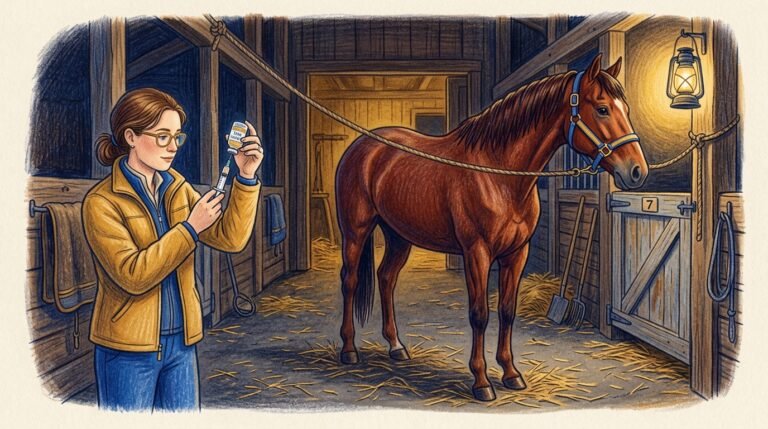
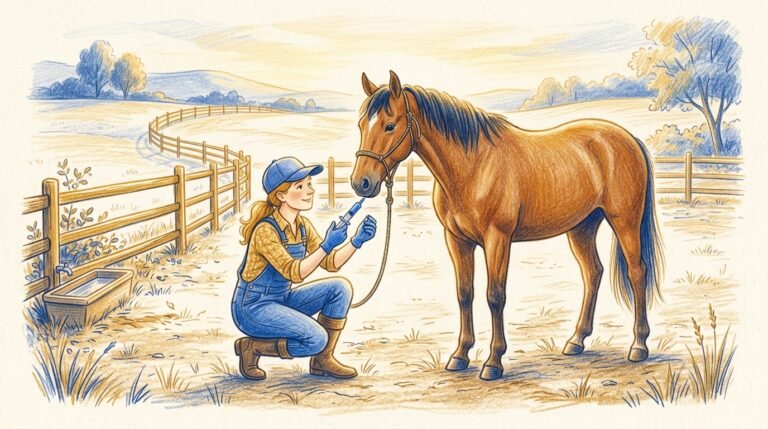
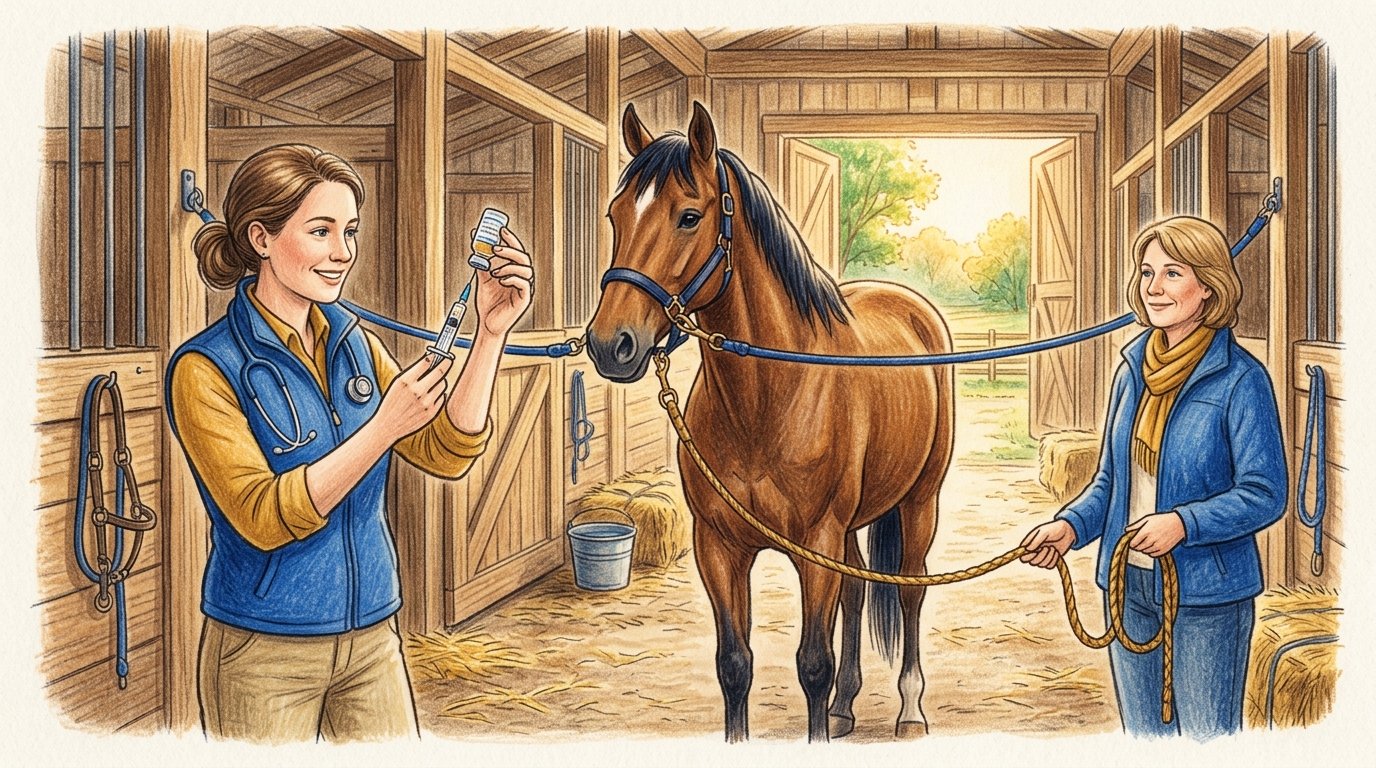
If you have never been present for a farm call, here is what happens. The vet arrives, does a brief check on each horse, and administers the injections. Most horses tolerate it well. Some get a little reactive at the injection site over the next day or two — mild swelling, some stiffness in the neck if the injection went in the neck muscle, occasionally a low-grade fever. This is a normal immune response and typically resolves in 24 to 48 hours.
Keep your horse’s workload light the day of and the day after vaccination. If you are seeing significant swelling, a fever over 103 degrees Fahrenheit that does not resolve, hives, difficulty breathing, or signs of colic — call your vet. Serious reactions are rare but they happen, and when they do you want to act quickly. Knowing what to watch for is part of the deal.
For more on recognizing when something is wrong before it becomes an emergency, our signs your horse is in pain page covers behavioral and physical cues that are worth knowing cold.
Frequently Asked Questions
How often does a horse need vaccines?
Core vaccines — EEE, WEE, tetanus, and West Nile — are given at minimum once a year, typically in spring. Risk-based vaccines like influenza and rhinopneumonitis are often given every six months for horses that travel or show. Your vet will set the schedule based on your horse’s specific situation.
Can I give my horse vaccines myself without a vet?
Some vaccines are available over the counter and some horse owners do administer them independently. However, there are real reasons to have a vet involved, including the Coggins test which requires a licensed veterinarian, proper assessment of the horse before vaccination, and the ability to respond to an adverse reaction. Most barn owners and experienced horse people still use a vet for at least the annual farm call.
What is a Coggins test and is it the same as a vaccine?
A Coggins test is a blood test for Equine Infectious Anemia. It is not a vaccine and there is no vaccine for EIA. It is a required test for travel across state lines and for entry at most shows and equine facilities. It is typically done annually by your vet, often at the same visit as spring vaccines.
What happens if I miss a year of vaccines?
If your horse has gone more than 12 months without vaccination, most vets will recommend restarting the primary series with two doses given four to six weeks apart rather than just giving a single booster. Missing a year is not catastrophic if you catch it promptly, but the longer the gap the more you need a vet to assess where to start.
Keep Your Horse on Schedule and Your Records in Order
A horse vaccination schedule is not complicated once you understand the two categories — core and risk-based — and you build the habit of planning ahead. Spring farm call, documentation in one place, show requirements checked before you pull out of the driveway. That is most of it. The rest is working with a vet you trust and paying attention to your horse the day or two after vaccines so you catch any reaction early.
If you are just getting into horse ownership and all of this feels like a lot at once, it is. But it becomes routine faster than you expect. The vet calls, the farrier schedule, the deworming rotation — after a season or two it is just the calendar of horse life, and you stop thinking of it as a checklist and start thinking of it as what you do.
Grab our free printable horse care checklist to keep vaccination dates, farrier appointments, and deworming notes in one place — and head over to the shop for more resources we have put together for barn families doing this work every day.