How to Cool Down a Horse After Riding
Knowing how to cool down a horse after riding is not optional horsemanship. It is the part of the ride that protects your horse’s health, keeps muscles from stiffening, prevents dangerous temperature spikes, and tells the animal that the work is finished. From the rail, I have watched a lot of riders untack and walk away too fast, especially beginners who do not yet understand that the twenty minutes after you pull up from your last canter are just as important as the twenty minutes of warm-up before it. This guide walks through the full cool-down process, why each step matters, and what to watch for so you know your horse is actually ready to go back to the stall or pasture.
The Riding Life is reader-supported. When you buy through links on our site, we may earn an affiliate commission at no extra cost to you.
Why the Cool-Down Matters More Than Most Riders Think
A horse that has been working hard is not just sweaty. Its heart rate is elevated, its muscles are producing lactic acid, its body temperature is up, and its respiratory system is still working to offload heat. If you stop that horse dead, pull the tack, and put it away, you have short-circuited the whole recovery process. That can mean tying-up, muscle soreness, colic risk, and a horse that is stiff and sour for the next ride.
The basic physiology here is simple. During exercise, blood is pushed to the muscles and skin to carry oxygen and dump heat. The moment you stop moving, that process needs time to wind down gradually. Walking keeps circulation moving. Moving circulation keeps muscle recovery on track and helps the horse regulate its temperature back toward normal. This is true for a trail ride on a cool day and doubly true for a hard jumping school in August.
If you want to understand more about how physical stress shows up in horses before and after it becomes a real problem, the resource at signs your horse is in pain is worth reading alongside this one. Catching something early, including heat stress or muscle tension after hard work, starts with knowing what normal looks like.
Step One Walk Before You Do Anything Else
The first thing you do when you finish your ride is walk. Not untack, not hose, not go check your phone. Walk the horse on a long rein for at minimum ten minutes, longer if the work was hard, the weather is hot, or your horse is breathing fast. You are looking for the breathing to slow down and steady, the neck to soften and drop, and the sweat to stop actively foaming.
For a light hack on a mild day, ten minutes of walking might be enough. For a hard flatwork school or a jumping session in summer, you might walk for twenty minutes or more. Let the horse tell you. If it is still blowing hard and the neck is still tense, keep walking.
This part happens in the saddle or on the lead rope, your choice depending on the horse and the situation. Some horses settle better with a rider still on board. Others are more relaxed walking out on a lead. At our barn, the standard is to walk out in the arena or along the fence line before bringing the horse to the wash rack, no matter what.
During this walk, run your hand along the neck and chest. You are checking for heat distribution, feeling for muscle tightness along the back and hindquarters, and just paying attention. Horses give you a lot of information if you are actually looking.
How to Cool Down a Horse After Riding with Water
Once the horse has walked out and the breathing has come down, hosing is your most effective tool for dropping body temperature fast, especially in warm weather. The method matters here. You are not giving the horse a bath. You are using cold water strategically to pull heat out of the body.
Start with the legs, moving up to the large muscle groups of the hindquarters and the neck. Avoid the back directly over the kidneys in some schools of thought, though this is debated. What is not debated is the scraper. You must scrape the water off immediately after applying it. Water sitting on the coat acts as insulation and traps heat rather than releasing it. Apply cold water, scrape it off, apply again, scrape again. Keep repeating until the water you scrape off comes away cool rather than warm. That warm water is carrying heat away from the horse. When the water starts coming off cool, the horse’s skin temperature is dropping toward normal.
Pay attention to the large veins visible along the neck and inside the hind legs. If they are still raised and prominent, the horse is still warm. As temperature normalizes, those veins flatten back down. That is another reliable read alongside the skin temperature test.
In cold weather, hosing may not be appropriate or you may use warm water and dry the horse thoroughly before it goes back to a stall or pasture. Blanketing a damp horse is a mistake, which connects directly to knowing how to read conditions and layer appropriately. If you are navigating that decision across seasons, the winter horse care tips guide covers the blanketing side of things in detail.
Checking Vital Signs and Knowing When the Horse Is Done
Every horse person should know the normal ranges for a horse at rest. Heart rate is 28 to 44 beats per minute. Respiratory rate is 8 to 16 breaths per minute. These numbers are your targets. A horse coming off hard work might have a heart rate of 100 or above and a respiratory rate to match. You want both back toward the low end of normal before you call the cool-down finished.
There is a useful field test called the recovery check. After the walk-out and initial hosing, press two fingers into the jugular groove on the neck for thirty seconds and count. If the horse is recovering well, the numbers will be dropping steadily. If after twenty minutes of walking and hosing the heart rate is still elevated and the horse is still breathing hard, something is off and it is worth paying closer attention or calling your vet.
Also check for gut sounds on both sides. Stand quietly and listen with your ear against the flank. You should hear gurgling and movement on both sides. Silence or only sounds on one side after hard work in heat can be an early colic flag. For a full picture of what to watch for, common horse health issues is a useful starting reference for barn families who are still learning the baseline.
Pinch the skin on the neck and release it. In a well-hydrated horse, it snaps back immediately. If it holds the tent shape for more than a second or two, the horse may need electrolytes and water before you finish up. Offer water after the initial walk-out. Some horses drink readily, some do not. Do not restrict water after exercise. The old advice about withholding water from a hot horse has been largely walked back by current equine veterinary guidance. Offer it and let the horse decide.
Finishing Up Grooming and Putting the Horse Away Right
Once the horse’s breathing is normal, its skin temperature is down, and the water test confirms it is cool, you move into the finishing grooming. Curry out any sweat residue, dried salt lines especially around the girth area, and any dirt that worked in during the ride. A good curry-and-brush sequence after a cool-down also functions as a muscle check, you are running your hands over the whole body and you will notice if something is sore or off.
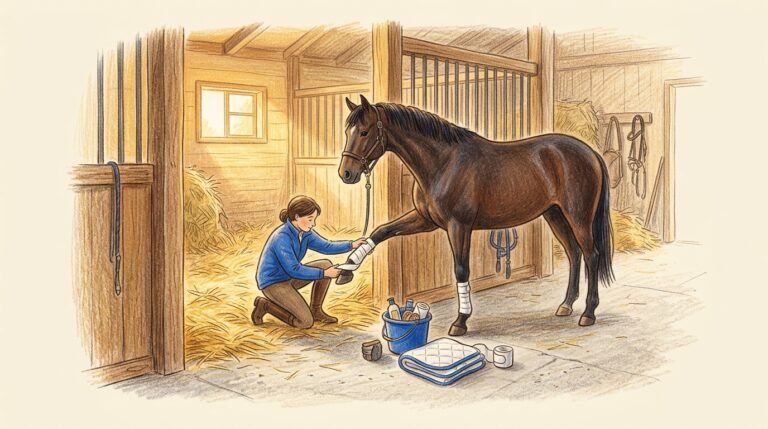
Check the legs. Run your hands down each leg feeling for heat, filling, or sensitivity that was not there before the ride. A leg that is warmer than the others or slightly puffy after a jumping school is something to note and monitor. This is also the time to pick hooves and check for anything that got lodged during the ride.
If the weather warrants a fly sheet or a light cooler while the horse finishes drying, put it on. A cooler helps wick residual moisture in cooler conditions and keeps the horse from getting a chill while you finish grooming. Then water, hay, and back to the stall or turnout, in whatever order your barn routine calls for.
For riders who are new to the full sequence of what barn life involves on a daily basis, the barn chores daily routine guide gives a grounded look at what the whole day actually looks like when you are doing this right.
Frequently Asked Questions
How long does it take to cool down a horse after riding?
Plan for at least twenty to thirty minutes from the end of the ride to the point where the horse is ready to put away. On hot days or after hard work, it can take longer. Walk-out time alone should be ten to twenty minutes, and hosing plus drying adds more. Do not rush it. The horse tells you when it is done, not the clock.
Can you put a hot horse straight into a stall or pasture?
No. A horse that is still blowing, still sweating heavily, and still warm to the touch is not ready to go back. Putting a horse away before it has cooled down properly raises the risk of muscle problems, colic, and respiratory stress. Walk it out first. Always.
Should you give a hot horse water right away?
Yes, you can offer water during and after the cool-down. Current equine veterinary guidance supports allowing horses access to water after exercise. Most horses will drink moderately and self-regulate. Restricting water from a hot, working horse increases dehydration risk, which is the bigger problem.
What if my horse is still warm after hosing and walking?
Keep going. Walk more, apply more cold water, scrape, and repeat. If after thirty to forty minutes of active cool-down the horse is still running warm, breathing abnormally, or showing any signs of distress, call your vet. Heat stress and exhaustion in horses are emergencies. Trust what you see over what you think the timeline should be.
The Cool-Down Is Part of the Ride
Everything about good horsemanship comes back to paying attention. The cool-down is not an afterthought you do while you check your messages. It is the part of the ride where you find out how the horse is actually doing, where you catch the early signs of anything wrong, and where you close the loop on the work you just did together. A horse that is cooled down properly, dried off, legs checked, gut sounds confirmed, and put away with water and hay is a horse that is ready to come out and work again tomorrow.
It takes time. It takes consistency. It is not complicated, but it has to be done every single time, not just on the hard days or the hot days. The horse does not get to skip it and neither do you.
If this guide helped you, grab our free printable cool-down checklist to keep in your tack trunk or post in the wash rack, and head over to the shop for more practical resources for horse families doing this every day.