Winter Horse Care Tips That Actually Work When the Temperature Drops
The Riding Life is reader-supported. When you buy through links on our site, we may earn an affiliate commission at no extra cost to you.
Winter horse care tips are everywhere this time of year, and most of them say the same three things: blanket your horse, check the water, call the vet if something looks off. That is not wrong, but it is not the whole picture either. If you have spent any real time at a barn between November and March, you know that winter care is less a checklist and more a daily recalibration. The footing changes overnight, the water situation is never quite solved, the blanketing debate runs on a loop, and your horse will find a way to need the farrier during the worst week of the year. Here is what we have actually learned from doing it, year after year, from the rail and from inside the barn.
Water Is the First and Most Important Winter Horse Care Priority
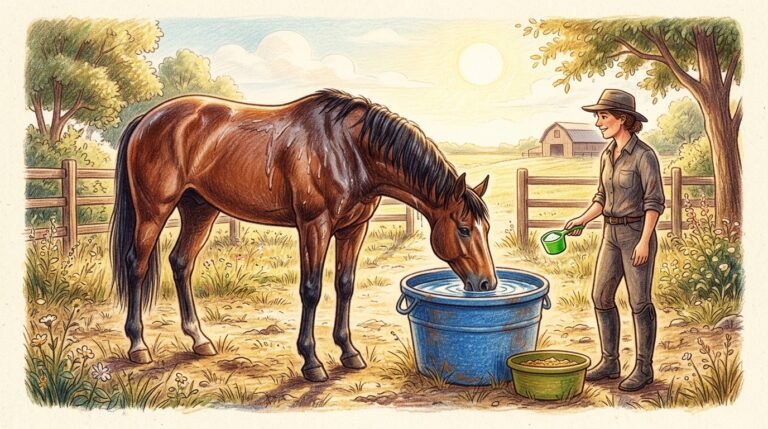
Horses need to drink somewhere between 10 and 12 gallons of water per day in normal conditions. In cold weather, they drink less if the water is cold, and that reduction in water intake is the fastest route to impaction colic. This is not a maybe. It is a documented, consistent risk, and it is the reason water management is the single most important winter horse care task you have.
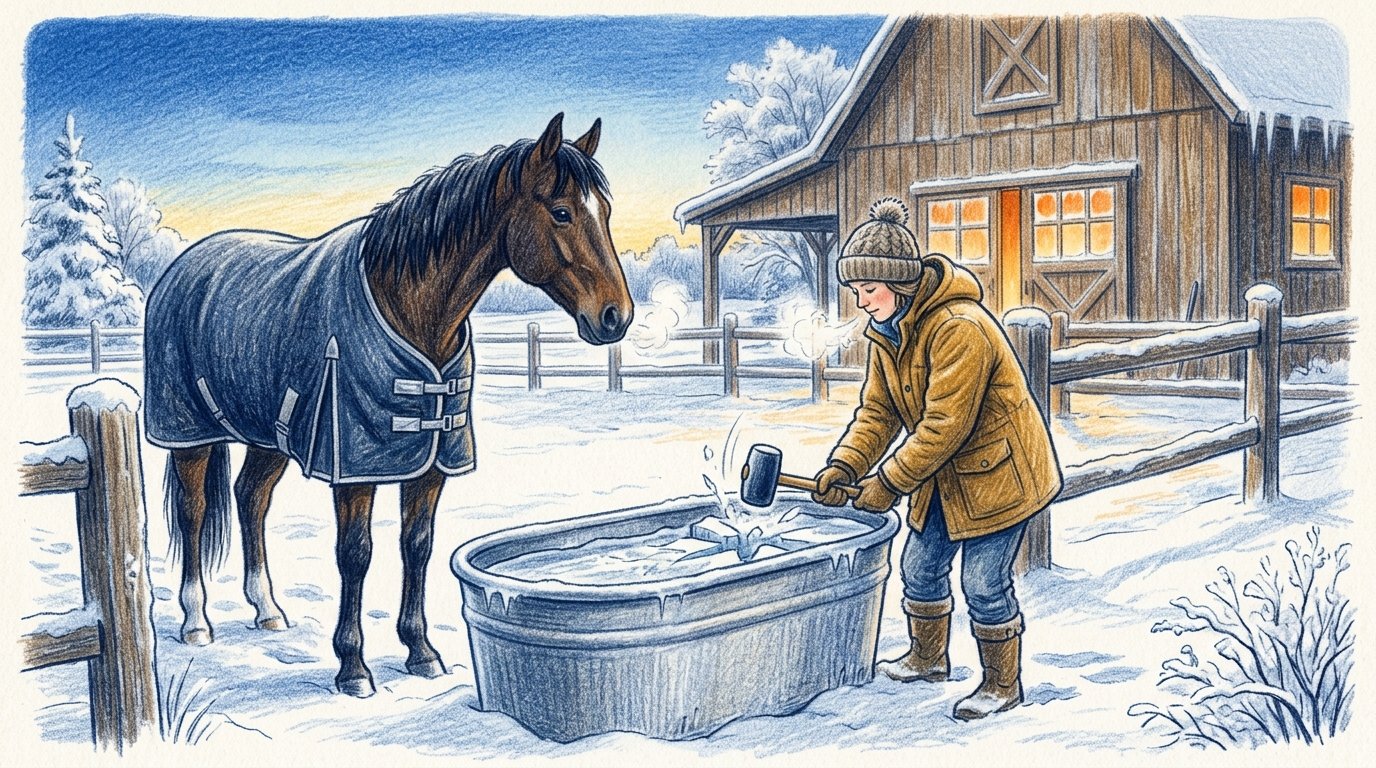
Heated water buckets and tank heaters are not optional equipment in climates where temperatures drop below freezing. A submersible tank heater keeps the trough at a drinkable temperature without running your electricity bill through the roof. If your horse is stalled, a heated bucket that clips to the stall wall is worth every penny. Breaking ice twice a day is not a substitute — most horses will not drink enough from a half-frozen trough, and you cannot always be there to break it at the right time.
Keep the water temperature somewhere between 45 and 65 degrees Fahrenheit. Horses prefer it. They will drink more consistently, which keeps the gut moving and keeps you out of a colic situation at 11 PM on a Tuesday.
Also watch salt intake. Horses should have access to a plain white salt block year-round, and in winter it is especially important because it drives thirst. If your horse is ignoring the salt block, try loose salt added to feed. A tablespoon a day goes a long way toward keeping them drinking.
Blanketing Decisions Require More Nuance Than the Charts Suggest
The blanketing debate at any barn is ongoing and occasionally heated, and the reality is that there is no universal right answer. The decision depends on whether your horse is clipped, how much shelter is available, your horse’s age and body condition, and what the overnight low actually feels like with wind chill factored in.
A healthy, unclipped horse with a full winter coat and access to a run-in shed or stall can handle temperatures well below freezing without a blanket. Their coat does what it is designed to do — trap warm air close to the skin and shed moisture. A wet blanket on a horse in a leaky shelter is worse than no blanket at all, because it presses the coat flat and eliminates that insulating air layer.
Clipped horses need blanketing much earlier in the season and in heavier weights. If your horse is being shown or worked heavily enough that a clip makes sense, you are taking on the responsibility of being their insulation. A medium-weight turnout in the 200 to 300 gram fill range handles most transition weather. A heavy blanket in the 400-plus gram range is for serious cold. Layer with a liner if conditions swing.
Check under the blanket regularly — at least every few days. Run your hand along the spine, over the shoulders, and along the topline. You are checking for weight loss and for rubs, especially at the shoulders and withers. A blanket that fit in October may not fit over a horse who has dropped weight by January.
For a deeper look at horse health basics across all seasons, our horse care basics guide covers the fundamentals in plain language.
Hoof Care and Footing Are Winter Horse Care Problems You Cannot Ignore
The farrier schedule does not slow down in winter. Hooves still grow, just slightly more slowly, and the freeze-thaw cycle that most of us live with is brutal on both the hoof wall and the terrain your horse is standing on. Hard frozen ground is unforgiving. Mud that freezes overnight into ruts and ridges is a sprain waiting to happen.
Keep your farrier appointments on schedule — every six weeks is the standard, and winter is not the time to push it to eight or ten. If your horse is barefoot, watch for snow balling in the foot, which is exactly what it sounds like: snow packs into the concave surface of the sole and builds up into a hard ball that forces the horse to walk on an uneven surface. It looks uncomfortable because it is. Packing the sole with petroleum jelly or using snow pads if your horse is shod can help.
Thrush is a winter barn problem because horses are standing in wet conditions longer — wet stalls, muddy paddocks, standing in snow melt. It has a distinctive rotten smell and you will know it when you pick the foot. Keep stalls clean, pick feet daily, and treat at the first sign. Thrush can move fast if you ignore it.
Watch for the abscess that presents as a sudden, dramatic three-legged lameness. It looks alarming. It is usually not an emergency in the life-threatening sense, but it needs the farrier, and sooner is better than later. Our overview of common horse health issues has more on what to watch for and when to call the vet versus the farrier.
Winter Feeding Adjustments That Keep Weight On and Guts Moving
Horses generate body heat by fermenting forage in the hindgut. That is not a metaphor — fiber digestion is a literal heat source. More hay in winter is not just about calories; it is about keeping your horse warm from the inside out. When temperatures drop significantly, increase hay rather than grain. A digestive system built around forage handles the cold better than one propped up on concentrates.
Good-quality grass hay fed free choice through a slow-feeder hay net is one of the best things you can do for a horse in cold weather. It keeps them eating steadily through the night, keeps the gut moving, and keeps them warmer. If your horse is an easy keeper who cannot have unlimited hay, a slow feeder net extends feeding time without adding volume — they spend more time eating less hay, which still serves the purpose of keeping the gut active.
Senior horses and hard keepers may need extra support in winter because maintaining weight when it is cold requires more calories. Senior feeds, beet pulp, and added fat are all options worth discussing with your vet. Body condition scoring your horse monthly through winter tells you whether your current program is working before the weight loss becomes a problem.
For nutritional guidance grounded in veterinary research, The Horse publishes solid science-based articles on winter feeding and equine nutrition that are worth bookmarking.
Tack and Equipment Maintenance in Cold Weather
Leather does not love winter. Cold temperatures dry it out, and leather left in a cold tack room without regular conditioning will crack. Clean and condition your tack more frequently in winter, not less. A well-conditioned bridle and saddle is also safer — dry, cracked leather is structurally compromised in ways you may not see until something fails at a bad moment.
Bits should be warmed before putting them in a horse’s mouth in freezing weather. A cold metal bit against sensitive mouth tissue is painful and it will make your horse resistant to bridling — reasonably so. Run warm water over it, hold it in your hands for a minute, or use a bit warmer if your barn has one.
Boots, wraps, and any fleece-lined gear need to dry completely between uses. Wet fleece against a leg, left overnight, is a recipe for skin irritation and fungal issues. Hang them somewhere with airflow, not stuffed in a bag in the tack room.
Our guide on how to clean and condition tack walks through the process in detail if you need a refresher on materials and tools.
Frequently Asked Questions
At what temperature should I blanket my horse?
For a healthy, unclipped adult horse in good body condition with shelter available, most barn managers start considering a blanket below 30 degrees Fahrenheit, especially with wind or precipitation. A clipped horse may need a blanket at 50 degrees or warmer depending on the clip. Age, body condition, and access to shelter all shift that number. There is no single temperature that applies to every horse.
How do I know if my horse is drinking enough water in winter?
Watch manure output and consistency — dry, firm manure or a reduction in the number of piles is a sign your horse is not drinking enough. Also monitor water levels in buckets and troughs directly. A horse drinking well should produce roughly eight to twelve manure piles per day. If you see a drop in output and the horse seems uncomfortable, that is worth a call to your vet before it becomes a colic situation.
Should I keep my horse in a stall all winter?
Most horses do better with turnout even in winter, assuming the footing is safe and shelter is available. Movement keeps the digestive system working, keeps joints from stiffening, and keeps horses mentally calmer. Extended stall rest in winter increases the risk of digestive issues and stiffness. Turnout in a dry lot or pasture with a run-in shed is usually preferable to full stall confinement unless there is a specific health or injury reason to restrict movement.
Is it safe to ride in winter?
Yes, with adjustments. A proper warm-up is more important in cold weather because muscles and tendons are less pliable. Plan for a longer walk warm-up before trotting or cantering. If your horse is clipped and working hard, plan a cool-out period before putting them away so they are not standing in a stall while still hot and sweating. Footing is the bigger safety concern — icy arenas or paddocks are a hard no, and frozen ground in turnout areas warrants caution.
Get Through Winter With Your Horse in Good Shape
Winter horse care tips are useful when they reflect what barn life actually looks like in February — cold hands, frozen water troughs, a horse who has mysteriously decided he does not want his blanket anymore, and the farrier scheduled for the day a snowstorm rolls in. None of it is glamorous. All of it matters.
Keep the water warm and accessible. Feed more hay before you feed more grain. Check under the blanket regularly. Stay on your farrier schedule. Clean your tack and warm your bit. These are not complicated principles, but they require consistency, and consistency in winter requires intention.
If you want to stay organized through the season, grab our free printable winter horse care checklist — it is built around everything covered here and designed to live on the tack room wall where you will actually use it. And if you are outfitting yourself or your rider for cold-weather barn time, head over to our shop for gear we have actually used and trust. Winter is long. You might as well be prepared for it.