What to Look for When Buying a First Horse
If you are standing at the edge of a paddock wondering whether that horse is the right one, you already know the answer is complicated. Knowing what to look for when buying a first horse is not really about finding a perfect animal — it is about finding the right match for the rider in front of you, right now, at this stage of their riding life. We have watched families rush this decision and families drag it out for years. Both approaches have a cost. What we have learned, from the rail and from the vet bills and from the long drives home after a trial that did not go well, is that the checklist matters less than the mindset. Go in with clear eyes, a real budget, and a plan for what happens the day after you bring the horse home.
The Riding Life is reader-supported. When you buy through links on our site, we may earn an affiliate commission at no extra cost to you.
Before You Buy Anything, Know Where You Are on the Path
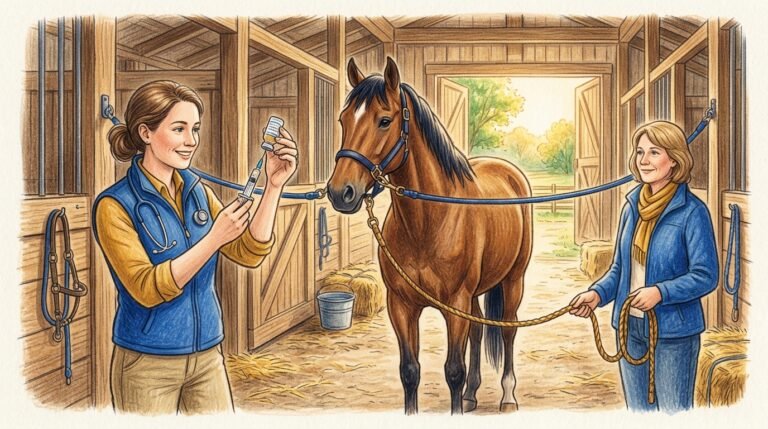
Most families buy a horse before they are ready to own one, and most of them figure that out about three months in. Ownership is a different animal — literally and logistically — from leasing or taking lessons. Board runs anywhere from $400 to $1,200 a month depending on your region and what is included. The farrier comes every six weeks. Coggins tests, dental floating, spring and fall vet visits, vaccinations, deworming on a schedule — none of that stops because it is an inconvenient month. Before you start shopping for a horse, make sure you have read through what leasing versus buying actually looks like in practice, because for a lot of first-time families, a full lease is the smarter bridge. You get the full ownership experience — scheduling your own rides, attending shows, making care decisions — without the capital outlay and without being permanently responsible for an animal you are still learning to manage.
If you have done the math and ownership is the move, good. Now let us talk about what to actually look for.
Temperament Is the Only Non-Negotiable
Every experienced horseperson will tell you this, and it is still the thing families ignore most often when they fall for a pretty head or a flashy coat. Temperament is the one thing that cannot be trained into a horse fast enough to matter for a first-time owner. You need a horse that is genuinely patient, not a horse that is patient when it is not in season, not a horse that is patient except at shows, and not a horse that is patient as long as the barn is quiet. You need the real thing.
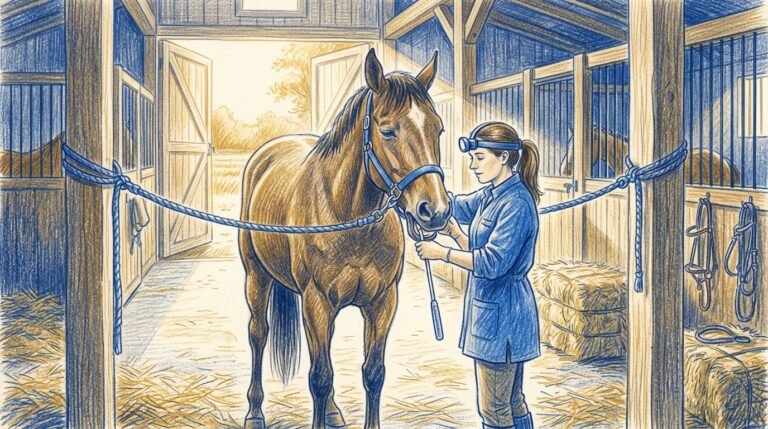
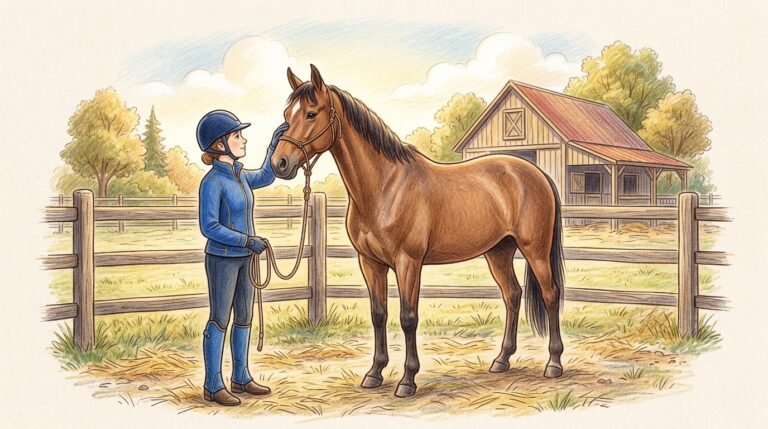
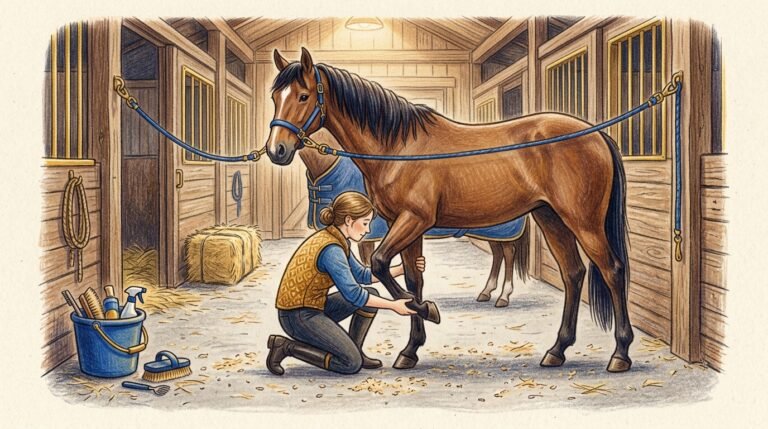
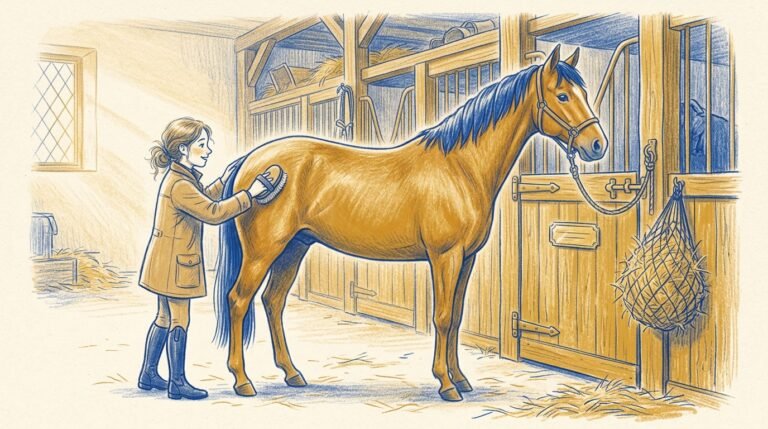
Watch the horse being caught from the paddock. Watch it being tacked up. Watch what happens when something unexpected occurs — a dog running past, another horse calling from across the barn, a tractor starting up nearby. A horse that locks up, spins, or comes off the ground in the crossties during a routine visit is telling you something important. Listen to it. A horse that stands quietly, sighs, lowers its head, and accepts grooming with the same energy on day one as on day one hundred — that is a horse a first owner can build confidence on.
Ask the seller to see the horse ridden by its current rider before you or your rider gets on. Watch for rushing, braciness, resistance at the canter transition, or pinned ears. A horse that is already managing a nervous or green rider with patience is showing you its actual character. A horse that is well-behaved only under a strong, experienced hand is not a first horse — it is a project.
Age and Experience Matter More Than Breed
The green-horse-for-the-green-rider pairing is one of the most common expensive mistakes in this sport. Both parties are guessing, and horses do not give points for good intentions. For a first-time owner, you want a horse that has already done the job — ideally for several years, at the level or slightly above the level where your rider is working now.
The sweet spot for a first horse is typically somewhere in the 8-to-16-year range. Young enough to have years of useful work ahead, old enough to have the mileage that makes them reliable. A well-maintained 14-year-old with ten years of lesson and show experience is often worth more to a first-time family than a six-year-old that looks stunning but has two seasons under saddle. Understanding the differences between horse breeds