The Daily Barn Chores Routine Every Horse Owner Actually Lives
What the Barn Chores Daily Routine Actually Looks Like
If you are new to horse ownership or you are getting close to that leap, the barn chores daily routine is one of the first things you need to understand before you sign anything or write any checks. It is not a list of tasks you can rearrange around your schedule. The horse sets the schedule. You work around it. What follows is a plain account of what happens every single day at a working barn, whether you are a boarding client doing partial care, an owner doing full care yourself, or a barn kid who has graduated from lessons into real responsibility. The work is consistent, physical, and non-negotiable. That is not a warning. That is just the truth.
The Riding Life is reader-supported. When you buy through links on our site, we may earn an affiliate commission at no extra cost to you.
Morning Chores: The First Round Sets the Tone
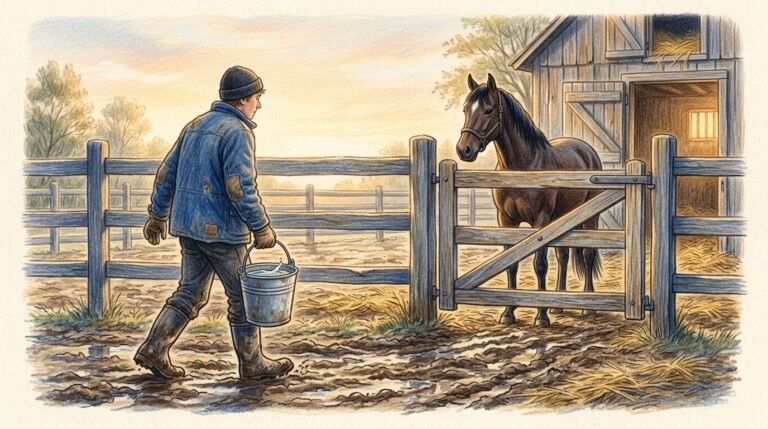
The first person through the barn door in the morning is doing the most important check of the day. Before anyone touches a hay bale or a grain scoop, you walk the barn. You look at every horse. You are looking for who is standing weird, who did not finish their water overnight, who has a leg that is stocked up, and who is pawing or looking uncomfortable. Colic does not wait for a convenient hour, and the horse that seemed fine at 9 PM can be in real trouble by 5 AM. That first visual sweep is not optional.
After the check, morning barn chores go in roughly this order: fill water buckets or check automatic waterers, distribute hay, then grain to horses that get it, then turn out. Turnout order matters at every barn because horses have opinions about other horses, and sending them out in the wrong sequence causes problems at the gate. If your barn uses a pasture rotation, you are also checking fencing every time you open a gate. A downed wire or a broken board does not announce itself.
Stall cleaning happens either before turnout or after, depending on the barn’s system. Before turnout is cleaner and gives the horse a fresh space to come back to. After turnout is more efficient because the stall is empty and you are not working around the horse. Either works. What does not work is skipping it or doing a half job. You are pulling all the wet bedding, not just the obvious piles. Ammonia from urine buildup causes respiratory issues and hoof problems over time, and thrush starts in a wet, dirty stall. A clean stall is not about appearances. It is about the horse’s health.
While you are in there mucking, you are also looking at the manure. Color, consistency, volume. A horse that is not passing manure normally is a horse you call the vet about. You learn what is normal for your individual horse, and you notice when it changes. That happens naturally after a few months. You stop thinking about it consciously and start just knowing.
Midday Checks and the Work That Gets Skipped First
Full boarding barns that include care will often do a midday check, a hay drop for horses that are stalled, and a water top-off. If you are doing your own full care, midday is when you squeeze in the things that got compressed in the morning. That might be picking hooves, which should honestly happen every day and often does not because mornings are chaotic. It might be applying fly spray if your horse is in a paddock without a run-in in summer heat. It might be checking a wound that the vet said to monitor.
Hoof care is one of the things that gets genuinely overlooked in daily routines. Picking hooves takes three minutes. It catches rocks, catches thrush early, catches a shoe that is pulling loose before it becomes a full pull. The farrier comes every six weeks, but six weeks is a long time if something is going on in there. You want to know what normal hooves feel like and smell like so you notice when that changes. For more on what to watch for, this rundown on horse hoof care basics is a good starting point.
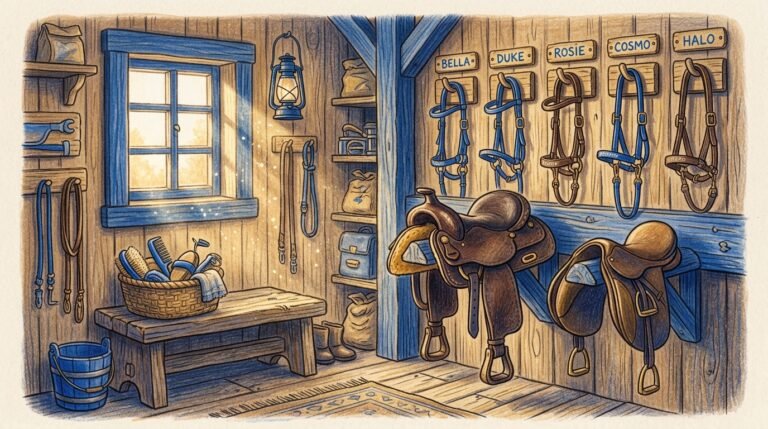
Midday is also when tack cleaning tends to happen for barns that are running a lesson program, because tack that gets used in the morning needs to be wiped down before it goes back on a horse that afternoon. Dirty, dried-out leather is unsafe leather. A bridle with a cracked cheekpiece is a liability in the middle of a lesson. Wiping down and conditioning tack is one of those tasks that feels optional until the day it is not.
Evening Chores: Closing Down the Barn Right
Evening barn chores are essentially the mirror of morning, but the stakes are higher in one way: this is the last time anyone will see these horses until tomorrow morning. Everything you miss at night, the horse deals with alone.
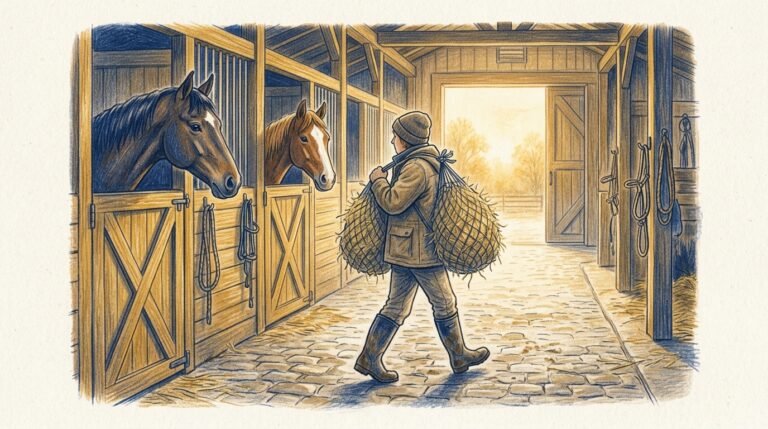
Horses come in from turnout, go back to their stalls, and you feed again. Some horses get a bigger evening hay portion because they are going the longest stretch of the night without anything else. Water buckets get topped off. You do another visual check. You are looking at legs, eyes, and demeanor. A horse that is dull or off in the evening when they are usually bright and interested is a horse you watch carefully.
Blanketing happens in the evening in colder months, and it generates more barn disagreement than almost anything else. The general guidance is to blanket based on temperature, the horse’s body condition, whether they are clipped, and whether they have adequate shelter. A healthy horse with a full winter coat and access to a run-in shed does not need a blanket at 40 degrees. A clipped horse in a drafty stall does. Learn your horse’s individual needs and stop making blanket decisions based on how cold you feel standing there. If you are sorting this out for the first time, the horse blanket sizing guide walks through the fit piece, which matters as much as the weight.
Before you turn the barn lights off, you walk it one more time. Latches are closed. No hay piled against anything that can catch heat. The aisle is clear. Water buckets are full. The last check of the night is fast, but it is not optional.
The Weekly and Ongoing Tasks That Run Alongside Daily Chores
The daily routine is the baseline. On top of it runs a set of weekly and ongoing tasks that do not have a fixed time slot but have to happen regularly. Stall mats get scrubbed periodically. Buckets get scrubbed rather than just rinsed, because algae and bacteria build up and horses will stop drinking from a bucket that tastes wrong, and a horse that is not drinking enough water is a horse at colic risk.
Feeding supplies get inventoried and reordered before you run out, not after. Running out of bedding on a Friday afternoon before a long weekend is its own specific kind of stress. You learn to order one week ahead. Same with feed. If your horse is on a supplement or a specific feed, you do not wait until the bag is empty.
Health monitoring is woven into every single day but becomes more formal on a weekly basis when you are checking weight, coat condition, and any ongoing issues. Common issues like thrush, minor cuts, and skin conditions are caught early when you are handling the horse daily. The ones that sneak up on you are the ones you were too rushed to notice. For a broader overview of what to watch for, common horse health issues covers the things that barn families deal with most regularly.
Good grooming is part of health monitoring, not just aesthetics. Running a brush over the horse every day means you find the lump, the bite, the swelling, the heat in the leg early. The The Horse has solid, vet-reviewed information on recognizing early signs of illness that is worth bookmarking. A quality set of grooming tools helps here — something like the Oster Equine Care Series Grooming Kit covers the basics in one purchase and holds up with daily use.
Frequently Asked Questions
How long does a daily barn chores routine take?
For a single horse in a stall, a thorough morning routine including mucking, feeding, watering, and turnout runs 45 minutes to an hour if you are moving efficiently. Evening is similar. Add another 20 to 30 minutes if you are doing a more thorough grooming or hoof check. Multi-horse barns scale up from there. Plan for two solid hours a day at minimum across morning and evening, more when something is off with the horse.
What happens if you skip or shorten barn chores?
The horse feels it. A stall that is not properly cleaned causes thrush and respiratory irritation over time. A horse that is not monitored daily is a horse whose colic or injury gets found late. Water buckets that are not checked lead to dehydration. Shortcuts compound. One skipped day is not a crisis. A pattern of cutting corners shows up in the horse’s health within weeks.
Do boarding barns handle all the daily chores?
Full-care boarding means the barn staff handles feeding, turnout, mucking, and basic monitoring. You are paying for that, and at most barns in 2026 it is the largest single line item in your horse budget. Partial care and self-care board reduce the cost but put the daily chores back on you, partially or fully. Know exactly what is and is not included before you sign a board agreement.
What is the most important part of the daily barn chores routine?
The visual check at the start of every visit. Everything else can be adjusted in timing or order. The one thing you cannot skip is actually looking at the horse and registering whether something seems different. That habit, built over months and years, is what catches problems before they become emergencies.
Build the Habit and the Rest Follows
The barn chores daily routine is not glamorous and it does not get easier to roll out of bed for. What changes is that you stop thinking about whether to do it. You just go. The horses are there, the work is there, and showing up is the whole job. That is true whether you are a new owner figuring it out or someone who has been doing this for years. The barn does not care about your experience level. It only responds to whether you showed up and paid attention.
If you are just getting into horse ownership or helping a kid who is, understanding horse care from the ground up makes the daily routine less overwhelming and more purposeful. The horse care basics for beginners guide is a good place to start if you want the full picture beyond just the chore list.
Ready to make the daily routine easier to track and hand off? Grab our free printable barn chores checklist and head over to the shop for more tools built for real barn families doing the real work every day.