How to Read a Horse’s Body Language
Learning how to read a horse’s body language is one of the most useful things anyone in this world can do, and it does not matter whether you are the one in the saddle or the one standing at the rail holding the lead rope. Horses are communicating constantly. They are telling you they are nervous, relaxed, in pain, bored, curious, or about to blow before any of that turns into something you have to deal with on the ground or in the arena. The problem is that most people do not slow down enough to listen. This guide is for riders, horse owners, and barn families who want to understand what a horse is actually saying before it has to say it louder.
The Riding Life is reader-supported. When you buy through links on our site, we may earn an affiliate commission at no extra cost to you.
Start With the Ears and Eyes
The ears are the fastest signal a horse gives you. They swivel independently and they almost always point toward whatever has the horse’s attention. When both ears are forward, the horse is focused on something ahead, curious or alert. That is not necessarily a problem, but it tells you the horse’s mind is out there, not with you. When one ear is back and one is forward, the horse is splitting attention, partly on you, partly on something else. Both ears pinned flat back against the skull is a warning. That horse is angry or deeply uncomfortable, and you treat it accordingly.
Soft, relaxed ears that hang loosely to the sides, sometimes called airplane ears, usually mean a horse that is dozing or genuinely at ease. You learn to love that look. It means you have done something right, or at least that nothing is wrong right now.
The eyes tell you almost as much. A soft, half-lidded eye on a standing horse means rest and comfort. A wide, white-rimmed eye means fear. Once you see the white of a horse’s eye that way, you remember it. The whole posture changes with it. The head comes up, the body tenses, and suddenly you are not dealing with the same animal you were thirty seconds ago. Stay calm, keep your movement slow and predictable, and give the horse a moment to come back down before you ask anything of it.
Read the Horse’s Body Language Through Posture and Weight
A horse standing square, weight even on all four feet, head relaxed at a natural height, is a horse that feels okay. A horse standing with a hind leg cocked, resting it at the hip, is often just resting. That is normal. But a horse that is shifting weight constantly, refusing to stand still, or loading one front leg awkwardly is telling you something hurts. Front-leg issues show up differently than hind. A horse with a sore front foot will often point it forward, trying to take weight off the toe or the heel. If you see that, you check the foot before you do anything else.
Watch the back and topline when a rider is on. A horse that is moving with a tense, hollow back, tail clamped down tight, is not a relaxed horse. A horse moving with a swinging, loose back and a tail that floats freely is working correctly and comfortably. You can see the difference from the ground if you know what you are looking for. We have stood at enough rail to know the difference between a horse that is moving well and a horse that is tolerating the ride.
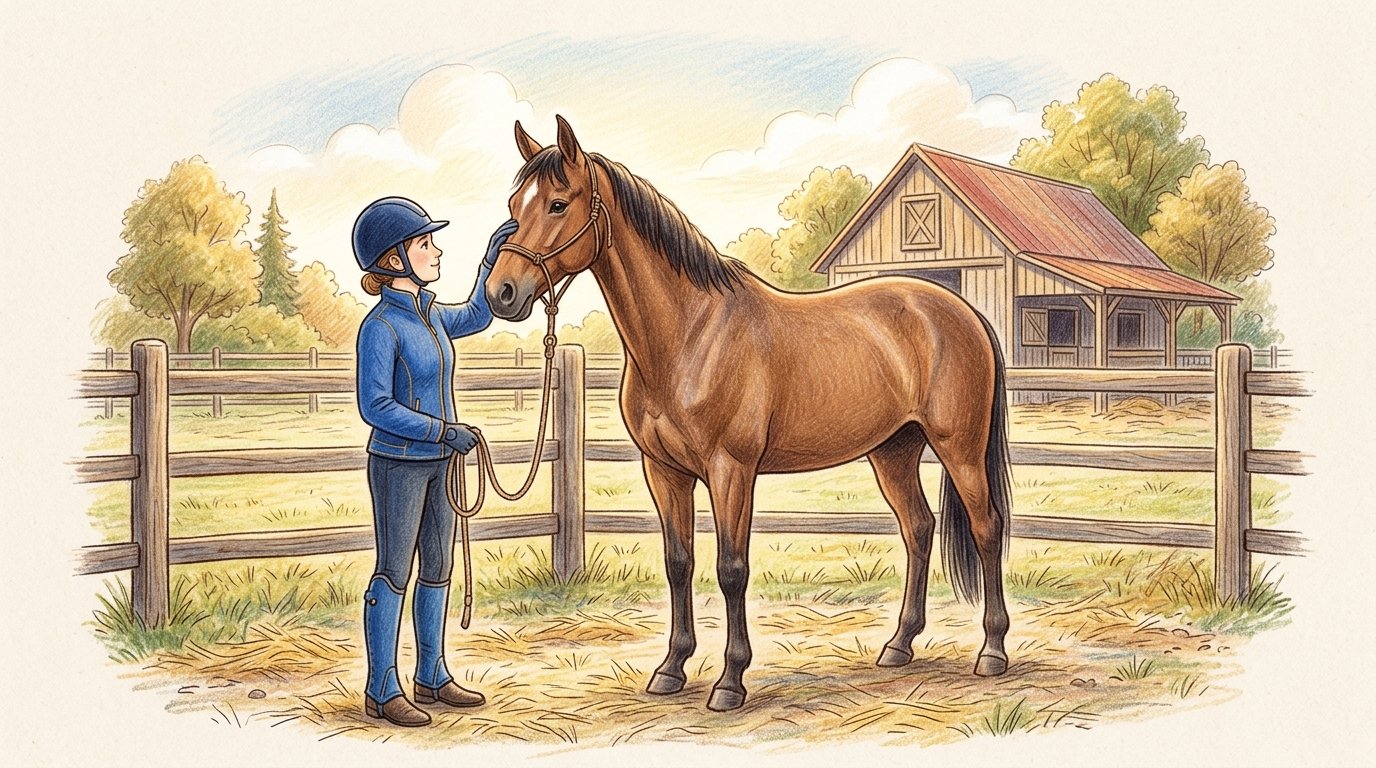
Pay attention to the weight of the horse’s head during grooming and tacking up. A horse that drops its head into your hands while you are working around the face is comfortable with you. A horse that holds its head high, pulls away, or braces is not. That is not stubbornness; that is communication. Something in what you are doing, or something in how that horse feels today, is not right.
For a broader look at what physical signals can mean for your horse’s wellbeing, it is worth reading through signs your horse is in pain and common horse health issues so you know where body language ends and a vet call begins.
Tail, Skin, and the Smaller Signals
The tail is a thermometer for emotional state. A tail carried naturally and swinging freely with movement is a good sign. A tail clamped tight against the hindquarters usually means discomfort, fear, or cold. A tail that is wringing, swishing in hard, rapid circles or sharp side-to-side movements, is irritation. It might be flies. It might be the leg aid being applied too hard. It might be a poorly fitting saddle. Figure out the cause before you decide it is a training problem.
Skin twitching, that small ripple across the flank or shoulder, is often just a fly response. But if a horse is twitching repeatedly in a specific spot and there are no flies, that spot is worth examining. Horses sometimes localize sensitivity to areas of soreness or skin irritation that way.
A horse that licks and chews during a training session is releasing tension and processing. That is a good sign. A horse that yawns big and long after you ask something of it is also releasing. These are signals that the horse worked through something and came out the other side. You want to see them.
Pawing on the ground while tied is often impatience or anxiety. Some horses paw before they are fed because they have learned that pawing is followed by grain. That is a habit, not distress. But a horse that is pawing, looking at its flank, and refusing to eat is showing you the early signs of colic, and that one you do not wait on. You call your vet.
Reading Body Language in the Herd and at the Gate
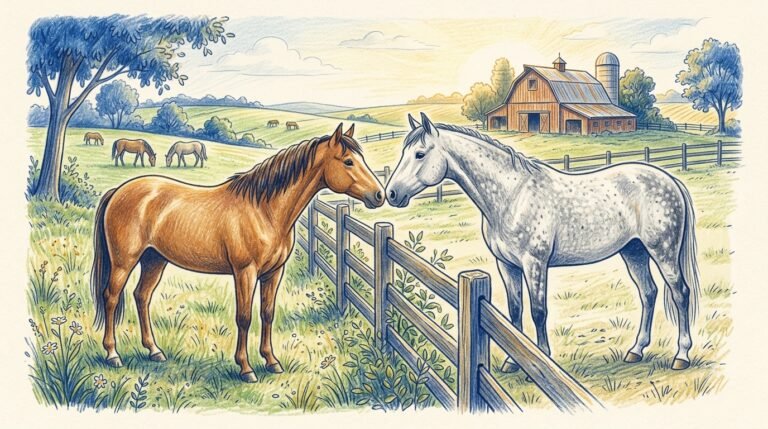
Watch horses in turnout for ten minutes and you will learn more about their communication than most books will teach you. The hierarchy is clear and mostly quiet. Pinned ears and a swung hindquarter at the fence line is a horse telling another horse to move. A horse that approaches another with a low, stretched neck and soft eyes is being submissive or affiliative. Mutual grooming, two horses standing side by side nibbling at each other’s withers, is social bonding. It means those two horses are comfortable with each other.
At the gate, a horse that walks right up to you is either food-motivated or genuinely comfortable with people. A horse that walks away when you approach, not running, just drifting off across the paddock, is avoiding. That is worth noting. It might mean the horse is not feeling well. It might mean something about the last few sessions was not great for them. It might just be a personality thing. But it is information.
A horse that turns its hindquarters toward you in the paddock is not being cute. That is a clear warning. Do not walk up behind a horse like that. Go to the shoulder, give it a moment, and approach from the front or side. You make that a habit early and you keep it forever. Resources like how to safely tie a horse go hand in hand with this kind of ground awareness.
For a deeper look at equine behavior research and what science says about horse communication, The Horse publishes regular coverage of peer-reviewed equine studies worth reading alongside your barn experience.
Putting It Together on the Ground and in the Saddle
Reading body language is not a skill you learn once. It is something you calibrate every single time you are with a particular horse, because horses have good days and off days like everyone else. The horse that is mellow and easy on Tuesday might be tight and distracted on Thursday. Your job is to notice that before you are in trouble, not after.
Before you tack up, stand next to the horse for a moment. Watch how it holds itself. Check the eyes. Watch the ears when you first walk in. Run your hand down the back and watch for flinching or tension. All of that takes about ninety seconds and it tells you what kind of ride you are probably in for, or whether today’s ride needs to be a short and easy one.
When you are in the saddle, the same cues apply. The horse that drops a shoulder and starts drifting toward the gate is telling you it is done. The horse that takes a deep breath and softens through the back is telling you it found the work comfortable. You start recognizing those moments and you respond to them, and that is where the relationship between rider and horse actually lives.
For riders who are still finding their footing in all of this, pairing body language awareness with solid fundamentals makes everything clearer. Understanding horse care basics for beginners gives you the daily handling context that makes reading a horse second nature over time.
Frequently Asked Questions
What does it mean when a horse pins its ears back?
Pinned ears are a warning signal. The horse is expressing displeasure, irritation, or aggression. It might be directed at another horse, at a person, or in response to something painful. If the ears go back when you cinch or girth up, that is worth noting as a possible pain response, not just attitude. Take it seriously and rule out physical causes before treating it as a behavior issue.
How can I tell if a horse is afraid versus just distracted?
A distracted horse has ears up and forward, possibly moving around a bit, but the body stays relatively loose. A frightened horse shows a wider, more intense eye, the white of the eye may be visible, the body tightens, the head comes up, the breathing may quicken, and the horse is ready to move. The shift from distracted to frightened can be fast, which is why staying aware of all signals at once matters more than watching just one.
Is tail swishing always a bad sign?
Not always. Horses swish their tails at flies constantly, and that is just fly season. But tail swishing that coincides with a specific leg aid, a girth being tightened, or a particular movement in work is telling you something is off. Persistent tail wringing during a ride, especially combined with a tense back and pinned ears, is a pattern that warrants a closer look at saddle fit, the horse’s soundness, and how the aids are being applied.
How long does it take to get good at reading horse body language?
It takes time around real horses, consistently. You can read about it, and reading helps, but the calibration happens in the barn. Most people start picking up the broad signals fairly quickly, the pinned ears, the wide eye, the resting hind leg. The subtle stuff, the early tension before a spook, the slight change in a horse’s way of going that signals something is wrong, takes years of regular handling. You just keep showing up.
Start Watching and Keep Watching
Learning how to read a horse’s body language does not require anything fancy. It requires time, attention, and enough humility to accept that the horse is always telling you something, even when you are not quite sure what. You start with the obvious signals and you work your way toward the quiet ones, and eventually you find yourself reading the whole horse at once without thinking about it much. That is when this stops feeling like a skill and starts feeling like a conversation.
We have watched enough rides from the ground to know that the people who do this best are not always the most technically polished riders. They are the ones who are genuinely paying attention. That habit starts on the ground, before anyone ever gets on, and it carries into every minute in the saddle.
If this kind of foundational knowledge is useful to you, grab our free printable checklist to keep these cues in front of you as you build your barn routine, and head over to the shop for more resources built for real barn families doing this work every day.