Horse Deworming Schedule Guide
Why a Horse Deworming Schedule Is Worth Getting Right
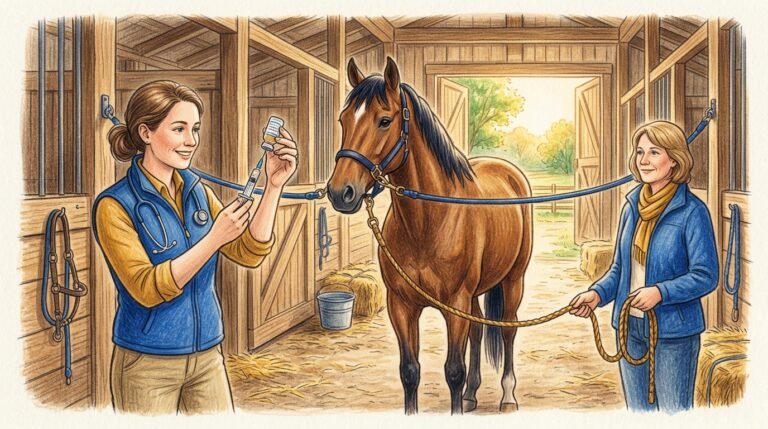
If you are new to horse ownership or just stepping into a lease situation, a horse deworming schedule is one of those things that sounds straightforward until you start reading about it. Then you find yourself staring at a wall of paste syringes at the feed store wondering what the difference is between ivermectin and moxidectin and whether your horse needs both. We have been there. This guide cuts through the noise and gives you the practical, current thinking on how to deworm a horse without overdoing it, underdoing it, or spending money on a rotation that does not actually fit your animal.
The Riding Life is reader-supported. When you buy through links on our site, we may earn an affiliate commission at no extra cost to you.
Parasite management used to be simple: you rotated through a list of dewormers on a fixed calendar, every six to eight weeks, all year long. That was the standard for decades. The problem is that approach accelerated resistance, and we are now dealing with the consequences. Certain strongyle populations have developed significant resistance to benzimidazole dewormers in particular. The equine veterinary community shifted its approach, and if your barn is still running a rigid every-eight-weeks rotation without any fecal testing, it is worth having a conversation with your vet about whether that still makes sense for your horses.
For a deeper look at the broader picture of horse health management, our guide to common horse health issues is a good place to start building your baseline knowledge.
Understanding the Parasites You Are Actually Targeting
Before you can build a smart deworming schedule, you need to know what you are dealing with. The main internal parasites in horses fall into a few categories, and each responds differently to different dewormers.
Small strongyles (cyathostomins) are the biggest concern in adult horses today. They encyst in the gut wall as larvae and can cause serious damage when they emerge en masse, a condition called larval cyathostominosis. They are also the parasites most likely to have developed drug resistance. Moxidectin is currently the most effective product against encysted larvae. Fenbendazole at a five-day larvicidal dose is another option, but resistance to benzimidazoles is common enough that fecal egg count reduction tests are the only way to know if it is working for your specific herd.
Large strongyles were the primary concern in older parasite management literature, and they are genuinely dangerous, but modern deworming has made them relatively rare in well-managed horses.
Roundworms (ascarids) are primarily a concern in young horses under two years old. Adult horses develop immunity. Importantly, ascarids have shown resistance to ivermectin and moxidectin in many populations, so young horses may need to be treated with fenbendazole or oxibendazole instead. This is exactly the kind of situation where talking to your vet rather than grabbing whatever is on the shelf makes a real difference.
Tapeworms require praziquantel or a double dose of pyrantel to treat. Ivermectin alone does not cover them. This is why the combination products like ivermectin plus praziquantel exist, and it is also why tapeworm treatment gets built into the schedule at least once, usually twice, a year.
Bots are larvae from botflies, and they attach to the stomach lining. Treatment is typically done in late fall or early winter, after the first hard frost kills the adult flies. Ivermectin and moxidectin both cover bots effectively.
The Fecal Egg Count First Approach
The current best-practice recommendation from most equine parasitologists is to stop treating on a fixed calendar and start treating based on fecal egg counts, often called FECs. The idea is that horses are not all equal shedders. Research has consistently shown that roughly 20 percent of horses in a herd shed roughly 80 percent of the eggs on the pasture. Some horses are low shedders, some are moderate, and some are high. Treating all of them identically is wasteful at best and contributes to drug resistance at worst.
A fecal egg count is done by your vet or a diagnostic lab using a fresh manure sample. The results are reported in eggs per gram. General benchmarks look something like this: under 200 eggs per gram is low, 200 to 500 is moderate, and over 500 is high. Low shedders may only need two targeted treatments a year. High shedders may need more frequent intervention. The key is that you are basing decisions on actual data from your actual horse rather than a product schedule on a calendar.
A fecal egg count reduction test, done 10 to 14 days after treatment, tells you whether the dewormer you used actually worked. If egg counts do not drop by at least 90 to 95 percent, resistance is likely present and you need to talk to your vet about alternatives.
For a broader overview of horse care fundamentals including health basics that go alongside parasite management, our horse care basics guide for beginners covers the full picture in plain terms.
Building a Practical Horse Deworming Schedule
Even with a targeted approach, most horses benefit from a baseline structure. Here is how a reasonable deworming schedule looks for an adult horse in good management, adjusted by fecal egg count results.
Spring, ideally March or April: Run a fecal egg count. Treat based on results. If treating, use ivermectin or a combination of ivermectin plus praziquantel to cover strongyles and tapeworms coming out of winter. This is a good time to do a fecal egg count reduction test a couple of weeks later to check efficacy.
Midsummer, around June or July: Run another fecal egg count if your horse is a moderate or high shedder. Treat if egg counts warrant it. Low shedders may not need treatment at this interval at all.
Fall, October or November: This is the most important treatment of the year for most horses. Use moxidectin, ideally combined with praziquantel, to cover encysted small strongyle larvae and tapeworms. Moxidectin is the only readily available product that addresses encysted larvae at a single standard dose. This treatment happens after the bot fly season ends in your region.
Late fall or early winter: If you did not combine praziquantel with your fall moxidectin treatment, add a tapeworm-specific treatment here. Bot treatment can also happen at this point if needed.
For young horses under two, foals, and weanlings, the schedule is different and more frequent, and ascarid resistance means the product choice matters more. That is a conversation to have directly with your vet, not something to manage off a general guide.
For information on the broader routine of daily and seasonal horse care that sits alongside deworming, our barn chore schedule for horse owners is worth bookmarking.
Practical Tips From the Barn
A few things we have learned the hard way that do not always make it into the official guidelines.
Store your paste dewormers at room temperature, not in a hot trailer or a cold barn. Extreme temperatures affect product integrity. Check the expiration date before you buy in bulk.
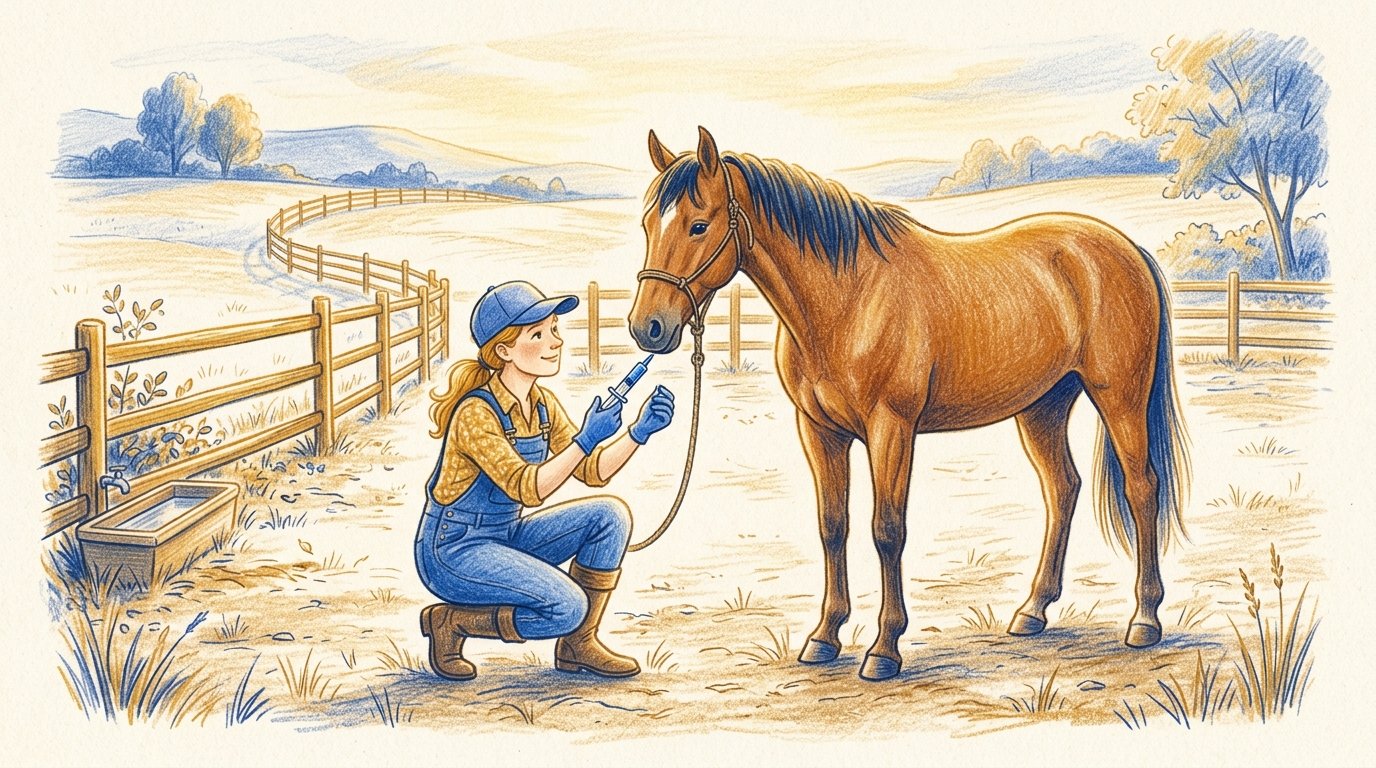
Weigh your horse before deworming. Dose is based on body weight, and most people underestimate how much their horse actually weighs. An underweight dose does not clear parasites effectively and directly contributes to resistance. A weight tape is not perfectly accurate but it is better than guessing.
Do not deworm a horse that is already stressed, colicky, or showing signs of illness without talking to your vet first. Killing a large parasite load too quickly in a compromised animal can cause problems of its own.
New horses coming onto your property are a real risk. Always treat a new arrival with moxidectin plus praziquantel and keep them off shared pasture for at least 72 hours after treatment to reduce the eggs they deposit. A fecal egg count before treatment gives you a useful baseline.
Pasture management matters alongside chemical treatment. Picking up manure regularly, avoiding overgrazing, and rotating pastures all reduce the parasite burden on the land. No deworming schedule fully compensates for poor pasture hygiene.
For current and thorough information on equine parasite management from a research perspective, The Horse publishes regularly updated coverage on resistance trends and treatment recommendations that is worth reading alongside whatever your vet recommends.
Frequently Asked Questions
How often should I deworm my horse?
It depends on your horse and your results. The current recommendation is to base treatment frequency on fecal egg counts rather than a fixed calendar. Most adult horses in good health need two to four treatments per year. Low shedders may need only two. High shedders may need more. Work with your vet to establish a baseline for your specific horse.
What is the best dewormer to use in the fall?
Moxidectin combined with praziquantel is the fall standard for most adult horses. Moxidectin targets encysted small strongyle larvae, which is the main reason fall treatment matters so much. Adding praziquantel covers tapeworms. Products like Quest Plus combine both in a single syringe. Do not use moxidectin in foals under four months or horses in poor body condition without veterinary guidance.
Can my horse develop resistance to dewormers?
The parasites can develop resistance, not the horse. Resistance is a population-level problem, meaning if a drug-resistant strongyle strain is present on your property, it will not respond adequately to certain dewormers regardless of dose. This is why fecal egg count reduction tests matter. If your horse is not showing a dramatic reduction in egg counts after treatment, resistance may be present and you need to switch products under veterinary guidance.
Do I need to deworm a horse that lives alone and has no pasture contact with other horses?
Even horses in isolation carry internal parasites. Strongyle eggs can survive on pasture for extended periods and the horse may have arrived with an existing parasite burden. Run a fecal egg count to assess the situation rather than assuming isolation means no parasites. You may find that your horse needs less frequent treatment than a herd horse, but you will know for certain rather than guessing.
Keep Your Deworming Program on Track
A solid horse deworming schedule is not complicated, but it does require you to pay attention, track your results, and work with a vet who is current on the resistance conversation. The days of buying a handful of syringes and cycling through them every two months are mostly behind us. What we have instead is a smarter, data-driven approach that protects the effectiveness of the tools we still have left.
Write down your fecal egg count results. Note which products you used and when. Track the fecal egg count reduction results after treatment. That information builds a picture of how your horse responds over time and makes every conversation with your vet more productive.
Parasite management is one piece of a larger horse health routine. The more organized you are about all of it, the less you end up scrambling when something goes sideways. If you want a simple way to stay on top of it, grab our free printable checklist to keep your deworming and health calendar in one place, and head over to the shop for more tools built for real barn families doing this work every day.