Barn Chore Schedule for Horse Owners
What a Real Barn Chore Schedule for Horse Owners Actually Looks Like
If you are new to horse ownership or you are taking over more responsibility at your barn, the first thing you need to understand about a barn chore schedule for horse owners is that it is not flexible the way other routines are. Horses run on their body clocks, not yours. They expect feed within roughly the same window every single morning and every single evening, and when that routine breaks, they notice. Some of them notice loudly. Getting clear on what needs to happen, and when, is the difference between a barn that hums along and one that is always scrambling.
The Riding Life is reader-supported. When you buy through links on our site, we may earn an affiliate commission at no extra cost to you.
This is not a schedule built around perfect conditions. It is built around what actually happens when you own a horse, which includes weather delays, a horse that has pulled a shoe overnight, a water trough that froze solid, and a kid who has school at seven. We have done all of those mornings. Here is what a workable daily and weekly routine looks like broken into honest pieces.
Morning Chores: The Non-Negotiable Foundation
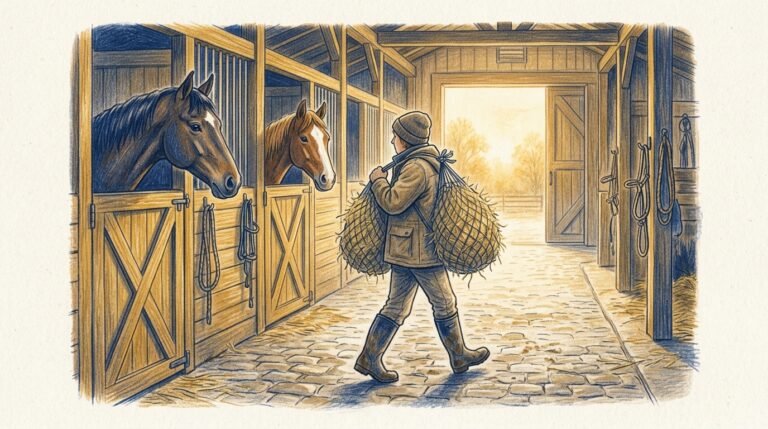
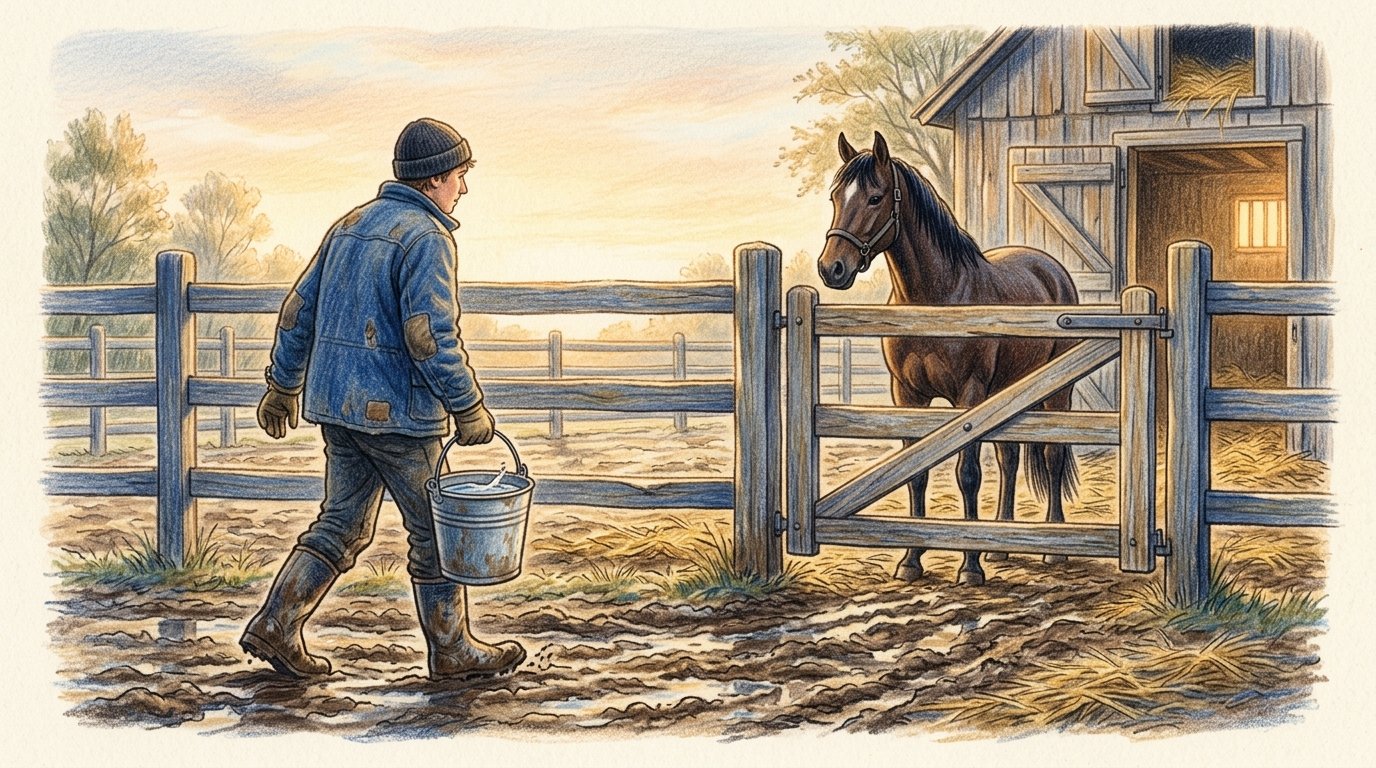
Morning barn chores start early because the horse has been standing since the evening feed and his body is ready. Figure on arriving at least thirty to forty-five minutes before you want to be done, because this is never a quick in-and-out.
Start with a visual check before you do anything else. Walk the stall or scan the paddock. You are looking at the horse before anything else touches him. Is he standing normally? Did he eat his hay from last night? Is he holding a leg? Is the stall a disaster that suggests he was down repeatedly, which can be an early colic flag? This two-minute walk-through has saved more horses from a bad morning than any single piece of equipment.
Then, in rough order, here is what morning looks like:
Feed grain and hay. Horses eat hay first, grain second if grain is part of the diet. Know your horse’s amounts and stick to them. Sudden changes in feed quantity or type are one of the common triggers for digestive upset, so consistency is not a preference here, it is horse care. For a solid overview of what to feed and how to think about it, our guide on what to feed a horse covers the basics without burying you in nutrition jargon.
Muck the stall or clean the paddock. A horse produces roughly fifty pounds of manure per day. That is not a typo. Pull the stall, bank the shavings, replace what is wet, and get clean bedding under him. This is daily, not optional. Ammonia from urine sitting in wet bedding leads to respiratory irritation and contributes to thrush in the hooves, which you will eventually be paying the farrier to address.
Check and fill water. Buckets get dunked, troughs get fouled, and in winter they freeze. Check it every morning, not just once in a while. A horse that goes without fresh water for a day is already on the path toward a health problem.
Turn out. If your management includes turnout, get the horse out while you finish stall work. Most horses are happier for it, and turnout time is real health time, not just a convenience.
For more detail on horse care fundamentals that inform this morning routine, our horse care basics page is a useful companion read, especially if you are earlier in the ownership journey.
Midday Check: Short but Worth It
Not every barn owner can do a midday visit, especially if you are working off the property. But if you can, even a ten-minute stop matters, particularly in summer heat or winter cold, and for any horse who is older, recovering from illness, or known to have digestive sensitivity.
Midday is a quick check, not a full chore run. Refill water. Toss a flake of hay if your horse is stalled and the morning hay is gone. Glance at the horse. That is it. If something looks off during that glance, you caught it hours earlier than you would have otherwise, and with horses, hours matter.
If your barn has a manager or barn staff covering midday, make sure you understand exactly what they are checking, because assumptions about who is doing what have caused more than a few preventable emergencies in shared barn environments.
Evening Chores: The Second Anchor of the Day
Evening chores mirror morning in most ways, and they matter just as much. The horse has been out or in all day, and now you are setting him up for the overnight.
Bring in from turnout if applicable. Check the horse over as you bring him in. Run your hands down all four legs. Feel for heat or swelling. Look at the hooves. An abscess in the early stage feels like a warm hoof and a subtle lameness that can escalate overnight into something that looks, alarmingly, like a broken leg until the farrier digs it out. Catching it early changes how that week goes for everyone. Our hoof care basics article walks through what to look for and why the farrier schedule, every six weeks as a baseline, is not something to let slip.
Feed evening grain and hay. Same time as yesterday and the day before. Same amounts. Horses do better on a schedule than almost any other animal I have observed, and we have been observing them for years now from the rail and from the barn aisle.
Muck the stall again if you are on a full-clean program. Or at minimum, pull the worst of it to set the overnight stall up cleanly.
Blanket if needed. The blanket debate is its own world, and experienced horse people will disagree on thresholds until the end of time. The basics are: know your horse’s body condition, know your overnight low, and have the right weight blanket for the conditions. A horse standing in a wet stall in a soaked blanket is worse off than no blanket at all.
Final water check. Full bucket going into the night. Non-negotiable.
If you want to read more about how seasonal weather changes the chore equation, our winter horse care piece gets into the specifics that catch first-year owners off guard.
Weekly Barn Chores: The Tasks That Hold Everything Together
Daily chores keep the horse alive and comfortable. Weekly chores keep the barn functional and the horse healthy over time. These are the things that slip first when life gets busy, and their absence compounds slowly until something goes wrong.
Full stall strip and rebedding. Depending on your bedding type and how hard the stall gets used, a full strip once a week is reasonable for many setups. Pull everything out, sweep or scrape the floor, let it air, and put in a full clean base of shavings or straw.
Scrub water buckets and troughs. Algae and biofilm build up even when you are topping off daily. A weekly scrub with a dedicated bucket brush keeps it from becoming a health issue. This is one of those chores that no one thinks about until a horse starts refusing to drink.
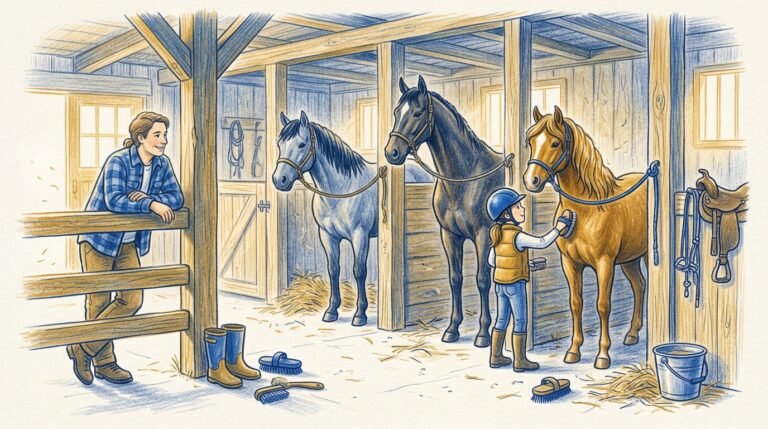
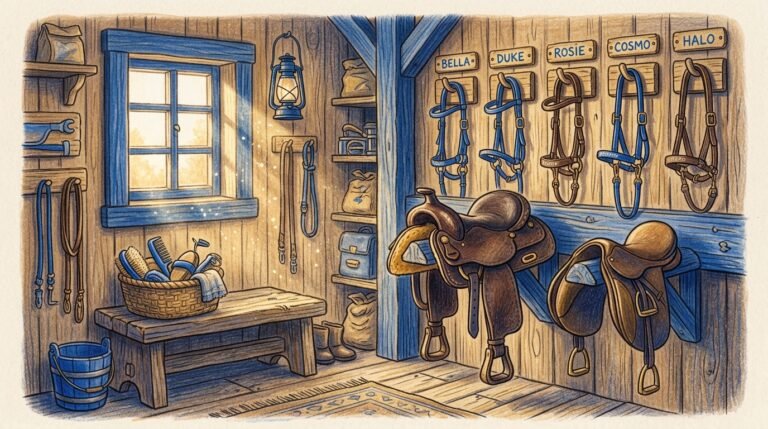
Check and clean tack. If you are riding regularly, your tack is accumulating sweat, dirt, and grime every single use. Leather that goes unconditioned dries out and eventually cracks. A basic weekly wipe-down and conditioning session is fifteen minutes of real maintenance that extends the life of equipment that costs real money. If you need to know what to use and how to do it, our tack cleaning guide covers it practically.
Clean and organize the feed room and tack room. Rodents, moisture, and clutter create problems in both spaces. Keep feed in sealed containers, check for any signs of pests, and make sure medications and supplements are organized and not expired.
Check fencing and gates. Walk the perimeter once a week. A broken board or a gate latch that is losing tension is a five-minute fix when you catch it and a full emergency when you do not.
Assess hoof condition. Between farrier visits, pick out hooves daily if you can and weekly at minimum. Look for softness, odor, black discoloration that signals thrush, or any chips and cracks worth noting before the farrier comes. Reporting what you have seen over the past six weeks matters more than most people realize.
Frequently Asked Questions
How many hours a day do barn chores take?
For a single horse with a standard stall-and-turnout setup, expect one to one and a half hours in the morning and forty-five minutes to an hour in the evening. Midday is ten to twenty minutes if you can make it. That adds up to roughly two and a half to three hours daily before you factor in any riding time. This is why people say that owning a horse is a lifestyle, not a weekend activity.
Can I hire someone to do barn chores if I cannot be there every day?
Yes, and many horse owners do. Working students, barn managers, and professional horse sitters are all real options. The key is being specific about what you expect, writing it down, and making sure whoever is covering knows your horse’s normal well enough to catch when something is off. Vague instructions lead to vague care.
What is the most commonly skipped barn chore?
Bucket and trough scrubbing, and hoof picking between farrier visits. Both feel like extras when you are short on time, and both have real consequences when they get dropped consistently. Thrush from wet, un-picked hooves is genuinely one of the most preventable issues in horse care, and it is also one of the most common.
Do I need a written barn chore schedule or can I just remember it?
Write it down. Even if you know the routine cold, a written schedule matters the moment someone else needs to cover for you, and they will at some point. It also catches the weekly and monthly tasks that are easy to lose track of when daily survival mode takes over. A laminated copy in the barn aisle is worth the five minutes it takes to make one.
Start With the Routine and Build From There
A barn chore schedule for horse owners is not glamorous. It is the same tasks, done consistently, regardless of what else is going on in your life that day. That consistency is the actual work of horse ownership, more than the riding, more than the shows, more than any gear purchase you will ever make. The horse notices when the routine holds, and he notices when it does not.
Start with the non-negotiables, morning feed and water check, stall cleaning, evening feed and water, and build outward from there. Add the weekly tasks as the daily ones become automatic. Keep a list, because something will always need to be handed off to someone else eventually.
If you want a head start, grab our free printable barn chore checklist, it covers daily, weekly, and monthly tasks in a format you can hang in the barn and actually use. And if you are looking for quality tools and supplies to make the routine easier, browse the shop for gear we actually stand behind. The work does not get lighter, but having the right tools for it helps.