What to Feed a Horse: A Plain Guide to Equine Nutrition for Every Owner
The Foundation: Forage First, Always
If you want to understand what to feed a horse, start with one non-negotiable: forage comes first. Hay or pasture is not a supplement to grain. It is the diet. Everything else is built on top of it, and if the forage is wrong, nothing else you add is going to fix it.
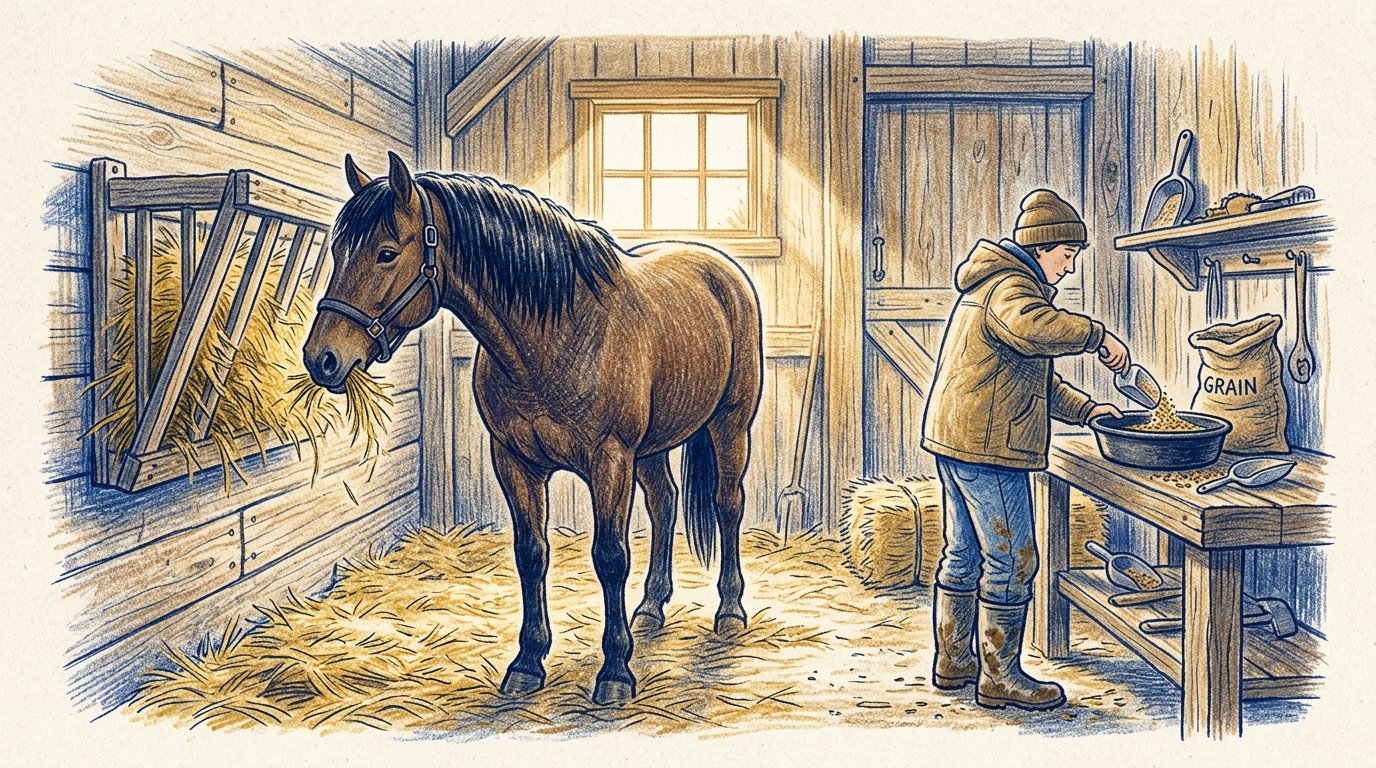
A horse’s digestive system is designed to process roughage almost continuously. Their stomach is small relative to their body size, and it produces acid around the clock whether there is food in it or not. Long gaps between meals invite ulcers and colic risk. The goal is a horse that has access to forage most of the day, either through turnout on grass, free-choice hay, or slow-feeder nets that stretch a hay ration across more hours.
The general rule of thumb is one and a half to two and a half percent of a horse’s body weight in forage per day. For a typical 1,100-pound horse, that works out to roughly 16 to 28 pounds of hay daily. Where in that range your horse lands depends on workload, age, body condition, and what else they are eating. A hard-working performance horse needs more. An easy keeper in light work needs less, and cutting their hay rather than piling on grain is always the smarter place to start.
Not all hay is equal. Timothy and orchard grass are the most common choices at lesson barns and boarding stables. Timothy tends to be lower in calories and is a solid all-around option for most horses in moderate work. Orchard grass is more palatable and a bit richer. Alfalfa is high in protein and calcium and is often used as a supplement flake rather than a full diet, particularly for horses doing serious work or mares in late pregnancy. Bermuda grass is common in the South and is a reasonable maintenance hay when quality is good.
When you buy hay, smell it. It should smell like dried grass or faintly sweet. Dusty, moldy, or fermented-smelling hay is a hard no. Look for good color, minimal weeds, and leaf retention. Stemmy hay with most of the leaves shaken off has lost a lot of its nutritional value in handling. If your horse is leaving a lot of hay uneaten or you are seeing weight loss, get the hay tested. Your local extension office can often point you toward a forage testing lab, and the results will tell you exactly what nutrients you are and are not getting. Our horse care basics guide goes deeper on building a care routine around these fundamentals.
Grain and Concentrates: What You Actually Need Versus What You Think You Need
Here is the honest truth about grain: most horses in light to moderate work do not need as much of it as their owners think. A well-conditioned horse on quality forage often needs nothing more than a ration balancer and maybe a flake of alfalfa. Grain is a tool, not a default.
That said, horses in heavy work, young growing horses, hard keepers that cannot hold weight, and senior horses with compromised teeth all have legitimate reasons to have a concentrate added. The question is which one and how much.
Commercial complete feeds and senior feeds are formulated to cover nutritional gaps and are appropriate when a horse cannot chew hay effectively. Textured feeds with whole grains and molasses are palatable but high in sugar, which is a real concern for horses prone to laminitis or metabolic conditions like equine metabolic syndrome or PPID, the condition most people call Cushings. For those horses, a low-starch, low-sugar pelleted feed or a plain ration balancer is a much safer choice.
A ration balancer is worth understanding if you are not familiar with it. It is a concentrated pellet fed in small amounts, usually one to two pounds per day, that provides vitamins, minerals, and protein to balance a forage-only diet without adding significant calories. It is not glamorous, but for the easy keeper who would get fat on regular grain, it is often exactly right.
Whatever you feed, measure by weight, not by volume. A coffee can of oats and a coffee can of a pelleted feed do not weigh the same thing. A simple kitchen scale or a dedicated feed scale is worth having. Feeding the same amount every day by weight, split into at least two meals, is one of the most straightforward things you can do for digestive health.
Water, Salt, and the Basics People Skip
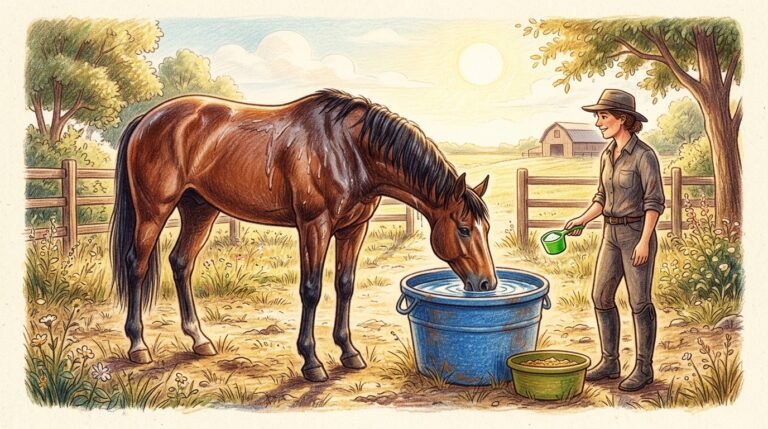
A horse needs clean, fresh water available at all times. An average horse drinks between eight and ten gallons per day, and that goes up in hot weather and with increased exercise. A horse that is not drinking enough is a horse at elevated colic risk. Check the water supply every day. Automatic waterers are convenient but can mask a malfunction, so check them manually rather than assuming.
Salt is not optional. Horses sweat out electrolytes during exercise and even through normal daily function, and they cannot synthesize what they lose. A plain white salt block in every stall and in the pasture is a baseline. In hot weather or for horses in hard work, loose salt added to feed or electrolyte supplementation is often appropriate.
On the subject of supplements: the market is enormous and a lot of it is noise. Before you add anything to your horse’s feed program, get clarity on what problem you are actually solving. Joint supplements, gut support, hoof support, and coat conditioners all have their place, but layering supplements without a forage analysis or a conversation with your vet is expensive guessing. Our common horse health issues article covers the conditions that most often prompt supplement questions, which is a useful place to start.
If you do want a reliable source for researching specific feeds and supplements, The Horse maintains a solid library of nutrition articles written by equine veterinarians and nutritionists. It is one of the better places to read before you buy.
Feeding for Life Stage and Workload
One feeding program does not fit every horse in the barn, and understanding why matters when you are making decisions about what to feed a horse in your care.
Foals and weanlings are growing rapidly and have high protein and mineral requirements. Young horses being started under saddle are still developing and should not be on a fat-building grain regimen. Broodmares in the last trimester of pregnancy and through lactation have significantly increased nutritional demands. Performance horses in heavy training need more calories and often need electrolyte support. Senior horses need easily digestible forage and often benefit from a senior complete feed that compensates for dental wear and decreased gut efficiency.
Body condition score is your most practical tool for evaluating whether you are on track. The Henneke Body Condition Scoring system runs from one to nine, with one being emaciated and nine being obese. A score of four to six is the healthy range for most horses, with five being ideal. You assess by looking and feeling, specifically at the ribs, the crest of the neck, the shoulder, the loin, and the tailhead. If you can feel but not see the ribs with light pressure, that is a five. If the ribs are visually prominent, that is a three or below and the feed program needs adjustment. If you cannot feel the ribs at all, that is a seven or above and it is time to cut back. Check this monthly and keep notes. It tells you more than any scale can.
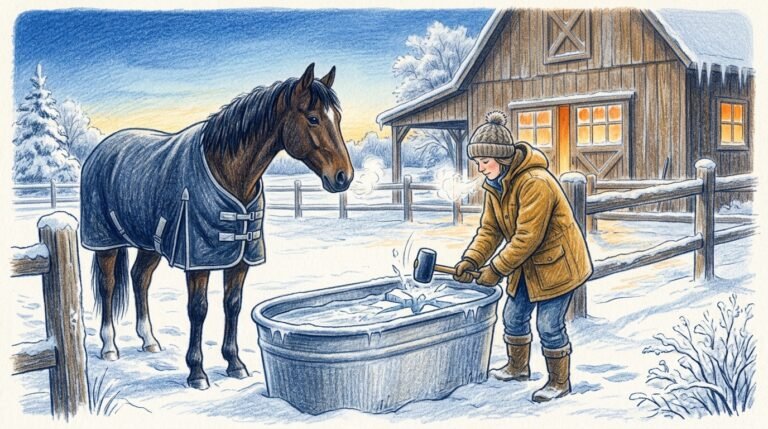
Winter changes the calculation too. Cold weather increases a horse’s caloric needs because they burn more energy staying warm. Forage is your best tool here because the fermentation of fiber in the hindgut actually generates heat. During a cold snap, adding hay is often more effective than adding grain. Our winter horse care guide covers the full seasonal picture including blanketing, which interacts with feed needs more than most people realize.
Frequently Asked Questions
How much hay should I feed my horse per day?
The baseline is one and a half to two and a half percent of your horse’s body weight in forage daily. For an 1,100-pound horse, that is roughly 16 to 28 pounds of hay. Adjust based on body condition score, workload, and whether they have access to pasture. Weigh what you are feeding at least once so you know what your flakes actually weigh.
Does every horse need grain?
No. Many horses in light work on quality forage do well on hay alone plus a ration balancer to cover vitamin and mineral gaps. Grain is appropriate for horses with higher caloric demands but is not automatically necessary. Feeding grain a horse does not need adds calories and sugar without benefit.
How do I know if my horse is getting the right nutrition?
Start with a forage analysis to know what your hay actually provides. Then evaluate body condition score monthly. A horse at a healthy body condition with a good coat, normal energy levels, and a clean bill of health from annual bloodwork is usually on a reasonable program. Involve your veterinarian if you are unsure, especially for horses with health conditions.
Can a horse colic from feed changes?
Yes, and this is one of the most preventable causes of digestive upset. Any change to a horse’s feed, whether switching hay types, introducing grain, or changing a brand, should happen gradually over a minimum of seven to ten days, with the new feed introduced in small increments while the old feed is reduced. Abrupt changes disrupt the microbial balance in the hindgut and significantly elevate colic risk.
Feed the Horse in Front of You
That is the whole principle, honestly. Knowing what to feed a horse comes down to starting with quality forage, matching calories and nutrients to the actual horse and their actual workload, keeping water and salt available without fail, and adjusting based on what you observe rather than what the bag recommends or what the barn down the road does.
There is a lot of noise in the equine nutrition space. A lot of products promising to be the missing piece. The missing piece is almost always in the hay, the water, or the consistency of the feeding schedule. Get those three things right before you add anything else.
If you want a simple place to start pulling this together, grab our free printable horse care checklist and head over to the shop for more barn-family resources. Both are there when you are ready.