What Vaccinations Does a Horse Need: A Complete Owner’s Guide
The Vaccines Every Horse Owner Needs to Know About
If you are new to horse ownership or you are just starting to take the reins on your own horse’s care, one of the first real questions you will ask your vet is what vaccinations does a horse need. It is not a simple answer, because not every horse needs the same shots on the same schedule. What your horse needs depends on where you live, how often it travels, whether it competes, and what diseases are currently circulating in your region. But there is a core list that applies to almost every horse in North America, and then a second tier of vaccines your vet will help you decide on based on your specific situation.
The Riding Life is reader-supported. When you buy through links on our site, we may earn an affiliate commission at no extra cost to you.
We have been navigating vet schedules at our barn for years. Spring comes around and along with the first warm days comes the reminder call from our veterinarian about getting everyone vaccinated before mosquito season. If you have ever scrambled to figure out which horses are current on what, or wondered why your barn manager looked alarmed when you mentioned skipping a year, this guide is for you. We are going to walk through the core vaccines, the risk-based ones, what the schedule actually looks like, and what it costs, because that part matters too.
Core Vaccinations Every Horse Should Receive
The American Association of Equine Practitioners, which is the professional body that sets the standard here, divides equine vaccines into two categories: core vaccines and risk-based vaccines. Core vaccines are the ones recommended for every horse, everywhere, regardless of use or lifestyle. If your horse never leaves the property and never has another horse come near it, it still needs these.
Eastern and Western Equine Encephalomyelitis (EEE and WEE). These are mosquito-borne neurological diseases. EEE in particular has a high fatality rate and moves fast. By the time symptoms appear, you are often already in crisis. This vaccine is given annually, typically in the spring before mosquito season starts, and in many parts of the country a booster in the fall is also recommended.
West Nile Virus. Also mosquito-borne, also potentially fatal or permanently damaging. West Nile vaccines are now commonly bundled with the EEE and WEE vaccine in a single combination shot, which saves your horse a needle and saves you money on farm call fees. Annual vaccination is the standard, and again, spring is the usual timing.
Tetanus. Horses are particularly susceptible to tetanus, more so than most animals, and a wound that looks minor can be the entry point. Tetanus is almost always fatal once symptoms develop. Every horse gets this annually. If your horse sustains a wound and its last tetanus was more than six months ago, your vet will often recommend a booster right then.
Rabies. Yes, horses get rabies vaccination too. It is less common in horses than in small animals, but when it happens it is fatal and it is a human health risk as well. Annual vaccination. No debate.
Those four, often given as a combination such as a four-way or five-way vaccine, are what we consider the floor. Everything else gets added on top depending on your horse’s circumstances. You can find more detail on routine care decisions like this in our horse care basics for beginners guide.
Risk-Based Vaccines to Discuss With Your Vet
Beyond the core vaccines, there is a list of risk-based vaccines that your vet will recommend based on your horse’s lifestyle, geographic location, and exposure risk. These are not optional for every horse, but they are essential for many.
Equine Influenza. If your horse goes to shows, comes into contact with other horses, or lives at a busy boarding barn, flu vaccination is effectively non-negotiable. It is highly contagious between horses, and outbreaks in show environments happen every year. Many show organizations now require proof of current flu vaccination before a horse can enter the grounds. Flu vaccines are typically given every six months for horses with regular exposure.
Equine Herpesvirus (EHV-1 and EHV-4). This one covers rhinopneumonitis, which causes respiratory illness, and in its EHV-1 form can also cause abortion in pregnant mares and in rare cases neurological disease. Horses that travel, compete, or live in large boarding situations are typically vaccinated every six months. Pregnant mares follow a more specific protocol your vet will outline.
Strangles. Strangles is a bacterial infection, not a viral one, which makes it a little different from the others on this list. It causes swollen lymph nodes, thick nasal discharge, and can be severely debilitating. The vaccine for strangles comes in two forms, an injectable and an intranasal, and neither is perfect, but for horses at high exposure risk it is worth the conversation with your vet. It is not universally recommended because the vaccine has some considerations around timing and prior exposure.
Botulism. Relevant primarily in certain geographic areas and for horses fed round bales or haylage, botulism vaccination protects against a toxin that is almost uniformly fatal. Ask your vet whether this applies to your region and feeding situation.
Potomac Horse Fever. Seasonal and geographically specific, more common along river valleys and wetland areas. If you are in a known risk area your vet will bring it up. If they do not bring it up you can ask.
For a look at how deworming fits into your overall parasite prevention calendar alongside vaccinations, our horse deworming schedule article runs through the timing and rotation decisions that most barn owners face every year.
What a Typical Vaccination Schedule Looks Like
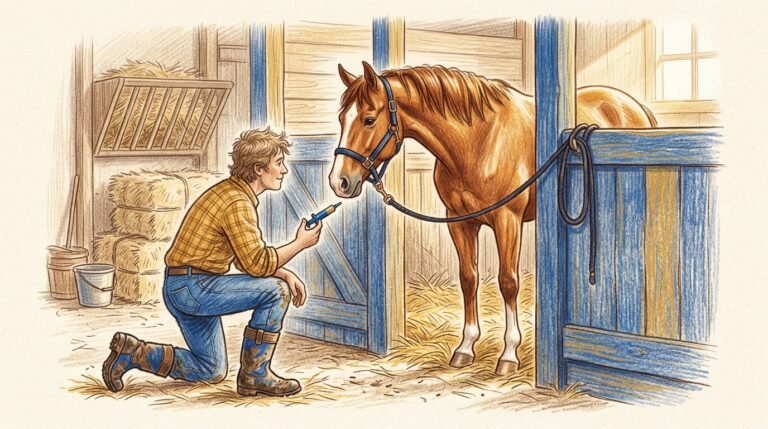
Most barns run two main vaccination events per year. Spring is the big one, happening before mosquito season ramps up, usually March through May depending on your climate. That appointment typically covers the core four plus any risk-based vaccines your vet recommends for the coming season. Fall gets a second round for horses that compete or travel, covering flu and rhino especially.
New horses that have no vaccination history, or horses where the history is unknown, need to start from scratch. Many core vaccines require a primary series of two doses given three to four weeks apart before you move to annual boosters. Your vet will map that out for a new horse during the initial wellness exam, which you should be scheduling before or right after that horse arrives at your property anyway.
Foals follow their own schedule entirely. Mares vaccinated in late pregnancy pass some immunity to foals through colostrum, which affects when you start the foal’s own vaccine series. Your vet handles this; it is not something to manage on your own.
One practical note: many barns schedule a group vet day for vaccinations to split the farm call fee across multiple horses. If you board at a facility with multiple horses, ask your barn manager whether this is already happening. It is one of the few places in horse ownership where you can actually share a cost.
For a broader look at what common health issues horse owners encounter beyond routine prevention, our article on common horse health issues covers the things you are most likely to deal with in a given year.
What Vaccinations Cost and How to Plan for It
We are going to be straight about the money because that is part of horse ownership too. A farm call from your vet runs anywhere from fifty to a hundred and fifty dollars depending on your area and your veterinary practice, and that is before a single vaccine is administered. Individual vaccines vary but plan on twenty to forty dollars per vaccine. A spring appointment covering the core combination vaccine plus flu, rhino, and rabies for one horse might run two hundred to three hundred dollars total including the farm call.
If you have multiple horses or split the farm call with other boarders, the per-horse cost drops. If you are at a large facility where the vet comes out regularly anyway, your vaccination costs may be folded into a barn wellness program.
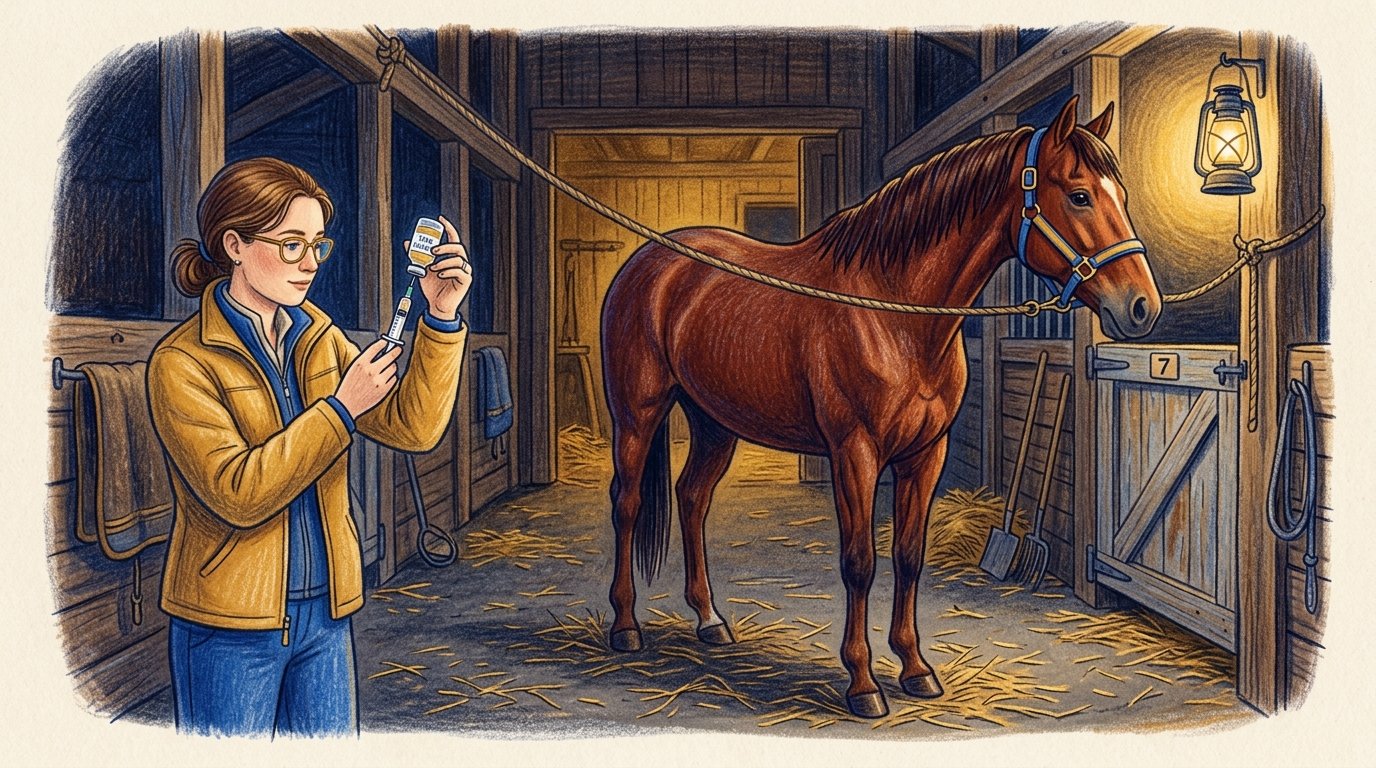
Some horse owners administer their own vaccines to cut costs, which is legal in most states for the injectable vaccines and is common practice in some barn communities. If you go that route, you are responsible for proper storage of the vaccines, correct administration, and documentation. You also lose the benefit of the vet doing a hands-on assessment during the visit. For most horse families, especially those newer to ownership, keeping the vet involved is worth the cost. The American Association of Equine Practitioners has published guidelines on equine vaccination protocols that are publicly available at thehorse.com, and your vet will reference those same guidelines when building your horse’s protocol.
If you compete, you also need to know what your specific show organization requires. Many hunter and jumper competitions, as well as USEF-rated shows, have specific vaccination requirements and documentation standards. You can find those requirements directly at usef.org.
Frequently Asked Questions
How often does a horse need vaccinations?
Core vaccines are given annually for most adult horses. Risk-based vaccines like flu and herpesvirus are often given every six months for horses that travel or compete. Your vet will set the schedule based on your horse’s specific exposure risk and health history.
Can I skip a year of vaccines if my horse never leaves the property?
Not safely. Diseases like EEE, West Nile, and tetanus do not require your horse to travel to reach it. Mosquitoes do not respect fence lines, and tetanus lives in soil. Skipping core vaccines to save money is a short-term savings that can turn into a devastating loss. The vaccine is a fraction of the cost of treating even one of these diseases, and most are not treatable once advanced.
Do horses need vaccines if they are only used for trail riding?
Yes. Trail riding exposes horses to mosquitoes, wildlife, water sources, and other horses on the trail. Core vaccines are always appropriate. Trail horses that encounter other horses regularly should also be current on flu and herpesvirus vaccination.
What if my horse has never been vaccinated and I do not know its history?
Start fresh with your vet. Horses without a known vaccine history are treated as unvaccinated and will go through a primary series for the vaccines that require two doses. This adds a few weeks to the process but puts your horse on solid footing. Do not assume a previous owner kept up with it; get documentation or assume they did not and start over.
Keep It on the Calendar and Keep Your Horse Healthy
Understanding what vaccinations does a horse need is one of the foundational pieces of responsible horse ownership, and it is not complicated once you know the framework. Core vaccines for every horse, every year. Risk-based vaccines added on based on your horse’s lifestyle and your vet’s regional knowledge. Two vet appointments a year as a general rhythm, adjusted as needed. Documentation kept where you can find it, especially if you compete.
We have watched horses at our barn over the years, and the ones with consistent vet relationships and a real vaccination and deworming calendar are simply healthier. The barn families who stay on top of this stuff spend less on emergency calls and more on the things that are actually fun. That is the goal.
If you want a head start on organizing your horse’s care calendar, grab our free printable horse care checklist and explore the shop for resources that make barn life a little more manageable. It is all in one place and it is built for the same barn families who read this site every week.