How to Choose a Riding Saddle Pad
If you are just getting into the horse world, the saddle pad aisle at the tack shop will stop you cold. There are square pads, contoured pads, half pads, correction pads, gel inserts, memory foam, wool, fleece, and approximately forty shades of hunter green. Knowing how to choose a riding saddle pad before you walk in there will save you money, time, and at least one bad purchase. This is not complicated once you understand what a pad is actually doing, what discipline you are riding, and how your horse’s back fits into that equation.
The Riding Life is reader-supported. When you buy through links on our site, we may earn an affiliate commission at no extra cost to you.
What a Saddle Pad Actually Does
A saddle pad has one primary job: protect your horse’s back. It absorbs sweat, cushions pressure points, and keeps the underside of your saddle clean. That is it. It is not a saddle fitting shortcut. A pad cannot fix a saddle that does not fit. If your saddle is bridging, pinching, or sitting on the wrong part of the horse’s back, no pad on the market is going to solve that. A pad works with a well-fitted saddle, not instead of one. If you are unsure whether your saddle fits correctly, it is worth reading through the English saddle buying guide before you spend money on pads.
What the pad is not doing: it is not adding significant height to your saddle to compensate for a too-narrow tree, and it is not a therapeutic solution for a horse with a diagnosed back problem. Those situations need a saddle fitter, a vet, or both. A pad is maintenance equipment, not a fix.
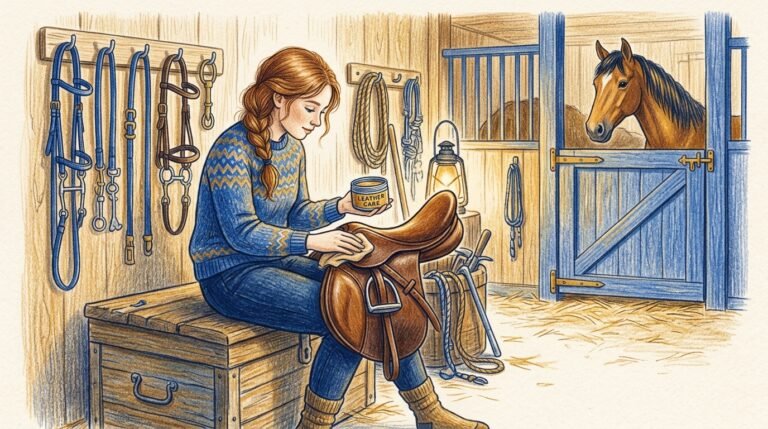
The secondary job of the pad is keeping your saddle clean, and that matters more than people give it credit for. Sweat is acidic. Sweat that soaks into the underside of your saddle leather day after day breaks down stitching and dries out the leather. A pad that washes easily and dries fast is a real practical consideration, not a luxury. Check out how to clean and condition tack for what comes after the pad comes off.
Discipline First, Then Everything Else
The shape of your saddle pad is largely determined by your discipline, and this is where beginners go sideways. They buy a pad they think looks good, then find out it is the wrong cut for their saddle.
English riders, whether hunters, jumpers, or equitation, typically use a square pad or a shaped contoured pad. A square pad sits under a close-contact or all-purpose saddle and provides even coverage. Shaped or contoured pads follow the topline of the horse more closely and reduce bulk under the flap. Dressage riders use a longer pad with square cut corners that follows the longer panels and flaps of a dressage saddle. Using a short square pad under a dressage saddle looks wrong and leaves the saddle panels exposed at the back, which defeats the purpose. Using a dressage pad under a close-contact saddle just looks wrong and adds unnecessary bulk.
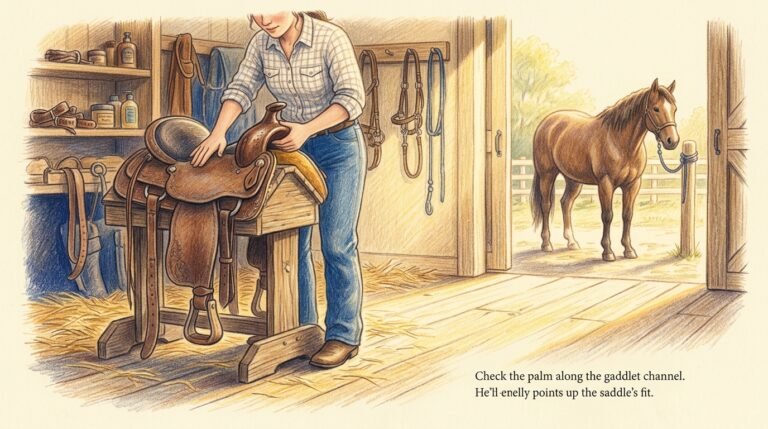
Western riders use a square blanket or a thick contoured pad sized to the western saddle, which has much larger panels and sits differently on the back than any English saddle. The weight distribution is different, the material tends to be thicker wool or felt, and the sizing is specific. Do not mix these up. Western saddle fitting covers that side of the equation in more detail.
If you are in a lesson program and riding school horses, your barn likely has pads for you to use. When you get to leasing or ownership, you will start buying your own, and discipline fit becomes your responsibility.
Materials Matter More Than Color
This is where most people spend too long looking at the wrong thing. The color of the pad does not affect your horse’s back. The material does.
Quilted cotton: the most common, the most affordable, and the most washable. A standard quilted square pad is what most lesson barns use because it holds up, cleans easily, and works with most horses and most English saddles. It is not glamorous. It does the job. For a rider who is just getting started, a basic quilted cotton square pad is the right choice.
Fleece: fleece pads, both real sheepskin and synthetic fleece, are soft on the horse’s back and wick moisture reasonably well. They are harder to clean than cotton. Synthetic is easier to machine wash. Real sheepskin has better breathability and pressure distribution, but it is also significantly more expensive and requires more care. If you are washing pads at the barn on a cold Tuesday morning, fleece is more work.
Foam and gel inserts: these are typically part of a half pad, not a primary pad. A half pad sits between the saddle pad and the saddle and adds targeted cushioning or corrects mild fit issues. The Mattes Euro Fit Half Pad is one of the more widely used options at the upper end, with real sheepskin and adjustable shims for fine-tuning fit. For a horse with a sensitive back or a saddle that fits but needs a little help, a half pad is worth considering. For a lesson horse that goes well in a plain quilted cotton pad, it is not necessary.
Wool felt: this is the traditional western material and still one of the best for pressure distribution under a heavy western saddle. It is dense, durable, and absorbs sweat well. It also takes longer to dry and is harder to clean. For trail riding or ranch work, it holds up. For daily lesson programs where pads are going through the wash constantly, easier-care materials win.
Fit and Thickness, the Part Everyone Forgets
Once you have the right shape for your discipline and a material that works for your situation, you need to make sure the pad actually fits the horse and the saddle correctly. This sounds obvious. It is routinely ignored.
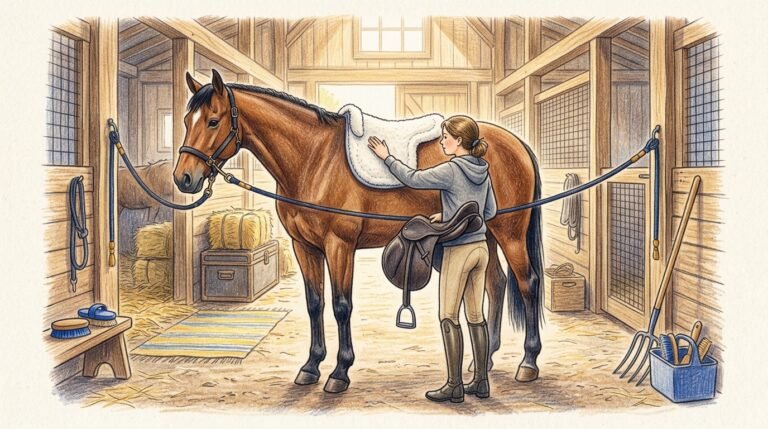
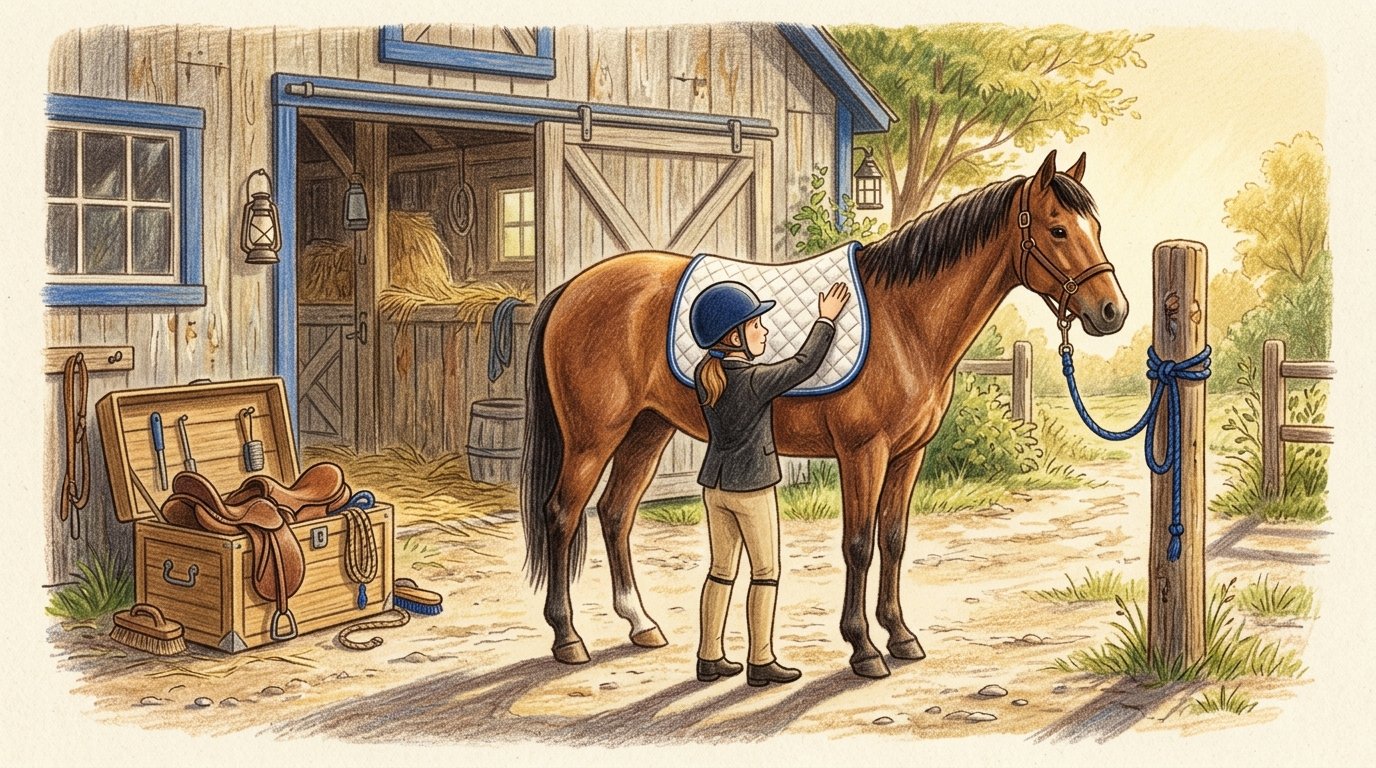
The pad should extend about two to three inches beyond the edge of the saddle all the way around. If the pad is barely peeking out from under the saddle, it is too small. If it is flopping around six inches past the flap, it is too large. The gullet channel of the pad, the hollow running down the center of the spine contact area, must line up with the channel of the saddle and clear the horse’s spine. A pad that collapses in on the spine and puts pressure directly on vertebrae is doing real harm. Check this every time you tack up. How to fit a saddle pad walks through this step by step.
Thickness is a practical question, not just a comfort question. A thicker pad changes the relationship between your saddle and your horse’s back. If your saddle fits correctly on a thin pad and you swap in a thick half pad or a very padded correction pad, you have changed the saddle’s balance. This is why you should not add padding without reassessing fit. A correctly fitted saddle on a standard thickness pad is the starting point. Everything else is adjustment.
For riders who want a reliable, no-nonsense starting point, the Roma Ecole Square Quilted Saddle Pad is a workhorse. It washes well, comes in standard sizes, holds its shape, and does not cost more than it needs to. It is the kind of pad that gets used hard and replaced when it wears out, which is exactly the right relationship to have with a saddle pad.
What to Spend and When to Upgrade
A decent basic cotton pad runs twenty to forty dollars. A mid-range pad with better materials or contouring runs fifty to eighty. A high-end sheepskin or therapeutic half pad can run well over a hundred, and some go much higher. The jump from basic to mid-range is usually worth it for a leasing or ownership situation where one horse is using the same pad every day. The jump into high-end therapeutic pads is worth it when there is a specific fit or comfort issue being addressed, ideally with input from your vet or saddle fitter.
For a child in weekly lessons, the barn’s pads are usually fine. For a leaser or owner doing multiple rides a week, two or three good quality pads that rotate through the wash are a smart investment. You do not need ten pads. You need two or three that fit correctly and wash easily.
And if you are trying to build out your gear in a smart order, the pad is not your first purchase. Helmet, boots, and breeches come first. Pads come once you are at the leasing or ownership stage. If you are still sorting out those basics, the guide on equestrian budgeting tips for horse owners is worth a read before you go further.
Frequently Asked Questions
Do I need a saddle pad and a half pad, or just one?
Most horses do fine with a single correctly fitted saddle pad. A half pad is an addition, not a replacement, used when you want extra cushioning or when your saddle needs minor fit adjustments. If your saddle fits well and your horse is comfortable, you probably do not need both. Start with one good pad and add a half pad if there is a specific reason to.
How often should I wash my saddle pad?
After every ride, ideally. Sweat and dirt left in a pad breaks down the fibers and can cause skin irritation and rubs on your horse. At minimum, let the pad dry completely between uses and brush off dried sweat and hair. Wash it thoroughly at least once a week for a horse in regular work. If it smells, it needed washing yesterday.
Can I use an English pad for western riding or vice versa?
No. The shapes, sizes, and materials are specific to each discipline and the saddle design that goes with it. A western saddle needs a pad designed for western use with the right coverage and thickness for the larger panels and tree. Mixing them up looks wrong, but more importantly it affects how the saddle sits and how pressure is distributed on the horse’s back.
What color or style saddle pad should I get for shows?
Check your discipline’s standards first. Hunter and equitation classes typically require white or conservative colors. Jumper classes have more flexibility. Dressage is almost always white. For schooling and barn work, color does not matter at all. Buy whatever washes well and fits correctly, then add a show pad in the appropriate color when you are ready to compete.
The Bottom Line on Saddle Pads
Knowing how to choose a riding saddle pad is not complicated, but it does require you to think about your discipline first, your horse’s fit second, and the material and budget third, in that order. Get the shape right for your saddle. Make sure it fits the horse correctly with a clear spine channel and adequate coverage. Choose a material that you will actually wash regularly. And do not spend money on therapeutic padding before you have confirmed that the saddle itself fits.
A good saddle pad is a quiet piece of equipment. It shows up, does its job, goes through the wash, and does it again. That is what you want. You will know it is not working when your horse starts showing soreness, rubs, or tension under saddle. Until then, a correctly fitted pad in good condition is enough.
Want a quick reference for your next tack shop trip? Grab our free printable checklist and head over to the shop for gear we actually use and recommend. It is all there when you are ready.