How to Pick Out a Horse Hoof the Right Way
If you are new to horses, learning how to pick out a horse hoof is one of the first real skills you will need, and it is not optional. Every horse, every day, before and after riding. That is the rule. It is not a suggestion and it is not just a barn chore you do when you remember. Packed mud, rocks, manure, and wet bedding sitting inside a hoof for hours will cause problems, ranging from thrush to a stone bruise to a full-blown abscess that will have you convinced your horse has a broken leg until the farrier digs it out. This is a five-minute job that protects a thousand-dollar vet call. Learn it right from the start.
The Riding Life is reader-supported. When you buy through links on our site, we may earn an affiliate commission at no extra cost to you.
What You Need Before You Start
You do not need much. A hoof pick is the main tool, and it should be sturdy with a firm point, not a flimsy plastic one that bends the moment it meets packed dirt. Most picks also have a stiff brush on the back end, which is useful for sweeping out the last of the debris after you have done the real work. That is the only tool you actually need for daily picking. Some people keep a small bucket nearby with a little water and a splash of diluted bleach or a commercial thrush treatment for days when they spot early signs of thrush in the grooves. Worth having around, not necessary every single time.
Tie your horse properly or have someone hold them before you start. A horse that shifts weight or moves unexpectedly while you are bent over holding a leg is how people get hurt. If you are just getting comfortable with horses, take a look at how to safely tie a horse before you add hoof picking to your routine. That step is not optional either.
How to Pick Out a Horse Hoof Step by Step
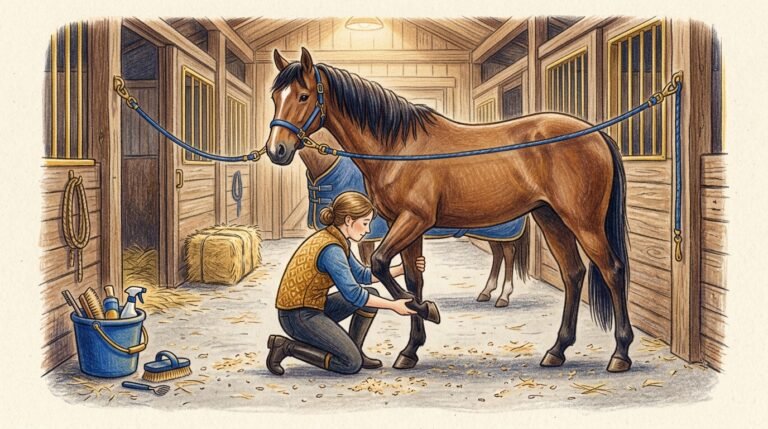
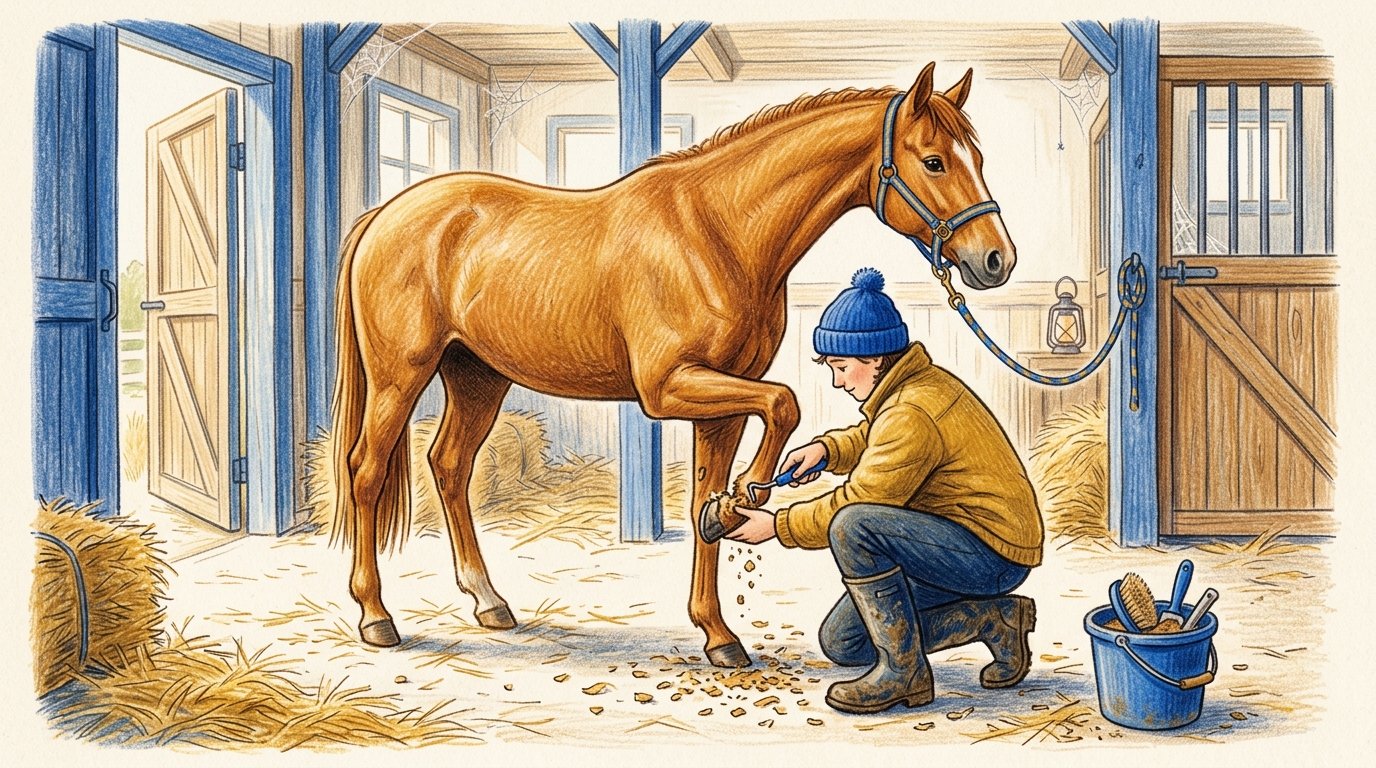
Start at the front legs. Stand beside the horse, facing the tail, close enough to the animal that if they move you move with them rather than getting kicked. Run your hand down the back of the leg from the knee to the fetlock. For most horses, steady pressure at the fetlock while saying something like a quiet cue word is enough to get them to lift. Pick up the foot and support it gently between your knees or rest it on your thigh. Do not wrench it up or hold it higher than the horse is comfortable with. You are asking for cooperation, not forcing compliance.
Now look at what you are working with. The hoof has a central groove called the central sulcus, and two side grooves called the collateral sulci, which run on either side of a rubbery triangular structure called the frog. The frog is normal and healthy and should not be cut out or hacked at. Your job is to clean the grooves, the area around the frog, and the rest of the sole. Run the tip of the hoof pick along the grooves from heel to toe, working out packed material. Do it firmly but do not stab into the frog itself. If the frog tissue looks ragged or the grooves smell like something died in there, that is thrush, and you will want to treat it. For more on what to watch for, common horse health issues covers thrush and a handful of other things you will encounter in regular barn life.
Finish with the brush side of the pick to sweep out the loose debris. Then set the foot down gently. Do not drop it. Move to the next foot. Most horses are fine with front feet and need a little more patience at the hinds. For hind legs, position yourself the same way, facing the tail, hand sliding down the gaskin to the cannon to the fetlock. Some horses pick up the hind before you even ask once they know the routine. Others take more time. Stay consistent.
Check all four hooves. Every time. It takes five minutes once you know what you are doing, maybe ten when you are still learning the horses and the habit.
What You Are Actually Looking For
Picking out hooves is not just about removing dirt. You are also doing a visual inspection every single time. Here is what to notice.
Smell: Healthy hooves do not have a strong odor. A foul, almost cheesy smell coming from the grooves is thrush. Early thrush is easy to treat. Ignored thrush is not.
Rocks and debris: A pebble wedged near the white line or under the frog can cause a stone bruise. A bruise that is not caught can turn into an abscess. Abscesses are extremely painful for the horse and the vet call plus treatment is not cheap. Picking hooves before and after every ride eliminates most of this risk.
Soft or crumbly frog tissue: The frog should be firm and rubbery. Soft, flaky, or very deeply grooved frog tissue is a sign of moisture and bacterial issues.
Heat or tenderness: Run your hand along the hoof wall and around the coronet band when you pick up each foot. Unusual warmth compared to the other hooves, or a horse that flinches when you apply light pressure, is worth paying attention to. That is a conversation for your vet or farrier, not a wait-and-see situation.
The white line: The inner edge of the hoof wall where it meets the sole is called the white line. Any separation, stretching, or black discoloration there is called white line disease and needs farrier attention. You will not catch these things if you are rushing through the job or skipping it entirely.
For a broader look at routine hoof maintenance, including what your farrier does every six weeks and why it matters, visit horse hoof care basics. That article will give you the full picture.
Building the Habit Into Your Barn Routine
The reason hoof picking works is because it is daily. One thorough cleaning does not protect a horse the way a consistent daily habit does. If your horse is in a stall overnight, pick before turnout in the morning and after you bring them in at night. If they are on pasture, pick before and after riding at minimum. If your child is a lesson student who does not have daily access to a horse yet, they will still pick hooves as part of lesson prep at most barns. That half hour before riding where you catch, brush, and tack is when this happens.
The tool itself matters. A cheap hoof pick will make the job harder and frustrate a new rider. The Tough 1 Hoof Pick with Brush is a solid, affordable everyday pick that holds up to real use. For riders who want something with a better grip for cold mornings or wet conditions, the Decker Manufacturing Hoof Pick is a classic for good reason. Either one works. The point is to have one that does not bend in your hand when the mud is packed in tight.
The American Association of Equine Practitioners provides guidance on hoof care as part of their broader preventive care guidelines, which you can find at thehorse.com if you want the clinical background behind what you are doing with that pick every day.
Frequently Asked Questions
How often should you pick out a horse’s hooves?
At minimum, before and after every ride. Ideally, once a day whether the horse is ridden or not. Horses standing in stalls or wet pasture overnight accumulate material in the hooves quickly, and daily picking is the fastest way to catch problems like thrush or a lodged stone before they become something worse.
What if my horse won’t lift their foot?
Most horses learn to lift on cue with consistent handling. If a horse that normally cooperates suddenly refuses to lift a leg, that is a sign something may be wrong with that leg or hoof, and you should look more closely before assuming they are just being stubborn. For a young or green horse that is still learning, patience and repetition are the answer. Never yank or force the leg up. Ask, reward, repeat.
Can you hurt a horse by picking their hooves wrong?
You can cause discomfort if you dig aggressively into the frog or force the leg into an uncomfortable position. The frog is sensitive tissue. Clean around it, not through it. The goal is to remove packed debris from the grooves and sole, not to scrape or cut any soft tissue. If you are unsure what is debris and what is hoof structure, ask your farrier to walk you through it at the next visit. That is exactly the kind of question farriers are used to answering.
What does a healthy hoof look like after picking?
After a thorough cleaning you should see a clear sole, a visible and intact frog with reasonably defined grooves on each side, and a clean hoof wall meeting the sole at the white line. There should be no strong smell, no visible blackening in the grooves, and no soft or crumbly areas in the frog. If the hoof looks clean and dry and does not smell, you did the job right.
Start Simple, Stay Consistent
Knowing how to pick out a horse hoof is one of those skills that sounds basic until you realize how much information it hands you every single time you do it. You learn what normal looks like for your horse. You catch problems early. You build the kind of trust with an animal that comes from handling them quietly and consistently every day. That matters whether you are a beginner lesson kid picking up their first horse’s foot with shaky hands or a seasoned rider who does it on autopilot before every hack.
Get the right pick, learn the anatomy well enough to know what you are looking at, and make it non-negotiable. Everything else in horse care builds on habits like this one.
If you found this helpful, grab our free printable hoof care checklist to keep in your grooming bag, and head over to the shop to see what else we have put together for barn families who want to do this right from the start.