How to Fit a Saddle Pad: A Plain Guide for Horse Families
Why Knowing How to Fit a Saddle Pad Actually Matters
Knowing how to fit a saddle pad is one of those things nobody at the barn talks about until something goes wrong. A saddle pad that sits too far back, bunches under the pommel, or flattens out completely under a heavy saddle is not just an aesthetic problem. It changes the pressure distribution on your horse’s back, and over weeks and months, a poorly fitted pad can contribute to soreness, behavioral changes, and resistance under saddle. We learned this the slow way, watching a horse start dropping its back and pinning its ears at saddling time before anyone thought to look at what was happening with the pad.
The Riding Life is reader-supported. When you buy through links on our site, we may earn an affiliate commission at no extra cost to you.
The saddle gets most of the attention, and it should, because choosing the right saddle is its own long conversation. But the pad lives between the horse and the saddle, and it is doing real work. Get it right and it protects soft tissue, keeps the saddle stable, and does its job quietly. Get it wrong and you will eventually have a horse telling you about it in ways you would rather avoid.
Step by Step: How to Fit a Saddle Pad Correctly
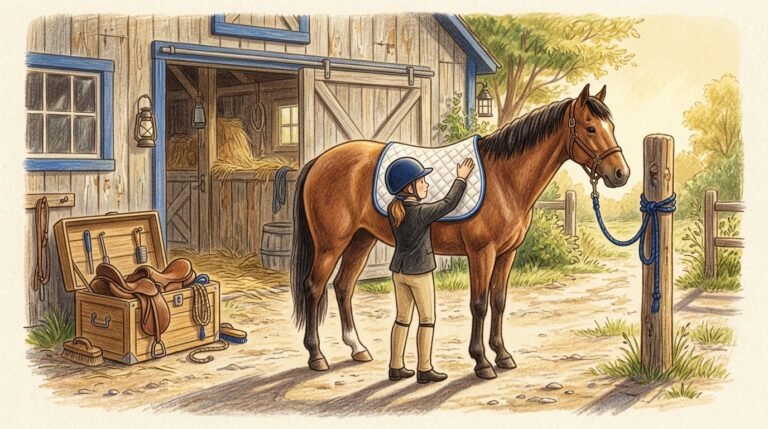
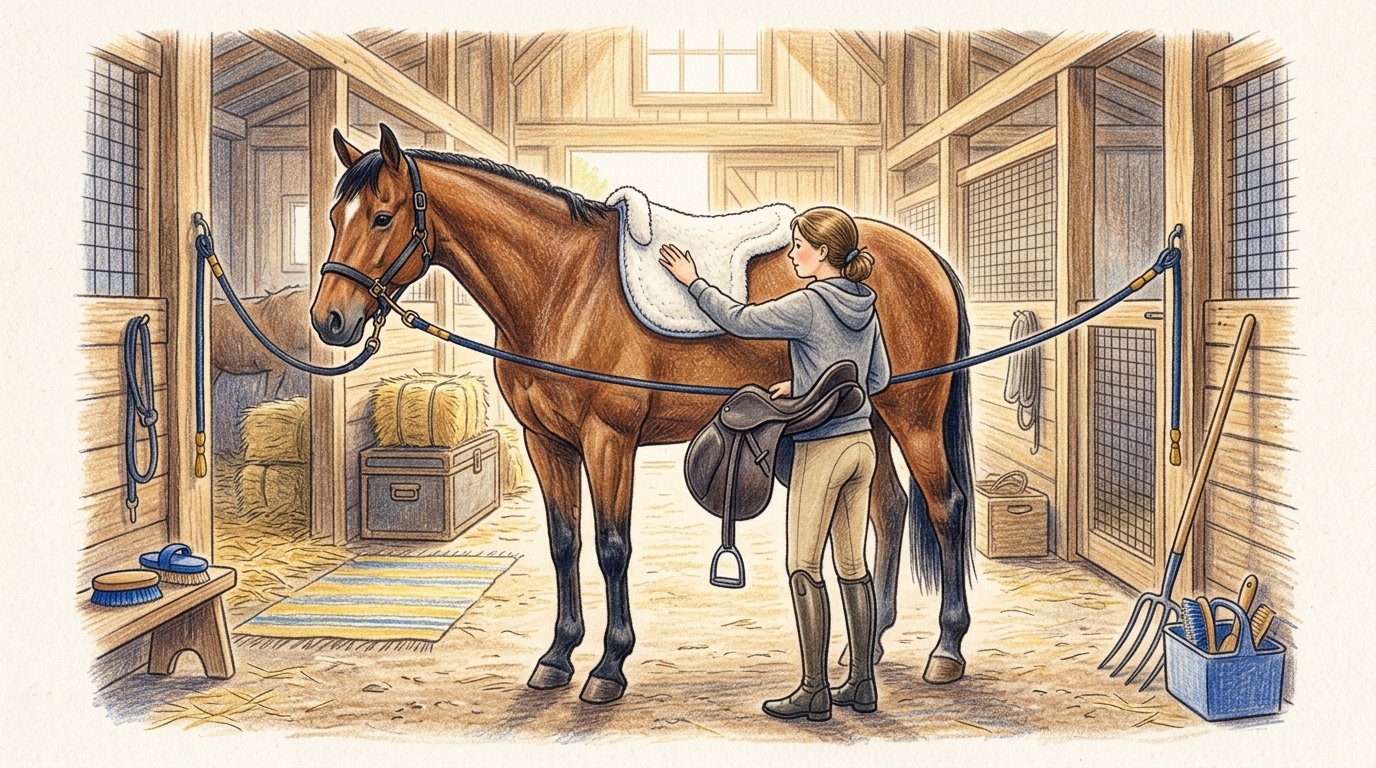
Start with the pad itself before the saddle touches it. Place the pad so the front edge sits about two inches in front of the horse’s withers. Not on the withers, not behind them. Two inches in front. This matters because when you pull the pad up into the saddle’s gullet in the next step, it will shift back slightly, and you want it to land with clearance at the withers rather than pressing down on them.
Next, place your saddle on top of the pad and do up the girth loosely. Now reach under the saddle at the front, grab the pad through the gullet channel, and pull it up firmly. You are creating a tent of fabric in the gullet so the pad is not pulling flat across the withers and spine. This step is non-negotiable. A pad that is pulled tight and flat across the top of the withers is doing exactly the wrong thing the moment weight goes into the saddle.
Check the rear of the pad next. It should extend roughly two to three inches behind the back of your saddle’s panels on each side. If it is hanging four or five inches past the back of the saddle, it is too large and can interfere with movement at the loins. If it barely clears the saddle, it is too small and leaving your horse’s back unprotected where it needs coverage. Neither extreme is acceptable, and both are common.
Tighten the girth in stages as you normally would, then do a final check. Run your hand under the front of the pad at the withers. You should be able to slide your fingers through with some air above them. If it is pressed flat, pull more fabric up through the gullet. A compressed, flat pad at the withers is pressing on the horse’s spine, and no amount of padding material will fix that problem if the pad is not correctly positioned first.
Saddle Pad Size: Matching the Pad to Your Saddle and Horse
English saddle pads are typically sized by saddle size, and the sizing on the tag is the first thing to check. A 17-inch saddle takes a pad sized for a 17-inch saddle. This is not always consistent across brands, which is the frustrating truth, but it is the starting point. Square pads versus shaped pads is also a real consideration. A square pad works well under a close-contact or jump saddle. A shaped or contoured pad is designed to follow the line of a dressage or all-purpose saddle and sits more cleanly without bunching.
Horse conformation matters here too. A horse with prominent withers needs a pad with a high gullet channel or a cutback design at the front so the fabric stays clear of the bony prominence even under compression. A broad, mutton-withered horse needs a pad that lies flat and does not bunch at the sides. You cannot always tell this from a product photo. If you can, bring your saddle to the tack shop or buy from somewhere with a reasonable return window and actually check the fit on your horse before committing.
Thickness is a separate question from size. Thicker is not automatically better. A pad that is too thick can actually make a saddle that fits reasonably well start to fit poorly by raising it higher on the horse’s back and changing the tree’s contact points. Most horses in regular work do fine with a half-inch to three-quarter-inch pad. Medical-grade orthopedic pads and shim systems exist for horses with back issues or asymmetry, but that is a conversation for your saddle fitter or vet, not a default choice for every horse.
Common Fitting Mistakes and What They Cost Your Horse
The most common mistake is skipping the gullet pull entirely. Riders toss the pad on, drop the saddle on top, and girth up without ever pulling the pad clear of the spine. We have seen this at every barn we have spent time at. It takes about four seconds to do it right, and most people just do not know it needs to happen. Now you know.
Second most common: a pad that is too small. When the pad is too small for the saddle, the saddle’s panels overhang the edge of the pad at the back. That edge can create a pressure ridge directly on the horse’s back with every stride. Over a long ride or repeated sessions, that matters. Buy the pad that fits the saddle, not the pad that was on sale in a size smaller.
Third issue: washing and care. A pad that has compressed down from repeated washing and use is not doing its original job. Proper tack cleaning applies to pads too. Fleece pads especially need to be washed on gentle cycles and air dried so the fibers do not flatten permanently. A matted, compressed fleece pad is essentially a thin piece of felt between the saddle and your horse’s back. Check your pads seasonally and replace them when they have lost their loft.
For a straightforward, well-made pad that holds its shape and pulls up properly in the gullet, the Toklat Medallion Contour Saddle Pad is a reliable choice that fits true to size and has a decent gullet channel. For a shaped dressage option with good wither clearance, the Roma Ecole Dressage Saddle Pad holds up well with regular washing and sits cleanly under a long-flap saddle.
You can also check the pad selection at Dover Saddlery, which carries a wide range of sizes and styles and has useful size guides posted on product pages.
When to Get a Saddle Fitter Involved
If your horse is showing back soreness, resisting being saddled, pinning ears, or swishing the tail persistently under saddle, the saddle pad fitting conversation expands into a full saddle fit evaluation. A properly fitted pad cannot compensate for a saddle that does not fit the horse. These are separate problems, and throwing a thicker pad at a saddle fit issue is a temporary band-aid at best and a worsening problem at worst.
A qualified saddle fitter can assess both the saddle and how the pad interacts with it. They will look at where the panels are making contact, whether there is bridging, and whether shims or a different pad profile would help. This is worth the cost of a farm visit, especially for a horse in regular work. The American Saddle Makers and many independent fitters operate regionally; your barn community will usually know who is respected in your area.
For overall horse care context, including back care and the basics of keeping your horse comfortable, this overview of horse care basics is a useful starting point if you are newer to ownership or leasing.
Frequently Asked Questions
How far in front of the withers should a saddle pad sit?
Place the front edge of the pad about two inches in front of the withers before you add the saddle. Once the saddle is on and the pad is pulled up through the gullet channel, it will settle slightly back and should sit with clear air space at the withers rather than resting directly on them.
Does a thicker saddle pad mean better protection for my horse?
Not necessarily. Thickness helps only if the pad is correctly positioned and appropriate for the saddle fit. A very thick pad under a saddle that already fits well can alter the tree angle and create new pressure points. Use a thickness appropriate for your saddle and horse, and prioritize correct positioning over bulk.
How do I know if my saddle pad is too small?
Check whether the saddle’s panels extend past the edge of the pad at the rear. If the back of the saddle overhangs the pad, the pad is too small. You should have two to three inches of pad visible behind the saddle’s back panels. A pad that does not adequately cover the contact area leaves your horse’s back exposed at the edges where the saddle’s panels meet tissue.
How often should I replace a saddle pad?
It depends on material and use. A fleece pad used daily in heavy work may need replacing every season if it has significantly compressed and lost loft. A quality cotton or wool pad with proper washing care can last several years. Check your pads regularly by pressing into them with your palm. If they spring back, they are still doing their job. If they compress flat with minimal resistance, it is time to replace them.
Getting the Fit Right Is Worth the Effort
Fitting a saddle pad is not complicated once you know the steps, but it is one of those things that gets skipped constantly because nobody explains that it needs to happen. Pull the pad forward before the saddle, pull it up through the gullet after, check the wither clearance, check the rear coverage, and make sure the pad is in good enough condition to actually do its job. That is the whole list.
The horse will tell you if something is off, eventually, but the goal is to get it right before the horse has to say anything. That is what we are all trying to do out here, early mornings and all.
If you found this useful, grab the free printable checklist to keep in your tack trunk, and head over to the shop for gear we actually use and recommend. It is all there when you are ready.