English Saddle Buying Guide for Every Rider and Budget
The Riding Life is reader-supported. When you buy through links on our site, we may earn an affiliate commission at no extra cost to you.
Whether you are stepping into the saddle for the first time or upgrading after years of riding, having a solid english saddle buying guide in your corner makes all the difference. The right saddle affects your position, your comfort, and most importantly your horse’s health and movement. With hundreds of styles, brands, and price points on the market in 2026, the choices can feel completely overwhelming. This guide breaks everything down so you can shop with confidence, avoid common mistakes, and find a saddle that truly fits both you and your horse.
Understanding the Different Types of English Saddles
Before you spend a single dollar, it helps to understand that not all English saddles are created equal. Each discipline has its own saddle design, and riding in the wrong style can interfere with your position and your horse’s performance.
All-Purpose Saddles are the most beginner-friendly option. They split the difference between jumping and flatwork, making them ideal for riders who trail ride, take lessons, or participate in low-level shows across multiple disciplines. If you are not yet committed to one specific sport, an all-purpose saddle is almost always the smartest starting point.
Close-Contact or Jump Saddles are designed with a flatter seat and forward-cut flaps to allow your leg to move freely over fences. The minimal padding between you and the horse gives you a closer feel, which is exactly what hunters and jumpers need in the ring.
Dressage Saddles feature a deeper seat and a straighter, longer flap that encourages your leg to hang long and still beneath you. The design supports the classical position required in dressage work at every level from Training through Grand Prix.
Eventing Saddles are a hybrid built to handle both the dressage phase and the jumping phases of combined training. They are slightly more forward than a dressage saddle but deeper than a true jump saddle.
If you are still figuring out your discipline, check out resources from USHJA to learn more about hunter and jumper competition formats, which can help you narrow down the saddle style that makes the most sense for your riding goals.
How to Evaluate English Saddle Fit for Your Horse
No english saddle buying guide would be complete without a deep dive into saddle fit. A beautiful saddle that fits you but not your horse is worse than useless — it can cause back pain, behavioral problems, and long-term damage to the muscles along your horse’s spine.
Tree Width: The tree is the internal frame of the saddle, and it must match the width of your horse’s withers and back. Trees typically come in narrow, medium, wide, and extra-wide. A tree that is too narrow will pinch the withers and restrict movement. A tree that is too wide will sit low on the spine and create pressure points.
Panel Contact: Place the saddle on your horse’s back without a pad and check that the panels make even, consistent contact from front to back. There should be no rocking and no bridging, which is when the front and back of the panels touch but the middle lifts away.
Wither Clearance: With a rider in the saddle, you should be able to slide three to four fingers flat between the pommel and the withers. Any less than that and the saddle is too narrow.
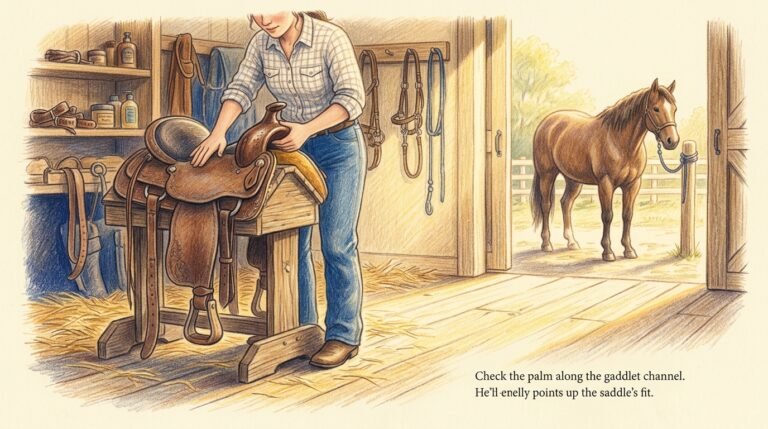
Channel Width: The gullet channel running down the center of the saddle must be wide enough to keep all pressure off the horse’s spine and the sensitive ligaments that run beside it.
Because fit changes as horses age, gain or lose muscle, and move through their seasons of work, having a certified saddle fitter evaluate your saddle at least once a year is a worthwhile investment. Resources from The Horse offer excellent veterinary-backed information on how poor saddle fit affects equine biomechanics.
English Saddle Buying Guide to Seat Size and Rider Fit
Once you know what your horse needs, it is time to focus on what works for your own body. English saddle seat sizes are measured in inches and typically range from 15 inches for very small riders up to 18.5 inches for larger adults. Most adult women ride in a 17 to 17.5 inch seat, while adult men often find 17.5 to 18 inches more comfortable, though individual builds vary widely.
To measure yourself at home, sit in a straight-backed chair and measure from the back of your knee to your seat bone. This is a rough guide, but there is no substitute for sitting in the actual saddle. You should have approximately a hand’s width of seat visible behind your seat bones when you are in your correct riding position. If you are jammed against the cantle or sliding forward toward the pommel, the size is off.
Flap length also matters. A flap that is too short will leave your knee hanging off the front edge, while a flap that is too long makes it impossible to feel the saddle through your leg. Many brands now offer saddles with different flap lengths independent of seat size, which is particularly helpful for riders with short or long thigh bones.
Pairing the right saddle with the right half chaps can also dramatically improve your security and stability in the tack. Take a look at our guide on how to choose half chaps to round out your riding gear setup.
New vs. Used English Saddles and What to Budget
One of the biggest decisions in any english saddle buying guide is whether to buy new or used. Both options have real advantages depending on your budget, your experience level, and how long you expect to ride in this particular saddle.
Buying New: A new saddle gives you a warranty, the confidence of knowing its history, and the ability to order custom specifications like tree width, flap length, and leather color. Entry-level new English saddles start around $400 to $600 for synthetic or starter leather models. Mid-range options from reputable brands run $1,000 to $2,500. High-end European-made saddles from makers like Stubben, CWD, and Amerigo can easily reach $4,000 to $8,000 or more.
Buying Used: A quality used saddle in good condition can be an excellent value, especially for growing riders or those still exploring disciplines. Look for even, supple leather with no cracking, check the tree for damage by holding both sides and gently twisting, and always have a fitter evaluate a used saddle before you commit. Consignment shops, reputable online platforms, and local tack sales are all good places to search.
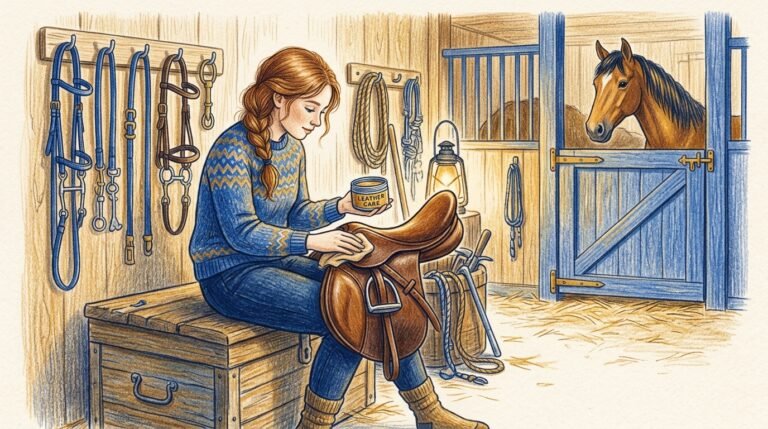
No matter what you spend, protect your investment with regular cleaning and conditioning. Leather saddles should be wiped down after every ride and conditioned at least monthly to prevent drying and cracking.
If you are newer to the sport and also shopping for safety gear, our article on the best riding helmet for beginners is a great next stop to make sure your head is protected before you swing a leg over.
Frequently Asked Questions
How do I know if an English saddle fits my horse correctly?
A properly fitting saddle will sit level on the horse’s back without rocking, have even panel contact from front to back, and allow three to four fingers of clearance over the withers when a rider is seated. When in doubt, always consult a certified saddle fitter for a professional evaluation.
What is the best type of English saddle for a beginner rider?
Most instructors recommend an all-purpose English saddle for beginners because it is versatile enough for flatwork, light jumping, and trail riding. It provides a balanced seat position that helps new riders develop a solid foundation before specializing in a specific discipline.
How often should I have my English saddle professionally fitted?
Plan on having your saddle evaluated by a certified fitter at least once a year. If your horse is young and still developing muscle, coming back from an injury, changing workload significantly, or gaining or losing weight, you may need to check the fit more frequently.
Can I ride in a saddle that is slightly too big or too small for me?
Riding consistently in a saddle that does not fit you properly can affect your balance, interfere with your aids, and contribute to back pain over time. It is worth taking the time to find the right seat size, even if that means trying several saddles before committing to a purchase.
Finding the Right Saddle Is the Start of a Better Ride
Choosing the right English saddle is one of the most important investments you will make as a horse owner or rider. From understanding discipline-specific designs to evaluating tree width, seat size, and leather quality, every detail contributes to a safer and more enjoyable experience for both you and your horse. Take your time, try before you buy whenever possible, work with a qualified fitter, and do not be afraid to ask questions at your barn or local tack shop.
The right saddle does not just make you more comfortable — it can unlock better communication, a more relaxed horse, and genuine progress in your riding goals. Whether you are just getting started or returning to the sport with fresh eyes, 2026 is a great time to invest in gear that truly fits.
Ready to take the next step? Grab our free printable saddle shopping checklist to take with you when you try saddles, and explore our shop for more hand-picked gear recommendations for riders at every level. Your best ride is still ahead of you.