Horse Girth Fitting Guide: How to Get It Right Every Time
If you have spent any time around a lesson barn, you have seen it: a saddle that has migrated halfway up a horse’s shoulder mid-lesson, a horse pinning its ears the moment the girth comes out, or a kid trotting around with a saddle so loose it could double as a hammock. Most of the time, the culprit is not the saddle. It is the girth — wrong size, wrong shape, or just badly fitted. A solid horse girth fitting guide is not the most glamorous thing to read, but it is one of the most useful. A girth that fits correctly keeps the saddle stable, keeps the horse comfortable, and keeps the rider safe. All three of those things matter.
The Riding Life is reader-supported. When you buy through links on our site, we may earn an affiliate commission at no extra cost to you.
Why Girth Fit Actually Matters
A girth is not just a strap that holds the saddle on. It sits in direct contact with some of the most sensitive skin on the horse — the area behind the elbow, along the sternum, and up toward the armpit, where the skin is thin and there is relatively little muscle between the surface and the bone. Get this wrong and you get rubs, sores, cinch sores, and a horse that starts expressing its displeasure in ways you really do not want during a lesson or a class at the show.
From the parent chair, girth fit is one of those things that is easy to overlook because it seems small. You buy the saddle, you get the pad, you find the helmet — and then you grab whatever girth seems close and call it done. That is a mistake. A horse that is uncomfortable through the girth will brace, hollow its back, toss its head, or simply refuse to move forward with any energy. Riders, especially newer ones, often get blamed for problems that are entirely equipment-related. A correctly fitted girth removes one variable from a situation that already has plenty of them.
If you want to understand how saddle fit fits into the bigger picture, our English saddle buying guide covers that side of the equation in detail. The girth is the next logical step.
How to Measure for the Right Girth Size
Girth sizing is straightforward once you know the method, but there is no single universal chart that works for every horse and every saddle. Here is the practical approach we use.
Start with a soft fabric measuring tape. Place it along the horse’s barrel, running it from the billet straps on one side, under the barrel where the girth will sit (roughly four inches behind the elbow), and up to the billet straps on the other side. The measurement you get is a starting point. For an English girth, you want the finished girth to buckle at roughly the middle hole of the billets — not the top hole, not the bottom. Middle means you have adjustment room in both directions.
As a general rule of thumb: subtract about sixteen inches from that tape measurement and you are in the ballpark for an English girth size. So if your tape reads fifty-two inches around the barrel at the girth groove, you are looking at approximately a thirty-four to thirty-six inch girth. For western cinches, the measurement method differs slightly — western cinches are measured differently, typically from ring to ring, and most average horses fall somewhere between a twenty-six and thirty-four inch cinch.
Always physically try the girth before committing. Numbers get you in the neighborhood. The horse tells you whether you have arrived.
Girth Shape and Why It Is Not One Size Fits All
Here is where a lot of people get tripped up: girths are not all the same shape, and the shape matters just as much as the length. A straight girth works fine on some horses and creates elbow interference and rubs on others. A contoured or anatomic girth — one that curves or dips in the center — is designed to give the horse’s elbow room to move without the girth pressing into it at every stride.
Straight girths are simple, traditional, and inexpensive. They work well on horses with long barrels and girths that naturally sit well behind the elbow without crowding it.
Contoured or Atherstone-style girths curve narrower in the center and wider at the ends. This shape relieves pressure at the elbow and is the right choice for horses that are built shorter through the barrel or have prominent elbows.
Balding girths cross in the center, creating a narrow middle section that relieves elbow pressure from a different angle. These are old-school and still popular with some eventers.
Stud-guard girths are a jumping-specific design with a padded flap at the front to protect the horse’s belly from stud contact if it knocks a fence. If your rider is jumping at any serious level, this is worth knowing about.
For dressage, longer billets on the saddle mean shorter girths — typically in the fifty to fifty-six centimeter range — and these are a completely different product category than standard English girths. If your rider is moving into dressage work, do not let anyone sell you a standard girth for a dressage saddle without checking the billet length first.
Girth Materials: What the Options Actually Mean
Walk into any tack shop and you will see girths in leather, neoprene, fleece, cotton, and various synthetic combinations. They are not all equivalent, and the right choice depends on the horse’s skin sensitivity, the climate, and how much time you want to spend on maintenance.
Leather girths are durable, traditional, and mold to the horse over time. They require regular cleaning and conditioning to stay supple. A dried-out leather girth is a recipe for rubbing. If you are already keeping up with saddle and bridle maintenance, adding the girth to the rotation is not a big deal. See our guide on cleaning and conditioning tack if that is new territory.
Neoprene girths are easy to wipe clean, grip well, and are popular in lesson programs for that reason. The downside is that neoprene does not breathe well, and on a horse with sensitive skin or heavy sweat patterns, it can cause irritation. If your horse starts showing girth galls — raw, rubbed spots — neoprene is often the first thing to swap out.
Fleece-lined or cotton girths are soft and forgiving and work well for horses with sensitive skin. They require more washing than neoprene but are generally kind to the horse’s coat and skin. If you are leasing a school horse that has seen a lot of different girths over the years, fleece or cotton is a good choice.
Gel-padded or memory foam girths are the premium option and are genuinely useful for horses with difficult conformation, pronounced rib angles, or a history of girth sensitivity. Brands like Equifit Essential Girth have a strong reputation for pressure distribution and horse comfort, and they show up at higher-level shows for a reason. The Total Saddle Fit Stretch Tec Girth is another one that gets recommended frequently because its elastic construction allows for better freedom of movement through the shoulder. Both are real investments, but if you are watching a horse pin its ears every single time the girth comes up and you have already ruled out saddle fit, one of these is worth trying before you call the vet.
For more information on recognizing when equipment discomfort may be masking something deeper, the team at TheHorse.com covers girth-related pressure and skin issues from a veterinary angle.
Common Girth Fitting Mistakes and How to Avoid Them
We have seen most of these at our barn at one point or another, and a few of them we made ourselves before we knew better.
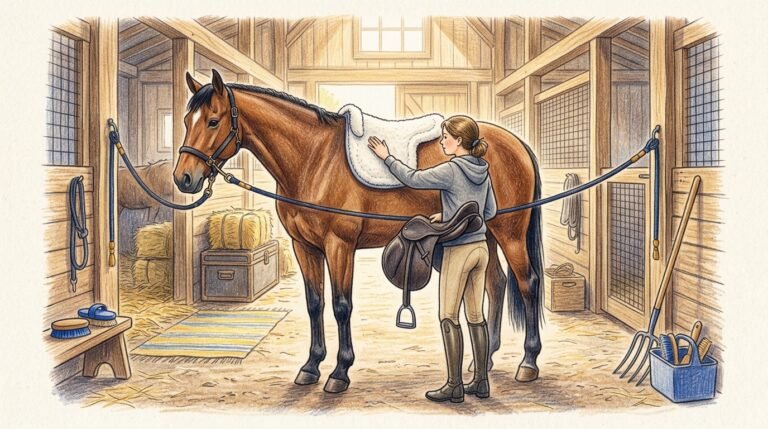
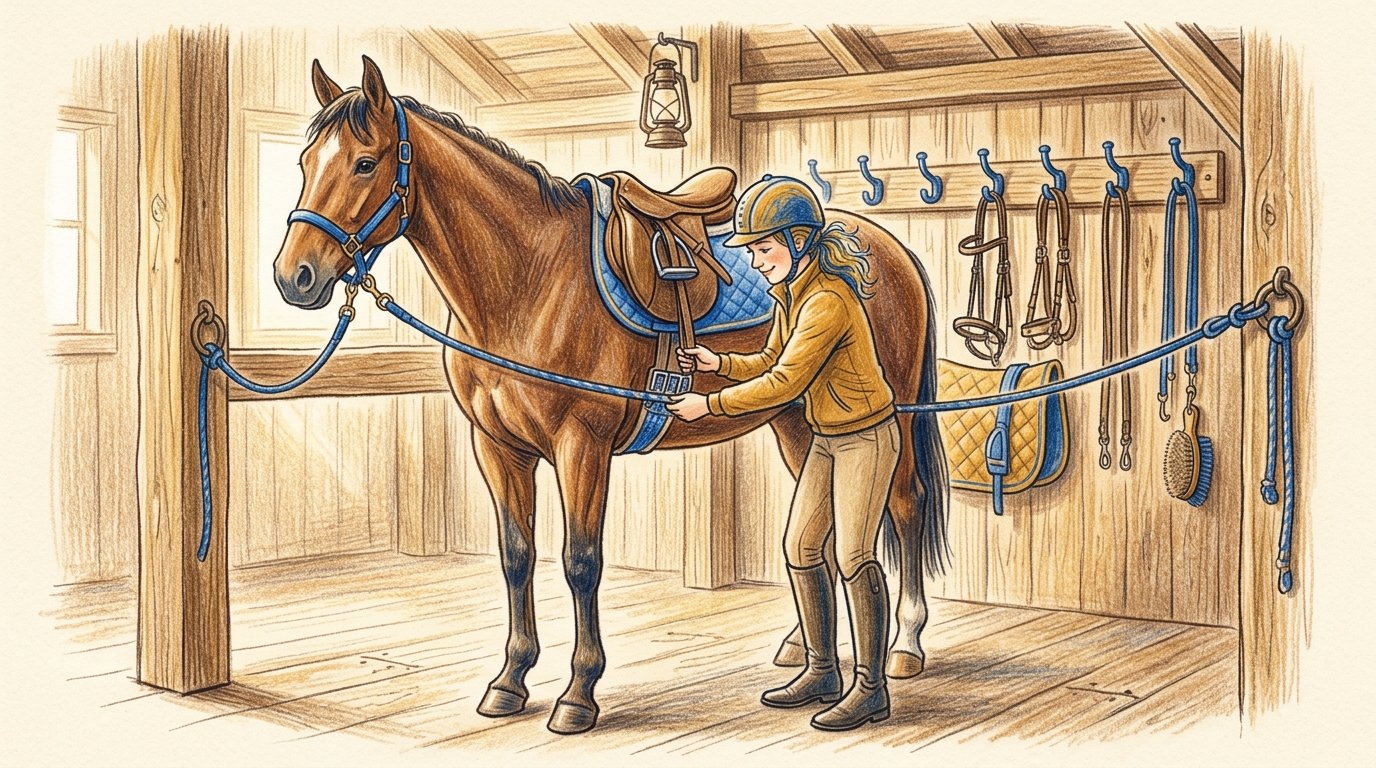
Overtightening all at once. A girth should be tightened gradually. Bring it up enough to keep the saddle from sliding before you mount, then tighten it properly once the horse has had a chance to walk for a few minutes. Cranking it up tight all in one go before the horse has moved is uncomfortable and tends to make horses that are already girth-sensitive worse over time.
Letting the girth slip too far back. The girth should sit in the natural girth groove of the horse — roughly four fingers behind the point of the elbow. If it migrates back toward the flank, you have a saddle fit problem, not just a girth problem, and tightening harder is not the answer.
Ignoring the wrinkle check. After tightening, reach down and gently pull each front leg forward to smooth out any skin wrinkles caught under the girth. A skin fold pinched under the girth from the first step is a girth gall waiting to happen.
Using a girth that is just plain too long or too short. A girth buckled at the very top hole on both sides has no adjustment room and puts the buckle hardware directly under the rider’s leg. A girth buckled on the bottom hole means you bought too big. Neither is correct. If you cannot get to the middle range of the billets, size up or down.
For more on identifying when something physical is bothering your horse — beyond the girth — the signs your horse is in pain guide is worth reading alongside this one.
Frequently Asked Questions
How do I know if my horse’s girth is too tight?
You should be able to slide two fingers flat under the girth after it is fully tightened. If you cannot fit two fingers, it is too tight. If you can slide your whole hand under, it is too loose. The horse should breathe easily and move freely at the shoulder. Pinned ears, head tossing, or girthiness — snapping or moving away when the girth comes out — are signs the horse has learned to associate the girth with discomfort, whether from overtightening, a poor fit, or skin sensitivity.
What is the difference between a girth and a cinch?
Girth is the English-riding term. Cinch is the western-riding term. They do the same job but are designed differently. Western cinches are typically shorter, often made of cord or neoprene, attach with a latigo or off billet, and are measured ring to ring. English girths attach to billets and are measured from end to end. They are not interchangeable between disciplines.
How often should I replace a girth?
There is no fixed schedule, but inspect the girth regularly. Look for cracked leather, worn elastic ends, torn stitching at the buckle attachment points, and any compression loss in padded or gel girths. A leather girth that is properly cleaned and conditioned can last many years. A synthetic girth under hard use in a lesson program may need replacing every season or two. If the elastic at the ends has lost its stretch, the girth needs to go regardless of how the rest of it looks — that elastic is part of how it accommodates the horse’s ribcage during movement.
Can I use the same girth for multiple horses?
Size permitting, yes — but be aware that girths can carry skin conditions, fungal issues, and bacteria between horses. If you are sharing a girth between horses, clean it thoroughly between uses. If one horse has any kind of skin issue, that girth stays off every other horse until the situation is resolved.
Putting It All Together
A girth is not an afterthought. It is a load-bearing piece of equipment that sits in direct contact with your horse’s most sensitive anatomy, every single ride. Getting it right — the correct size, the correct shape for that horse’s conformation, the right material for the conditions and the horse’s skin — is not complicated, but it does require paying attention. Measure, fit in the middle range of the billets, do your wrinkle check, and tighten gradually. Watch your horse’s behavior around the girth as a real-time feedback system. A horse that is comfortable with the girth is a horse that is ready to work.
If you are still building out your tack knowledge, our English saddle buying guide is the logical companion to this article, and our equestrian budgeting tips for horse owners can help you figure out where the girth fits in the overall spend. Grab our free printable checklist to keep your girth fitting process consistent, and head over to the shop to see what we actually use and recommend. Small piece of equipment, big impact — get it right and your horse will tell you the difference.