Stirrup Length Guide for Riders
If you have spent any time at the barn watching lessons, you already know the moment when something is off before the instructor even says a word. The rider looks braced, or collapsed, or like they are fighting the horse instead of moving with it. Half the time the fix is not the rider’s position or the horse’s attitude. It is the stirrup length. This stirrup length guide for riders covers what to look for, how to check your length from the ground and from the saddle, and what changes when you switch disciplines, so you stop guessing and start riding from the right foundation.
The Riding Life is reader-supported. When you buy through links on our site, we may earn an affiliate commission at no extra cost to you.
Why Stirrup Length Matters More Than Most Riders Think
A stirrup that is one hole too long or too short changes everything downstream. When stirrups are too long, the rider reaches for them. That reach tilts the pelvis, stiffens the hip, and pushes the leg forward. When stirrups are too short, the knee comes up, the heel comes up with it, and the rider bounces instead of absorbing movement. Neither position is safe, and neither is comfortable for the horse either.
The stirrup length is the base of your position. Everything else, your hip angle, your weight distribution through the heel, your ability to follow the horse’s motion, depends on it. We have watched riders struggle for months with what looked like a balance problem, only to have a trainer drop their stirrups two holes and watch the problem disappear in half a lap. It is one of those adjustments that costs nothing and changes everything, which is exactly why it should be the first thing you check, not the last.
This is also worth understanding if you are new to the sport and still figuring out what all the gear actually does. A properly adjusted stirrup is as fundamental as a properly fitted helmet. If you are still getting started with the basics, our guide on what to wear to your first riding lesson gives a good overview of where stirrups fit in the full picture.
The Ground Check and the Armpit Method
The classic starting-point check is simple. Before you mount, detach the stirrup iron from the leathers and hold it up into your armpit with your fingertips touching the stirrup bar. The iron should reach almost exactly to your armpit. That is a rough baseline, not a final answer, but it gets you in the right neighborhood before you even get on.
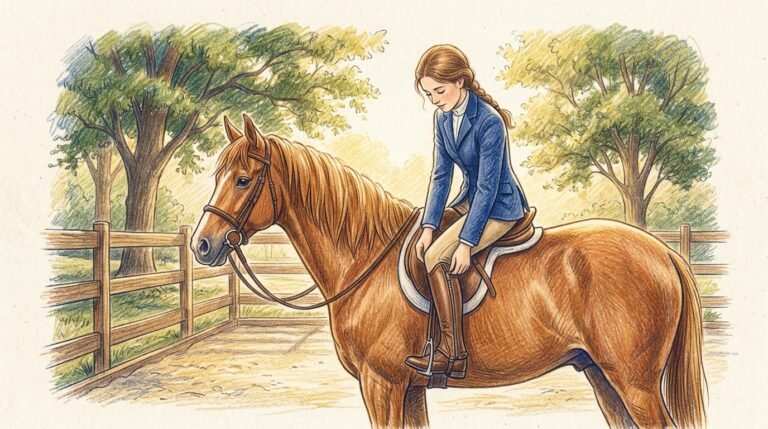
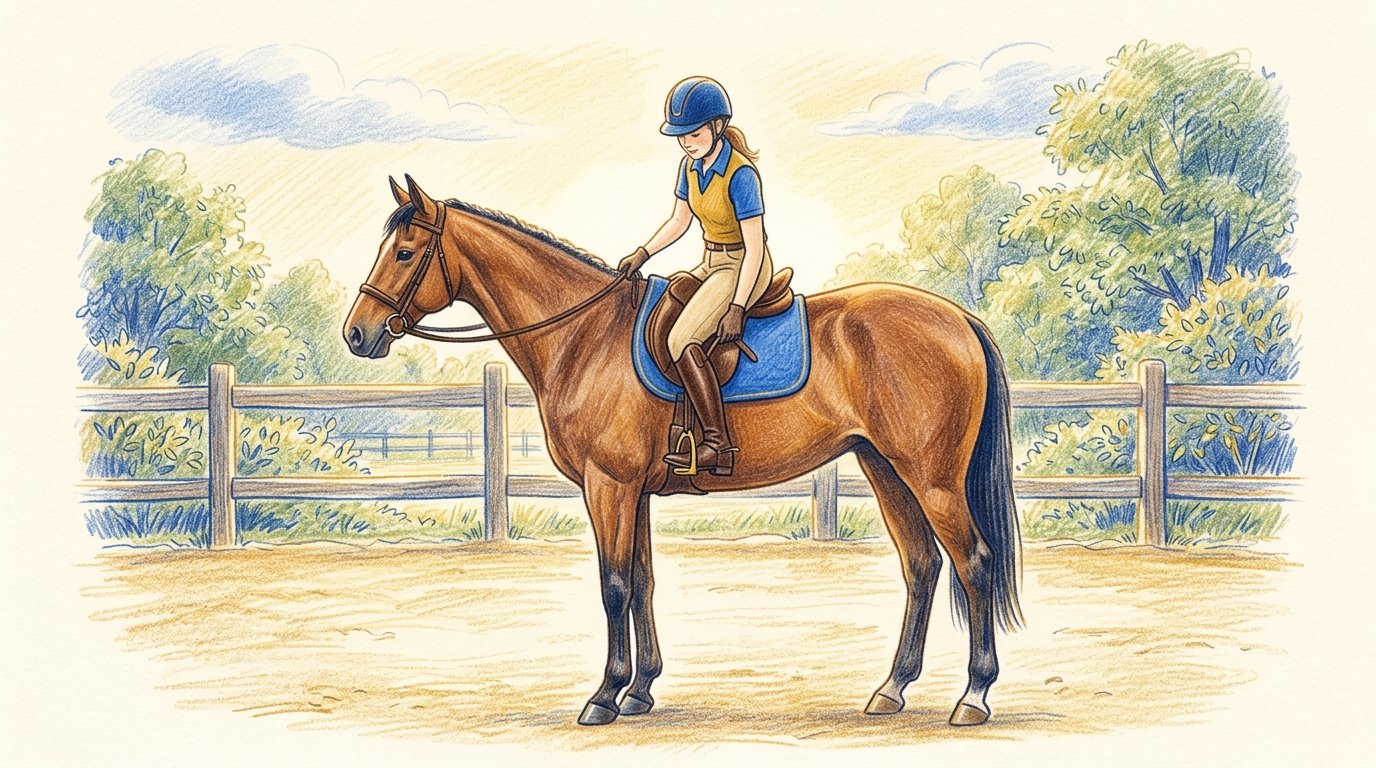
Once you are mounted, let your legs hang completely relaxed, no effort to reach the stirrups. The iron should rest at or just below your ankle bone. If it is hanging a full inch below your ankle, your leathers are too long. If you cannot touch it without lifting your thigh, they are too short.
From there, the real check is what happens when you ride. Pick up your stirrups and look at your knee angle. For most English disciplines, you are looking for a bend somewhere around 100 to 110 degrees when you are sitting the trot. Your heel should drop naturally below the level of your toe without you forcing it. If you are muscling your heel down, your stirrups are probably too long. If your knee feels jammed up toward your chin, they are too short.
The test at the posting trot is useful too. When you rise, you should feel like the stirrup is meeting you rather than you searching for it. There should be a push-and-return quality to it. If you are slapping down into the iron on the down beat, you have likely found the wrong length.
Stirrup Length by Discipline
This is where a single rule stops working. Different disciplines call for genuinely different stirrup lengths, and the adjustment is not just a matter of preference. It reflects the actual mechanics of how you are supposed to ride.
Hunter and equitation: A slightly longer leg is the standard here. You want a quiet, long leg that sits close to the horse. The knee angle opens up, the lower leg hangs, and the weight drops into the heel. If you are jumping, you will shorten a hole or two from your flat length to get into a more closed hip angle in two-point. Learning two-point well is its own project, and if you want to dig into the mechanics, our piece on how to improve your two-point position breaks it down clearly.
Jumpers: Shorter than hunters, sometimes significantly. Jumper riders use a more aggressive two-point and need the knee to act as a shock absorber over bigger fences. The stirrup length reflects that closed hip angle on approach and over the fence.
Dressage: The longest stirrup length of any English discipline. A dressage rider is working toward a nearly vertical leg with minimal knee bend, designed to allow the deepest possible seat and maximum hip mobility. Many riders who come from hunter backgrounds feel like they are sitting on a chair when they first try a dressage length. That feeling is correct. It takes time for your hip flexors to open up enough to use it.
Western: Also a long, dropped leg, but with a different body position than dressage. The stirrup in western is positioned under or slightly ahead of the hip rather than directly under it. If you are fitting a western saddle and want a deeper look at the mechanics involved, our western saddle fitting guide covers the whole setup.
Trail riding: Somewhere between flat work and jumping length. You want enough bend in the knee to absorb uneven terrain without being so short that you are braced and tipping forward on downhill stretches.
When Your Stirrup Length Is Correct and Still Feels Wrong
Sometimes the length is right and the rider’s body is the variable. Hip tightness, ankle inflexibility, and asymmetry in leg length all affect how a stirrup feels even when the leather is set at the right hole. If one stirrup always feels longer than the other, you may be sitting crookedly, or you may have a genuine leg length difference, which is common and manageable once you know it is there.
Ankle flexibility is one that catches newer riders off guard. The ability to let your heel drop and stay down through movement is not just about the stirrup. It is about your ankle joint. Riders who are stiff through the ankle tend to grip the stirrup with the ball of the foot and brace, which causes the heel to come up no matter where the leather is set. This is a body issue, not a tack issue, and it gets better with time and deliberate practice at the walk before asking it to hold through the canter.
If you have worked through the length and still feel disconnected from the horse’s movement, it may be time to look at your overall position, not just the stirrups. Our guide on how to improve your riding position addresses the full picture.
Frequently Asked Questions
How do I know if my stirrups are too long?
The most common signs are that your leg swings forward and back during the trot, your heel comes up when you rise to post, or you feel like you are reaching down for the iron. When you are sitting quietly and let your leg hang, if the iron falls below your ankle bone rather than resting at it, shorten your leathers one hole at a time and recheck.
Should stirrup length be the same on both sides?
Not always. Most riders have a slight leg length difference or sit with some asymmetry, and riding reveals it immediately because one stirrup starts feeling longer than the other. Check that you are sitting level in the saddle first. If the asymmetry persists even when you are sitting square, you may need to set your leathers at different holes on each side. That is not unusual, and there is no reason to fight it.
Does stirrup length change for jumping versus flat work?
Yes. Most English riders shorten their stirrups one to two holes when moving from flat work to jumping. The shorter length closes the hip angle and lets you get into two-point without collapsing forward. Some riders keep a separate set of leathers at each length and swap them depending on the day’s work. Others simply adjust at the gate. Either approach works as long as you are actually making the adjustment rather than jumping in a flat-work length and wondering why your position falls apart on approach.
Can the wrong stirrup length cause soreness?
Absolutely. Stirrups that are too long force the rider to grip with the inner thigh and reach, which overworks the adductor muscles and causes inner-thigh and hip soreness. Stirrups that are too short compress the knee joint and can cause knee and lower-back pain over time. If you are consistently sore in places that seem unrelated to your effort level, stirrup length is one of the first things worth checking before blaming the saddle or the horse.
Start Here, Adjust Often, and Trust What You Feel
There is no universal number. There is no perfect hole that works for every rider on every horse in every discipline. What there is, is a process: start with the armpit check on the ground, verify with the ankle-bone check mounted, then ride and feel what is actually happening. Adjust one hole at a time. Give yourself a full ride at each adjustment before deciding. And when something changes, whether you are riding a different horse, switching disciplines, or hitting a growth spurt in a young rider, check the length again.
The stirrup is one of the simplest pieces of equipment in the whole tack room, and it is also one of the most powerful levers you have over your own position. Getting it right does not require expensive gear. It requires attention and a willingness to experiment.
If you found this guide useful, grab our free printable checklist to keep your tack adjustments organized and consistent, and explore the shop for gear recommendations we actually stand behind. Both are one click away.