What to Wear to Your First Riding Lesson
The Riding Life is reader-supported. When you buy through links on our site, we may earn an affiliate commission at no extra cost to you.
If you are trying to figure out what to wear to your first riding lesson, the honest answer is simpler than the internet makes it look. You do not need to show up in full show attire. You do not need to spend four hundred dollars before you have sat on a horse. What you do need is a few specific things that keep you safe and let you actually ride, and a clear sense of what can wait. I have watched enough first-timers walk into the barn overdressed in the wrong things and underdressed in the right ones to know exactly where the confusion starts. Let me save you the trip back to the tack shop.
Start Here: The Two Things That Are Non-Negotiable
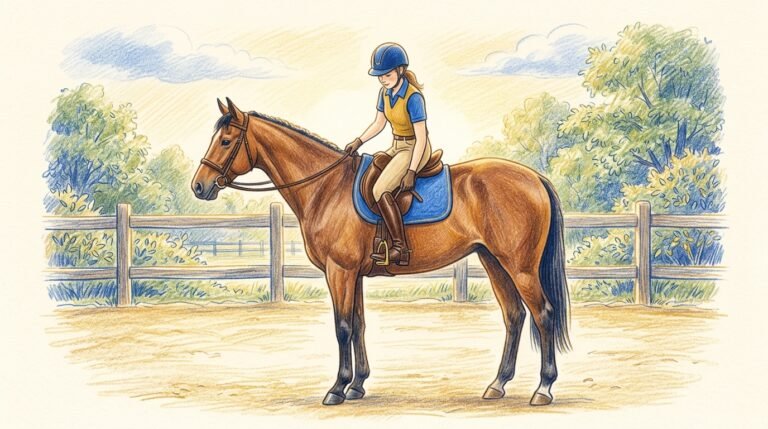
Before we talk about anything else, two items are not optional. The first is a properly fitted helmet. The second is boots with a heel. Everything else you wear to your first lesson is secondary to those two things. A horse can spook, a rider can slip, and a lesson horse that has carried a thousand beginners is still a thousand-pound animal with its own opinions. You do not get to skip the helmet because you are only walking in the ring.
For a first lesson, your barn may have loaner helmets. Ask before you assume, because many do. But if you are serious enough to be reading this article, you are probably serious enough to buy your own, and that is the right call. A loaner helmet fits nobody perfectly and has a history you cannot verify. A helmet that has taken a hard impact may look fine and offer almost no protection.
For a real first purchase, the Troxel Spirit Helmet is one of the most recommended entry-level options for good reason. It is ASTM/SEI certified, lightweight, ventilated, and priced for families who are not sure yet how deep this rabbit hole goes. The Ovation Deluxe Schooler Helmet is another solid choice in a similar price range. Both fit a wide range of head shapes and hold up to daily barn use. For a deeper breakdown of fit and certification levels, our guide to the best riding helmets for beginners walks through everything you need to know before you buy.
On boots: you need a smooth sole and a heel of at least one inch. That heel keeps your foot from sliding through the stirrup, which is not a style preference, it is the mechanism that prevents a drag situation if you fall. Sneakers, hiking boots with lug soles, and rubber rain boots with no heel are all wrong for riding. You do not need tall field boots on day one. A simple paddock boot works fine. The Ariat Paddock Boot is a workhorse that holds up and fits a range of feet. If you have wide calves and are already thinking ahead to tall boots, we have a full resource on top riding boots for wide calves worth bookmarking for later.
What to Wear to Your First Riding Lesson from the Waist Down
This is where most beginners make the first mistake, and it is an uncomfortable one. Jeans seem like a reasonable choice. They are not. The inseam seam on a pair of jeans sits exactly where your leg contacts the saddle, and after forty-five minutes of posting trot, that seam will leave marks. Beyond the discomfort, denim does not grip the saddle the way riding-specific fabric does, which makes an already tricky skill harder to learn.
You do not need to buy full breeches before your first lesson, but if you are going to spend money on anything after the helmet and boots, spend it here. Riding tights or breeches made for equestrian use are designed to be seamless or flat-seamed in all the right places and have a grip panel at the knee or full seat. They make a real difference in how quickly you build a secure position.
Paired with paddock boots, half chaps are your next addition. Half chaps cover the lower leg, protect against stirrup leather rub, and give you a bit of grip contact that short boots alone do not provide. They are not required for lesson one, but if you stick with riding for a month, you will want them. Our guide on how to choose half chaps walks you through fit and material so you are not guessing at the tack shop.
What to Wear on Top and What to Leave at Home
The upper body is the most forgiving part of this conversation. A fitted t-shirt or a long-sleeve athletic shirt works fine. You want something that does not billow or catch on anything, and something that lets your instructor see your posture and position. A loose sweatshirt hides the things your trainer is trying to correct.
Avoid anything with a hood that could catch, drawstrings that dangle, or a heavy jacket that restricts shoulder movement. In cold weather, layer with a fitted fleece or a riding-specific quarter-zip. You will warm up quickly once you are moving, and you want layers you can peel off between the barn aisle and the arena without a production.
Leave the jewelry at home. Rings catch on tack. Long necklaces are a snag risk. Earrings are your call, but studs are safer than anything that dangles. Pull long hair up and back so it does not interfere with your helmet fit or end up in your face during a trot. A properly fitted helmet should sit level on your head, two finger-widths above your eyebrows, and a ponytail worn low at the nape sits cleanly under the harness. A high bun pushes the helmet forward and throws off the fit.
Gloves, a Crop, and What Comes Later
Gloves are worth grabbing early. Reins are leather, rope, or rubber-coated, and all of them have texture that works against bare skin over time. A basic pair of riding gloves gives you grip and protects your hands. They do not need to be expensive. Spend five dollars more than the cheapest option and you will be fine.
A crop is not a first-lesson item. Your instructor will tell you when you are ready for one and how to use it correctly. Do not bring one on your own initiative before that conversation.
The gear progression generally follows this order: helmet and boots first, then breeches or riding tights, then half chaps and gloves, then eventually a show outfit if and when showing becomes part of your plan. Resist the impulse to buy everything at once. The horse world will happily take every dollar you have, and the expensive stuff matters much less than the fundamental stuff early on. For context on what this whole endeavor costs beyond the gear, our breakdown of how much horseback riding lessons cost is worth reading before your first invoice arrives.
For reference on what the broader equestrian safety standards look like, the United States Equestrian Federation publishes guidelines on helmet certification and competition attire that are useful reading even if you are nowhere near competing yet.
The Barn Reality Nobody Mentions
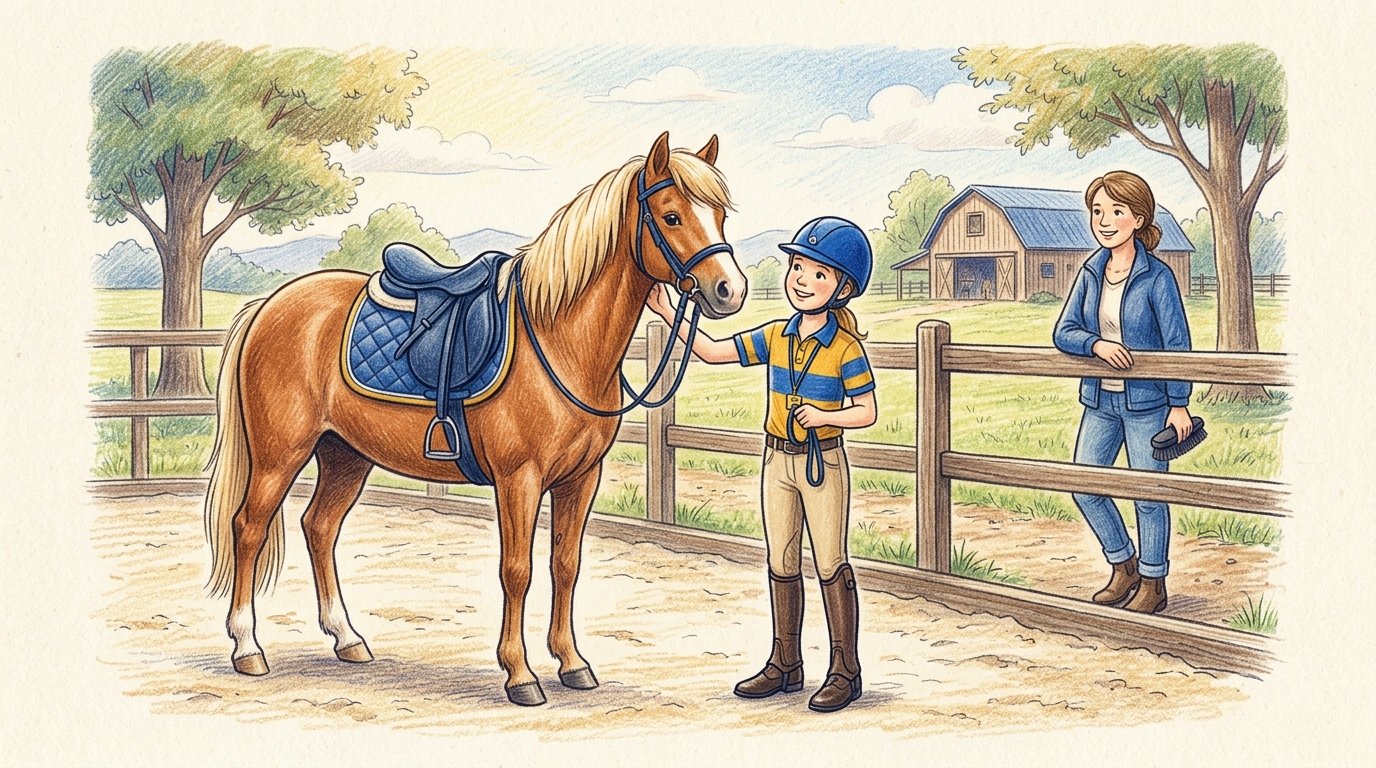
Here is the part the gear lists leave out. Your first lesson is not just an hour in the saddle. If you are catching your horse from a paddock or helping to groom and tack before you ride, add thirty minutes minimum to the front end. You will be in mud, around manure, and close to a large animal that is shedding hair everywhere. Your clothes will smell like horse. Plan accordingly.
Wear something you are comfortable getting dirty. Leave the brand-new everything for month two when you know you are sticking with this. Old barn clothes and new safety gear is the right combination for day one. The helmet and boots protect you. The rest is just fabric.
Closed-toe shoes are required for any time you are around horses, not just when you are in the saddle. That rule applies in the barn aisle, at the wash rack, and in the pasture. A horse stepping on a foot in a sneaker is a very different outcome than a horse stepping on a foot in a leather boot. Nobody needs to learn that lesson twice.
Frequently Asked Questions
Can I wear jeans to my first riding lesson?
Technically yes, but you will probably regret it. The inner seam sits exactly where your leg contacts the saddle and will be uncomfortable after about fifteen minutes of posting trot. If jeans are all you have for the very first lesson, wear your thinnest pair with the flattest seam. Then buy riding tights or breeches before the second one.
Do I need to buy a helmet before my first lesson or can I borrow one from the barn?
Many barns keep loaner helmets for first-time riders. Call ahead and ask. If a loaner is available and you are not sure you want to commit to lessons yet, using it once is reasonable. But a loaner helmet has unknown impact history and fits no one particularly well. If you know you are continuing, buy your own as soon as possible and get a proper fit.
What kind of boots work for a first riding lesson?
You need a boot with a smooth sole and a heel of at least one inch. Tall field boots are not required. A paddock boot is the right entry-level choice. Sneakers, hiking boots with lug soles, and flat-soled rubber boots are not safe for riding regardless of what else you are wearing.
Do I need to wear riding gloves?
They are not required on day one, but they are inexpensive and genuinely useful. Reins create friction against bare skin during a lesson, and gloves also improve your grip. Grab a basic pair along with your other gear and you will not regret it.
You Are Ready: Now Go Ride
Getting dressed for your first riding lesson does not need to be complicated. A certified helmet that fits correctly, boots with a proper heel, pants with no inseam seam cutting into your leg, and a fitted shirt on top cover everything that matters on day one. Gloves are a smart and cheap addition. Everything else can wait until you have a few lessons under your belt and know what direction you are heading.
The barn will take care of the rest. The horse will not notice what brand you are wearing. It will notice how you breathe, how you hold the reins, and whether you are tense or relaxed. That is where the real work starts, and the gear is just what you show up in while you figure it out.
If you want to make sure you have not missed anything before that first lesson, grab our free printable first-lesson gear checklist and browse the shop for our vetted picks on helmets, half chaps, and everything else your first year in the barn will call for.