Signs Your Horse Is in Pain
Why Recognizing the Signs Your Horse Is in Pain Matters More Than You Think
Horses are stoic animals. That is not a compliment in the way people mean it. It is a survival trait that works against you when something is wrong, because a horse that hurts will often mask it long enough that by the time you notice something is off, the problem has been building for a while. Learning the signs your horse is in pain is one of the most useful things any owner, leaser, or barn family can do, not because you are going to diagnose anything yourself, but because you are the one at the barn every day. You know your horse. You are the early warning system, and the vet is who you call when your gut tells you something is not right.
The Riding Life is reader-supported. When you buy through links on our site, we may earn an affiliate commission at no extra cost to you.
What follows is a practical breakdown of what pain actually looks like in horses, organized the way you will actually encounter it: in the stall, at the crossties, under saddle, and in the field. This is not a replacement for a veterinarian. It is a framework for knowing when to pick up the phone.
Behavioral Changes Are Usually the First Signs Your Horse Is in Pain
Before the limping starts, before the swelling shows up, something changes in how a horse acts. That is almost always the first signal. The horse that usually meets you at the gate and does not. The horse that pins its ears when you reach for the girth and never did that before. The one that used to stand quietly at the crossties and now kicks at its belly or swings its head around to look at its flank.
Behavioral pain signals include:
Aggression or irritability that is new. If a horse that has been handled safely for months suddenly snaps, pins ears, or threatens to bite when you touch a specific area, that is pain talking. It is not attitude. It is the horse telling you in the only language available to it that something hurts when you go there.
Reluctance to be caught or handled. A horse that starts hanging back in the pasture or pulls away when you approach its head may be anticipating discomfort from work. This can show up before any obvious lameness.
Changes in appetite or water intake. A horse that leaves feed or stops drinking is worth watching closely. Dental pain, gastric ulcers, and early colic all show up in eating behavior before anything else does.
Depressed or dull affect. A horse that stands with its head low, eyes dull, disengaged from its environment, is not just tired. That posture is a flag. Healthy horses are aware. They notice things. A horse that has gone flat is often a horse that hurts.
These behavioral shifts are easy to explain away, especially if you are busy or the horse has a reputation for being difficult. Do not talk yourself out of what you are seeing. Note it, write it down with the date, and watch for a pattern. If it persists, call your vet.
Physical Signs Your Horse Is in Pain You Can See and Feel
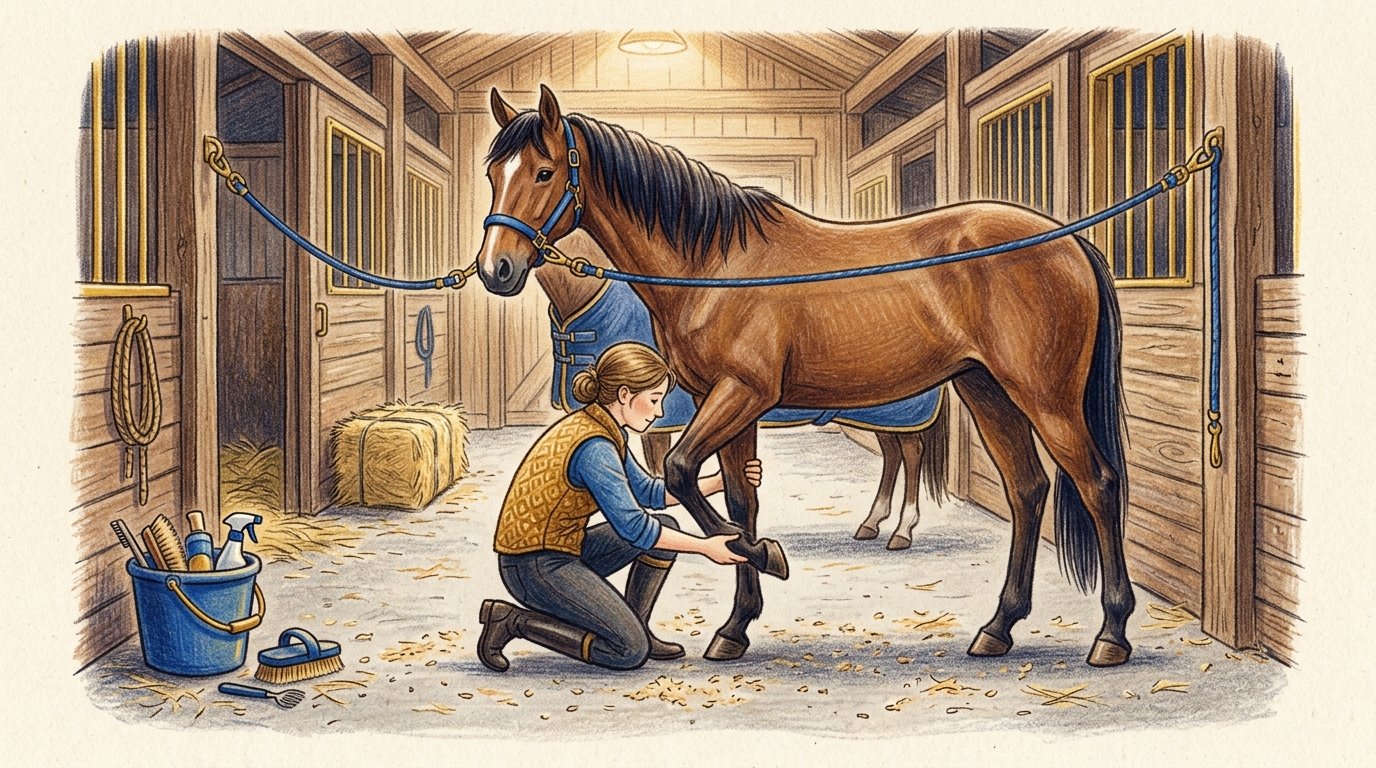
Once you know what to look for, your daily grooming routine becomes a health check. Running your hands over your horse every single time you handle it is not fussiness. It is how you catch things early. Horse care basics for beginners will tell you to groom before every ride, and the reason is exactly this: you cannot feel heat in a leg you are not touching.
Asymmetry in stance. Horses rest a hind leg routinely, and that is normal. But a horse that constantly rests the same hind leg, or that stands with a front leg pointed forward to offload weight, is compensating for something. Pointing is a classic front-foot pain signal. Watch for it.
Heat and swelling in the legs. Run both hands down both legs, every time, and compare them to each other. One leg that is noticeably warmer or fuller than its pair is telling you something. A hard, hot, painful swelling in a tendon sheath is an emergency. A slightly puffy fetlock after hard work is something to monitor. Know the difference by knowing your horse’s normal baseline.
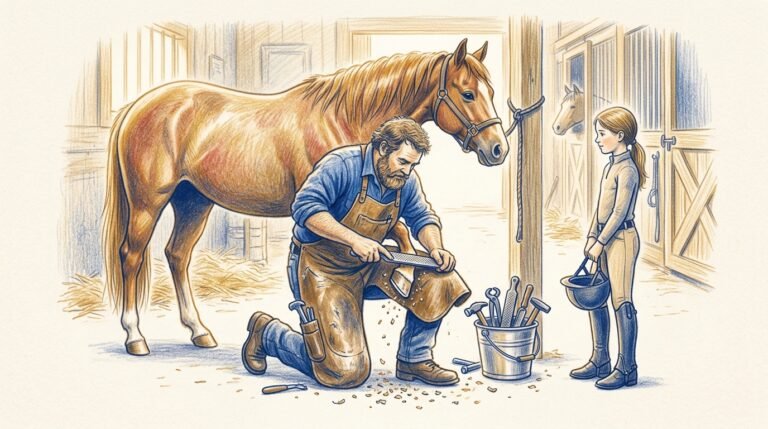
Hoof sensitivity. A horse that flinches or pulls away when you pick out a foot, or that is tender on hard ground, or that walks like the ground is burning might have an abscess brewing, early laminitis, or thrush that has gone deeper than the surface. Understanding hoof care basics will help you know what you are looking at when you clean those feet, but anything that looks or smells wrong down there deserves a call to your farrier before your vet, because farriers find abscesses that look exactly like broken legs.
Facial tension. Research on equine pain assessment has produced tools like the Horse Grimace Scale, and they work because horses do show pain in their faces. Tense muscles above the eye, a hard stare, flared nostrils, and a tight jaw are all part of a pain expression. A horse in significant pain often looks like it is concentrating very hard on something that is not there.
Under Saddle Signs That Something Hurts
A lot of what gets labeled as a training problem is actually a pain problem. This does not mean every resistant horse is injured. But it does mean that when a behavior change happens under saddle, pain should be ruled out before you escalate pressure or change your training approach.
Watch for these under-saddle signals:
Refusing jumps or stopping suddenly at obstacles the horse previously took easily. A horse does not decide to stop trusting jumps for no reason. Back pain, hock pain, and front-end soreness all show up at the fence first.
Pinning ears, tail wringing, or bucking when asked to canter or go forward. Chronic tail wringing during work is a known indicator of back or sacroiliac discomfort. The horse is not being dramatic. It hurts.
Short-striding on one side, or refusing to pick up a lead. Asymmetry in movement, especially at the canter, often traces back to a hind end issue. If your horse picks up one lead beautifully and swaps out or refuses the other, get a lameness evaluation.
Head tossing or leaning heavily on the bit. Dental issues and bit fit both contribute to mouth pain, which shows up as head tossing, resistance to contact, or leaning. Have your horse’s teeth floated on schedule, and have your vet rule out pain before you assume it is an evasion.
Resources like The Horse have solid, peer-reviewed coverage of equine lameness and pain assessment if you want to go deeper on any of these topics before your vet appointment. Going in informed is never a bad idea.
Colic and Acute Pain Signals That Require Immediate Action
Colic is the word every horse owner dreads, and it covers a range of abdominal pain events, some that resolve with hand walking and some that require surgery. Knowing the difference between mild discomfort and a crisis is the difference between a barn call and an emergency trailer ride.
Signs of colic and acute abdominal pain include: pawing at the ground repeatedly, looking at or biting at the flank, refusing to eat when food is right in front of them, getting up and down repeatedly, rolling violently, and a horse that will not stand still or settle. Gut sounds that are absent on one or both sides are also significant. Normal horses have gut sounds. A horse with no gut sounds on either side needs a vet call now, not later.
Know your horse’s normal vital signs. Resting heart rate for an adult horse is roughly 28 to 44 beats per minute. Respiratory rate is 8 to 16 breaths per minute at rest. Rectal temperature is around 99 to 101.5 degrees Fahrenheit. Deviations from these numbers, combined with behavioral signs, tell you how serious the situation is. Keep a thermometer in your grooming kit. Common horse health issues covers this ground in more detail if you want a broader overview of what comes up most often and how to handle it.
Frequently Asked Questions
How do I know if my horse is in pain or just being difficult?
Rule out pain first, always. A sudden change in behavior or performance under saddle is more likely a pain signal than a personality shift. Get a vet to do a lameness evaluation or a full physical before you decide it is a training issue. If the vet clears the horse, then you can look at other causes.
What are the most common causes of pain in horses?
Hoof issues including abscesses and laminitis, gastric ulcers, dental problems, musculoskeletal pain from soft tissue injuries or arthritis, and back pain from poor saddle fit or overwork are the most common. Ulcers in particular are underdiagnosed because the symptoms look like a grumpy horse rather than a sick one.
Can a horse hide pain from its owner?
Yes, and they do it well. Horses evolved as prey animals, and showing weakness in the wild is dangerous. This means pain masking is instinctive. Subtle signs like a slight change in gait, a new reluctance at a specific movement, or mild behavioral shifts can be easy to miss until you train yourself to look for them consistently.
When should I call the vet versus wait and watch?
Call immediately for signs of colic, severe lameness where the horse will not bear weight, a wound near a joint, eye injuries, or any vital signs outside normal range. For mild lameness, minor swelling, or behavioral changes, monitor closely for 24 hours and call your vet to describe what you are seeing. When in doubt, call. Most vets would rather answer a phone call that turns out to be nothing than arrive too late.
What to Do When You Spot the Signs Your Horse Is in Pain
The short version is this: trust yourself, document what you see, and call your vet. The longer version is that your job as an owner or leaser is to know your horse well enough to notice when something is off, and to be the kind of person who takes that seriously instead of hoping it goes away. Most things in horse health get worse with delay and better with early intervention. That is not a dramatic statement. It is just the math of the barn.
Keep a simple log of anything unusual, the date, what you noticed, how long it lasted, whether it got better or worse. That information is more useful to your vet than you might think. When you call and can say this started four days ago and is getting worse instead of I noticed something felt off recently, you are giving them something to work with.
Take the time to learn your horse’s normals. Know what their legs feel like on a good day so you can detect heat. Know their resting heart rate. Know how they move on their best day so you can see asymmetry when it shows up. That baseline knowledge is the most practical tool you have.
If you want a resource to keep on hand at the barn, grab our free printable checklist for daily horse health monitoring, and visit the shop for more guides and tools built for barn families who want practical, no-nonsense help. You put the time and money into being there for your horse. Make sure you are watching closely enough to catch it when something is wrong.