How to Build a Barn Routine for Two Horses
Why a Barn Routine for Two Horses Is a Different Animal Than One
If you have ever managed a single horse and then added a second, you already know the math does not simply double. A barn routine for two horses requires more than an extra bucket and an extra flake of hay. The timing shifts, the order of operations matters, the individual quirks of each animal start competing with each other, and the whole thing can unravel fast if you did not build the routine with intention from the start. Whether you are a first-time owner who just made a big leap or a barn family who has been doing this for years, what follows is a plain, practical walkthrough of how to build a two-horse routine that actually holds.
The Riding Life is reader-supported. When you buy through links on our site, we may earn an affiliate commission at no extra cost to you.
Start With Each Horse as an Individual Before You Build the System
The first mistake people make when managing two horses is treating them as a unit. They are not. Before you can build a shared routine, you need to know what each horse actually requires on its own. Feed amounts, feed type, supplement needs, turnout preferences, grooming sensitivities, health history, and temperament under stress all factor in. Write it down for each horse separately. Keep it somewhere everyone who touches these animals can see it.
One horse might need a slow feeder or a grazing muzzle. The other might bolt his hay and be done in twenty minutes. One might be fine in the pasture with the other; the other might need a fence line introduction before any shared turnout. These are not small details. They are the load-bearing structure of your routine. Get them wrong and you spend every morning firefighting instead of just doing barn chores.
A quick health awareness baseline matters here too. Knowing what normal looks like for each horse individually is the only way you catch problems early. A horse who is off feed, moving differently, or dull in the eye is telling you something, but only if you know what that horse looks like when everything is fine. For a good reference on what to watch for, signs your horse is in pain is worth bookmarking. We have pulled it up more than once standing in the barn trying to decide whether to call the vet.
Build the Morning Block Around the Horses, Not Your Schedule
The barn does not care what time you have to be at work. Horses are creatures of metabolic routine, and their gut health depends heavily on consistent feeding times. If your morning feed time drifts by two or three hours from day to day, you are increasing colic risk, and with two horses that risk is twice as present. Pick a morning window and protect it.
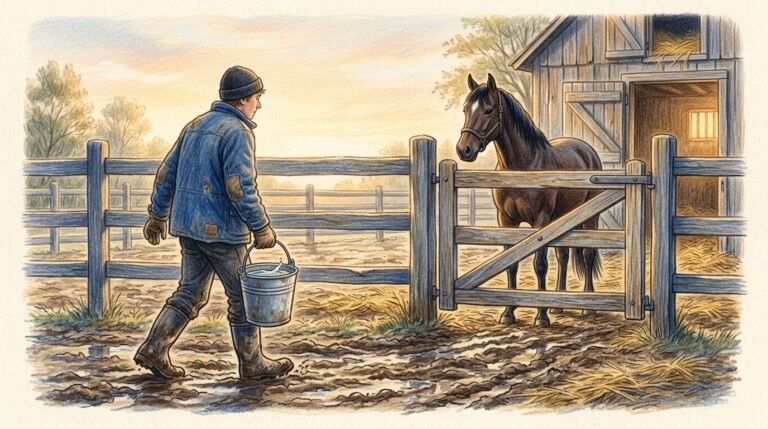
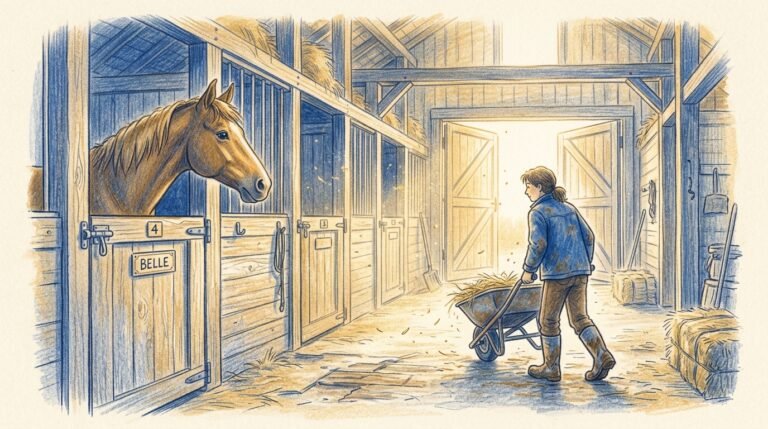
A functional two-horse morning block runs roughly like this. Arrive and do a quick visual on both animals before you touch a single bucket. Eyes, posture, any signs of distress or injury overnight. This takes two minutes and it is not optional. Then hay or forage first, because horses should have something in their gut before grain hits. While they eat, you can muck stalls or paddocks, check water, and pull any overnight blankets if the temperature warrants it. Grain goes in after the forage has had a few minutes. Supplements get added to grain. By the time both horses are eating, you are mucking, refilling water, doing a quick hoof check if anything looked off overnight, and already building your afternoon list in your head.
If both horses are in stalls overnight, plan for thirty to forty-five minutes minimum to do this properly. If they are on pasture or in paddocks, your morning check is faster but your perimeter walk matters more. Fencing, water tank levels, any new divots or hazards in the pasture from overnight activity. Two horses moving around at night do more damage to a fence line than one.
Our full breakdown of what a structured daily chore sequence looks like lives at barn chore schedule for horse owners. It is a good starting point before you start customizing for two.
Turnout, Feed, and Hoof Care for Two Horses Require a System, Not a Habit
A habit is something you do without thinking. A system is something that holds even when you are tired, distracted, or handing off to someone else. When you are managing two horses, you need a system.
Turnout decisions are the first place the system has to hold. Can these two horses share turnout safely? If yes, great, that simplifies a lot. If no, you need two separate turnout windows or two separate spaces, and that changes your whole timeline. Do not assume two horses will work out together just because it would be convenient. Let them meet properly and watch the dynamic before you put them out together unsupervised.
Feed management for two horses means keeping records. How much each horse is eating, any changes in appetite, body condition scored consistently every few weeks. A horse who is losing weight slowly is easy to miss if you see him every day. A number on a body condition scorecard does not lie. Know what you are feeding and why. For a grounded breakdown of equine nutrition and feed decisions, what to feed a horse is a solid starting point.
Hoof care runs on a six-week schedule whether you feel like it or not. With two horses, you are coordinating the farrier for two sets of feet, which means two invoices and double the chance of one horse throwing a shoe at an inconvenient moment. Keep a simple calendar and do not let one horse’s appointment slide because the other one just got done. A neglected hoof on one horse while you are focused on the other is a classic two-horse mistake. Review horse hoof care basics if you are newer to managing this yourself, especially the section on picking hooves daily and what you are actually looking for.
Deworming also runs on a schedule, and with two horses sharing any pasture space, their programs should be coordinated. Resistance is a real concern. Work with your vet to set up a proper protocol based on fecal egg counts rather than just rotating dewormers on a calendar. It costs a little more up front and saves you problems down the road.
Evening Chores and the Blanketing Decision That Never Gets Easier
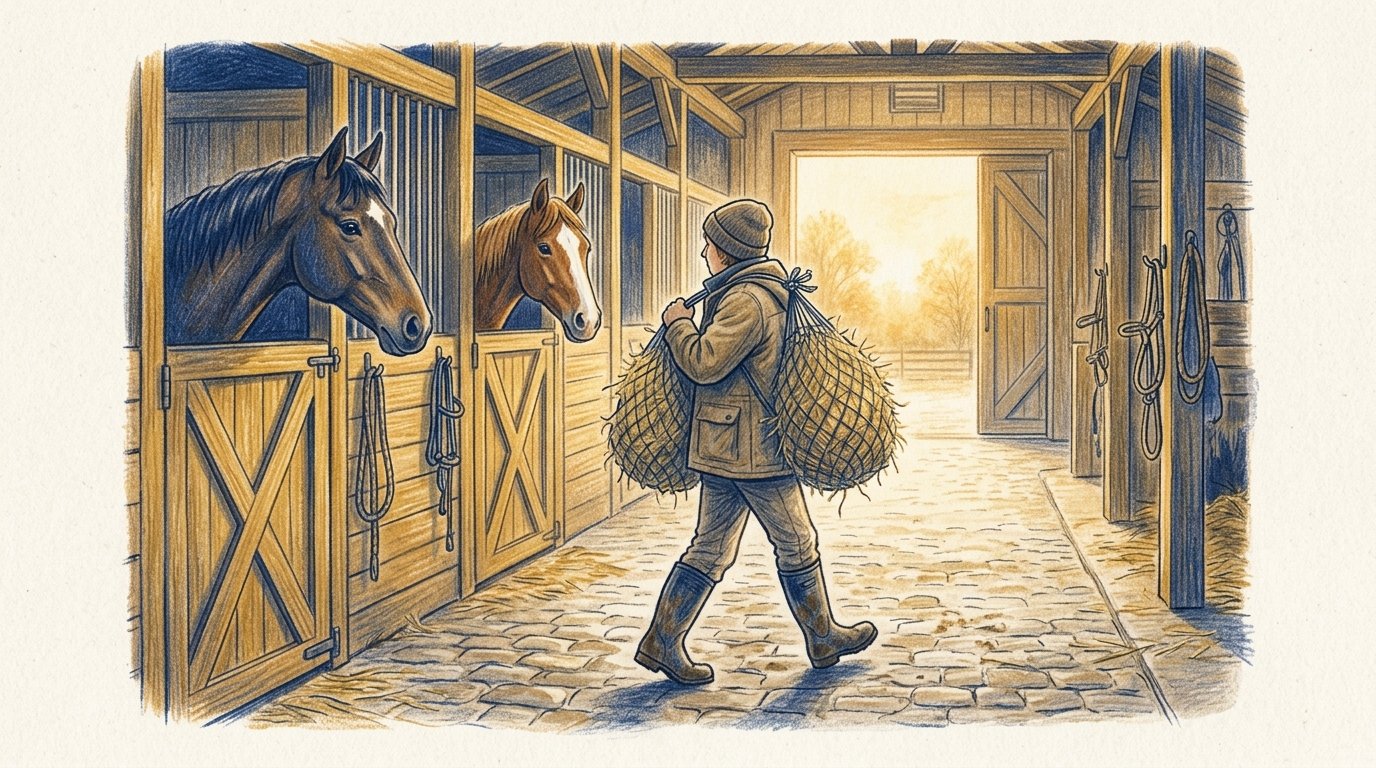
Evening barn chores for two horses mirror the morning in structure but usually run a little faster if the morning went well. Check both animals. Hay goes in. Grain and supplements if your schedule calls for an evening feed. Water checked and topped off. Stalls or paddocks assessed. Any turnout gear swapped.
Then there is the blanketing question, which every horse person has strong opinions about and which the horses themselves seem to have no opinion about at all. The short version: horses regulate temperature better than most people assume. A horse with a good winter coat does not need a blanket until temperatures drop significantly, especially if they have access to shelter and adequate forage. The problem with two horses is that they often have different coat types, different body condition, and different levels of cold tolerance. A clipped horse and an unclipped horse standing in the same barn are not the same animal in winter. You cannot apply one blanket rule to both.
Build your blanketing decision into the routine as a check, not a habit. Look at the forecast, look at each horse’s coat and body condition that day, and make the call. It takes thirty seconds more than grabbing a blanket automatically and it keeps you from over-blanketing a horse who is already warm or under-blanketing one who is actually cold. For more on reading your horses through the winter, winter horse care tips covers the real nuances.
Frequently Asked Questions
How long does a daily barn routine take for two horses?
Budget sixty to ninety minutes per day split between morning and evening if both horses are stalled overnight. If they are on pasture, morning can be shorter but afternoon checks take longer. Do not underestimate it. Two horses is a real daily commitment, not a weekend hobby.
Can two horses share a stall or a paddock safely?
Some horses do fine together. Many do not, at least not without a proper introduction period. Watch for dominant behavior at feed time especially, because a horse who pushes another off hay or grain will cause a slow body condition decline in the lower-ranking animal that is easy to miss. If you share turnout, feed in separate areas at a distance that eliminates competition.
How do I hand off barn chores to someone else without things falling apart?
Write everything down. A simple one-page barn sheet for each horse, including feed amounts, supplements, any current health notes, and what normal looks like for that animal. Leave it posted in the barn where anyone covering for you can find it in under sixty seconds. A good routine only works if someone else can execute it when you cannot be there.
What is the biggest mistake people make when managing two horses?
Treating them as interchangeable. Different horses have different needs, and a routine that is built around one generic horse will miss important individual details on both. Know each animal specifically and build your system to accommodate the differences, not to smooth over them.
Build the Routine Once, Let the Horses Show You What Needs Adjusting
A barn routine for two horses is never fully finished. You build the structure, you run it for a few weeks, and then the horses tell you what is not working. One of them goes off feed and you realize your timing is off. One of them is consistently agitated at turnout and you figure out the order you bring them in matters. The routine is a living document. Write it down, run it, revise it when the barn shows you something new.
The horses do not care that you thought the plan was good. They only respond to what you actually do and how consistently you do it. That is the honest truth of two-horse management. Get the fundamentals right, keep good records, pay attention to each animal individually, and build in enough flexibility to handle the inevitable day when nothing goes according to plan.
If you want a head start, grab our free printable daily barn routine checklist and explore the shop for more tools built around real barn life. Everything there is designed for people who actually live this, not just read about it.