How to Body Clip a Horse
If you have ever watched a horse come in from a hard winter workout absolutely soaked with sweat underneath a thick coat, you already understand why people body clip. Knowing how to body clip a horse is one of those skills that sounds optional until it suddenly is not — until your horse is taking forty-five minutes to dry after a ride and you are standing there with a cooler and a prayer. Body clipping removes some or all of that winter coat to help hard-working horses cool down faster, dry more quickly, and stay more comfortable during heavy exercise. It is not complicated, but it does require the right setup, the right tools, and a little patience on both ends of the clippers.
The Riding Life is reader-supported. When you buy through links on our site, we may earn an affiliate commission at no extra cost to you.
Why Body Clipping Matters and When to Do It
Horses grow a winter coat in response to shortening daylight hours. That coat is a brilliant piece of biology for a horse living outside doing minimal work, but it becomes a liability the moment that horse is in regular work through fall and winter. A heavily coated horse working hard sweats underneath that fur, takes forever to dry, and risks chilling if you do not cool him out properly after every ride. That is a lot of management, and it adds time to every single barn visit through the cold months.
Body clipping solves that. Once you clip, your horse dries faster, stays cleaner, and is genuinely more comfortable during and after work. The trade-off is that you have to blanket him more carefully because you have removed his natural protection. If you are already managing blankets through the season, that is not a big shift. If you are new to blanketing decisions, check out the horse blanket sizing guide before you pick up the clippers — you will need to know what you are putting on that horse after the coat comes off.
Timing matters. Most people do their first clip of the season in October or November once the winter coat is fully grown in. If you clip too early, you catch the coat mid-growth and the result looks patchy. If you clip after deep winter has set in and you are in a cold climate, your horse will need serious blanketing around the clock. Many horses get clipped twice in a season — once in fall and once in January when the coat has grown back enough to cause the same sweating problem again.
Types of Body Clips to Know
Body clipping is not one-size-fits-all. There are several clip styles, and the one you choose should match your horse’s workload, your climate, and how much you want to manage blankets afterward.
The trace clip is the most common starting point. You remove the hair along the neck, chest, belly, and the area where the girth sits — essentially the parts of the horse that sweat the most during work. The back and hindquarters stay intact, so the horse retains a good bit of natural weather protection. This is the clip most lesson horses and lightly-to-moderately worked horses get. It is also the most forgiving if your clipping lines are not perfectly even on the first try.
The blanket clip takes more coat, leaving hair only on the legs, the back, and the hindquarters in the shape of a blanket. It looks polished and works well for horses in moderate to heavy work. The defined line along the back and haunches is where your technique shows, so take your time.
The hunter clip removes nearly everything except a saddle patch and the legs. The saddle patch protects the back from rubbing, and leaving the legs unclipped protects against mud fever and thorns for field hunters. This is for horses in serious, consistent work.
The full body clip removes all the coat, legs included. This is the choice for horses in very heavy work or horses being shown under artificial lights where coat management is critical. It requires the most aggressive blanketing regimen afterward and leaves zero margin for error in cold conditions.
For most barn families managing a horse in regular but not elite-level work, the trace clip or blanket clip covers the bases. Start with less. You can always take more off. You cannot put it back.
Tools and Prep You Actually Need
The single most important investment is a quality set of clippers. Cheap clippers drag, pull, heat up fast, and quit halfway through a horse that is already not thrilled about the process. The Andis Excel Clippers are a standard barn choice that holds up through multiple seasons with proper blade care. The Oster Clipmaster Variable Speed is another workhorse that professionals and serious amateurs both reach for — it runs cool, has adjustable speed, and handles thick winter coats without bogging down.
Beyond the clippers themselves, here is what you need before you start:
Blade wash and blade oil. You will run your blades through the wash and re-oil them every fifteen to twenty minutes during the clip. Blades heat up. Hot blades on a horse’s skin cause discomfort and can cause the horse to move or panic. Check the blade temperature against your own forearm every few minutes.
A clean horse. Clipping through dirt destroys blades faster than anything. Bathe your horse a day or two before, or at minimum curry and brush thoroughly the day of. Some people wipe the coat with a damp towel or use a coat conditioner spray to help the clippers glide.
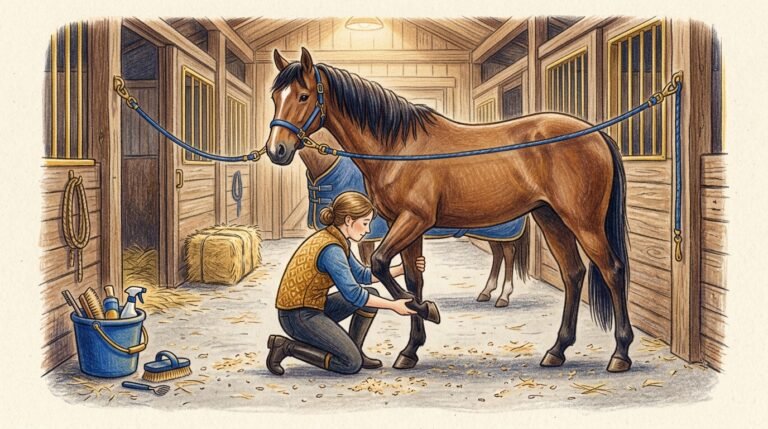
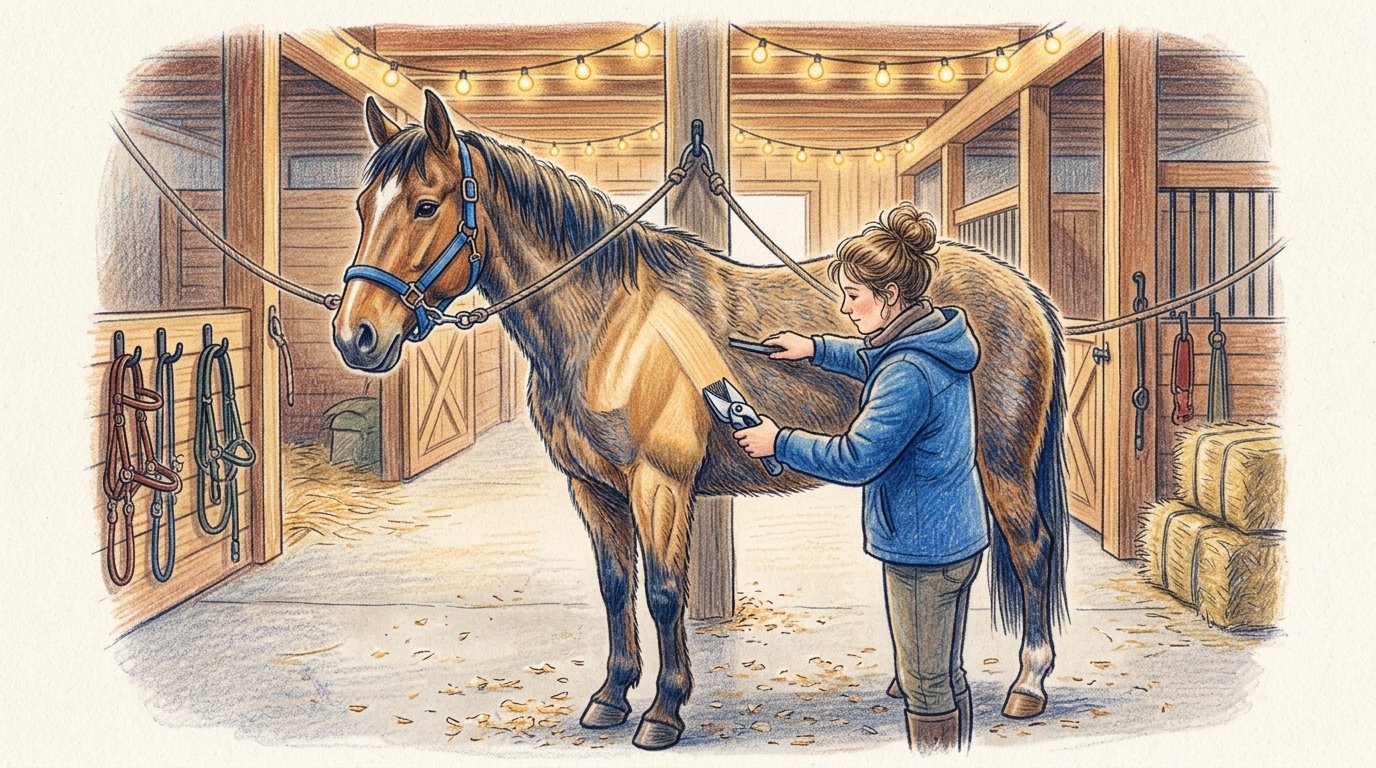
A well-lit, safe space. Cross-ties in a wide barn aisle under good lighting. You need to see what you are doing, and you need the horse standing still. If your horse is already worried about clippers, do your desensitization work well before clip day — running the clippers near him during grooming sessions over several days makes a difference.
Chalk or stock marker. For blanket clips and trace clips, mark your lines before you start clipping. It takes two minutes and saves you the lopsided regret of eyeballing it.
Good grooming fundamentals apply throughout. For a broader look at what a real grooming kit should include, the best grooming brushes for horses guide walks through what actually earns its spot in your kit.
How to Body Clip a Horse Step by Step
Start with the neck and shoulder — areas where most horses tolerate clippers most easily. Work in long, smooth strokes against the direction of hair growth, overlapping each pass slightly so you do not leave lines. Keep the blade flat against the skin. Do not press in or angle the clippers.
Move methodically. Do not jump around the horse. Work section by section so you can see what you have covered and keep your lines consistent. When you reach sensitive areas — the flanks, under the belly, between the front legs, around the face — slow down. Use a smaller trimmer on the face if you are including it. Many people skip the face entirely for a trace or blanket clip and there is nothing wrong with that.
Stop and cool your blades regularly. Oil them, check them, replace them if they start to pull. Have at least one backup set of blades on hand. A full body clip can go through two or three sets of blades depending on coat thickness.
Clip the legs last if you are doing a hunter or full clip. The legs are more sensitive and the skin is thinner. Some horses object more here than anywhere else.
Once you are done, wipe the horse down with a damp cloth to remove loose hair from the skin, then immediately put on a cooler or a sheet depending on the temperature. Your horse has just lost a significant amount of insulation. Do not leave him standing without cover in a cold barn.
For broader context on keeping a horse healthy through the colder months, the winter horse care tips article covers the full picture — blanket management, feed adjustments, and everything else that goes sideways in January. The The Horse also has solid veterinary-backed resources on managing clipped horses through winter if you want to go deeper on the health side.
After the Clip: Blanketing and Ongoing Care
Once that coat is gone, you own the horse’s thermoregulation. That is the honest trade-off of body clipping, and it is a real one. A fully clipped horse in a cold climate may need a stable sheet, a medium-weight blanket, and a heavy blanket in rotation depending on temperature. A trace-clipped horse has more of his own coat working for him and needs less intervention, but still needs monitoring.
Check your horse after turnout. A clipped horse that gets wet and cold and stands in wind will be miserable and can get into real trouble. Make sure your turnout blankets are waterproof and fitted correctly. A blanket that slips or rubs defeats the purpose.
The clip also grows back, unevenly, and sometimes in a slightly different texture the first time. Do not be alarmed if the new growth looks a little different. It typically evens out as the full coat comes in.
Frequently Asked Questions
Can I body clip my horse myself if I have never done it before?
Yes, with preparation. Watch videos, mark your lines, have a second set of hands available for the first time, and start with a trace clip rather than a full body clip. The technique is learnable. The main beginner mistakes are rushing, neglecting blade temperature, and trying to clip a dirty horse. Fix those three things and you are most of the way there.
How often do I need to reclip during the winter?
Most horses in regular work get clipped once or twice per season. If you do a first clip in October, you may find the coat has grown back enough by January to cause the same sweating problem. Many people do a second clip then. After February, the horse starts to shed out naturally and clipping is less useful.
My horse is scared of clippers. What do I do?
Desensitize before clip day. Run the clippers near him during regular grooming — turned on, buzzing, but not necessarily touching him — and let him figure out they are not dangerous. Work up gradually over days or weeks. Some horses need a second person to hold them during their first clip. A few horses genuinely require sedation from a vet, and there is no shame in calling your vet if a horse is truly unsafe. Getting someone hurt over a clip is not worth it.
Do I need to change anything about feeding after I clip?
Potentially, yes. A clipped horse in a cold climate may burn more calories keeping warm, especially in turnout. Monitor body condition and talk to your vet or an equine nutritionist if you see weight dropping. For a baseline on horse nutrition, the what to feed a horse guide is a solid starting point.
Start Your First Clip With a Plan
Knowing how to body clip a horse comes down to preparation, patience, and the right tools. Get your clippers in good shape before you start, clean your horse, mark your lines, keep your blades cool, and have blankets ready before the last stroke is done. It is a skill that takes a couple of sessions to feel comfortable with, and then it becomes just another thing you know how to do. Like most things at the barn, it is not as mysterious as it looks from the outside — it just takes showing up and doing it.
If you want a step-by-step reminder sheet to hang in your barn aisle for clip day, grab our free printable checklist. And when you are ready to stock up on blades, blade wash, or anything else that keeps your grooming game solid, head over to the shop — we have put together the tools we actually use so you are not guessing in the feed store aisle.