Horse Teeth Floating What to Expect
What Is Horse Teeth Floating and Why It Matters
If you are new to horse ownership, horse teeth floating is one of those procedures you hear about early and probably nod along to without fully understanding what it means. Floating a horse’s teeth is the process of filing down the sharp points and uneven edges that develop naturally as a horse chews. Horses grind their feed in a side-to-side motion, and over time that motion creates points on the outside of the upper teeth and the inside of the lower teeth. Left alone, those points cut into the cheeks and tongue, interfere with the bit, and make chewing painful enough to affect the horse’s weight and behavior. It is not optional maintenance. It is basic care.
The Riding Life is reader-supported. When you buy through links on our site, we may earn an affiliate commission at no extra cost to you.
We did not know any of this when we started. We knew the vet came out, we knew it cost money, and we knew the horse stood there with its mouth propped open looking vaguely indignant. It took a couple of years of barn life before we actually understood what was happening and why it mattered. If you are at that stage now, this is the rundown you need.
How the Procedure Actually Works
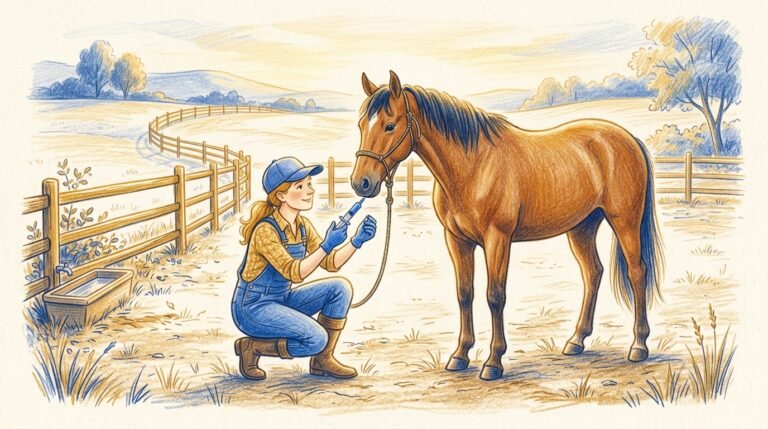
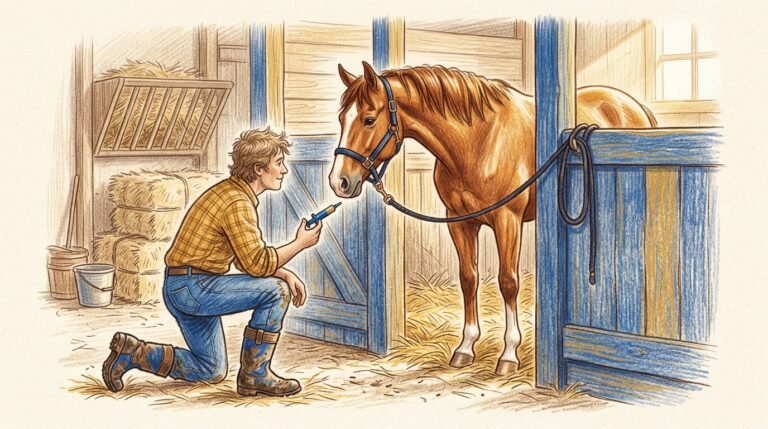
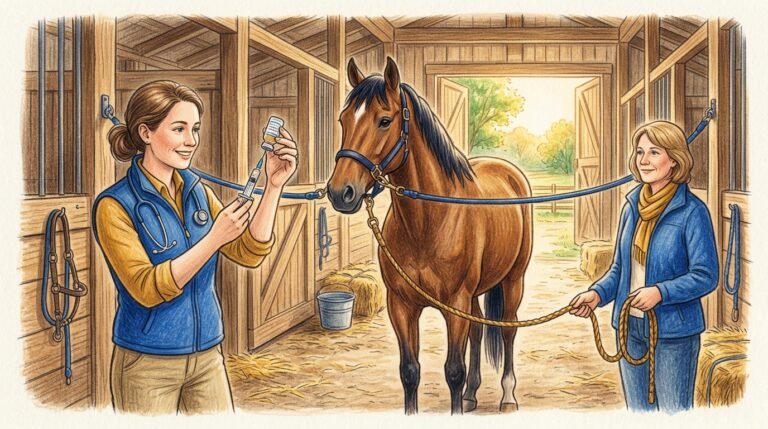
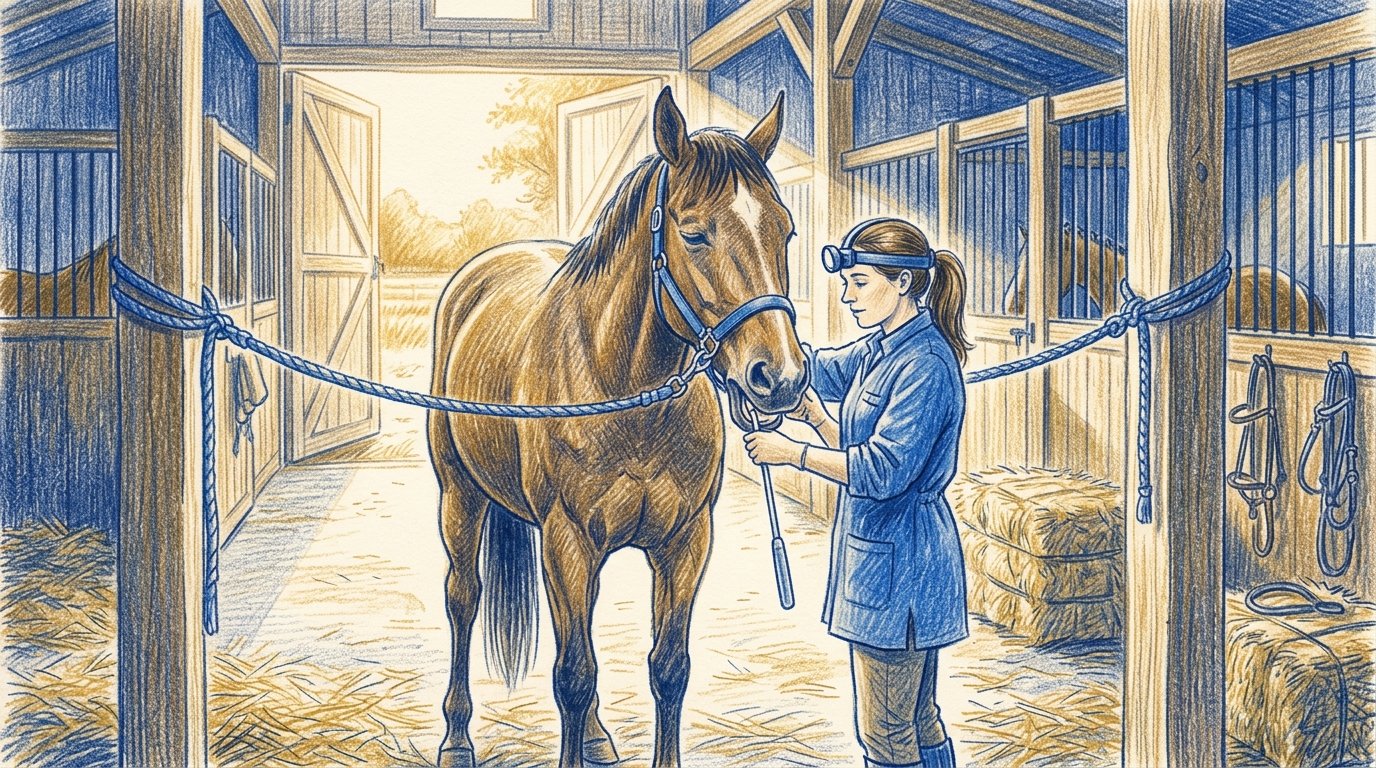
A licensed equine veterinarian performs the float, though in some states an equine dental technician can do it under vet supervision. The vet will almost always sedate the horse. Light sedation is standard. The horse’s head drops, the muscles relax, and the vet can open the mouth wide enough to actually see and reach all the teeth. Without sedation, most horses will not hold still long enough for a thorough job, and you cannot do a thorough job without seeing clearly.
Once the horse is sedated, the vet uses a speculum, which is a metal device that holds the mouth open, and then either a manual float or a motorized one. A float is essentially a long-handled rasp or grinding tool. The vet works through the mouth systematically, filing down sharp edges, addressing any hooks, ramps, or wave patterns that have developed, and checking the overall alignment. A good dental exam also looks at the incisors, the wolf teeth if they are present, and any signs of disease or missing teeth in older horses.
The whole procedure from sedation to finish usually takes between thirty minutes and an hour depending on what the vet finds. Older horses and horses who have gone too long between floats often take longer because there is more to correct.
Afterward, the horse comes out of sedation in a quiet stall with nothing to eat or drink for a short window, usually an hour or two. Your vet will give you specific instructions. The horse is typically back to normal the same day, sometimes a little wobbly for an hour while the sedation wears off.
How Often Horse Teeth Floating Should Happen
The standard recommendation is once a year for most adult horses. Some horses need it twice a year. Young horses between one and five years old are going through a lot of dental changes, shedding caps and erupting permanent teeth, and they may need more frequent checks. Senior horses, generally those over fifteen, often need closer attention because their teeth are wearing down at a different rate and complications become more common.
Your vet will tell you after each float how long to wait before the next one. Do not just assume annual is right for your horse without that conversation. The answer depends on the individual animal, its age, what the vet found, and how it responds between appointments.
What you should not do is skip it because the horse seems fine. A horse in discomfort from sharp dental points will often just get quieter about it. They do not always dramatically signal pain. What you might notice instead is unexplained weight loss, dropping feed, resisting the bit, head tossing, or behavioral changes under saddle. By the time you see those signs, the problem has been building for a while. If you want to understand the broader picture of what horses communicate when something hurts, the signs your horse is in pain guide covers that territory in more detail.
What It Costs and How to Plan for It
Expect to pay somewhere in the range of 150 to 300 dollars for a routine dental float, depending on your region, the vet, and whether the visit is combined with other annual care like vaccines or a Coggins test. Some practices charge a farm call fee separately. If the horse has significant problems that require extra work, or if wolf tooth extraction is needed, the price goes up.
That is a real number. It is not a devastating one in the context of horse ownership, but it is a line item you need to plan for every year. If you are newer to all of this and still figuring out what the full cost picture looks like, the breakdown at horse care basics for beginners is a good place to map out the recurring expenses before they catch you off guard.
The way to handle vet costs in general is to build them into your monthly budget as a fixed number rather than treating them as surprises. Dental care, farrier every six weeks, annual vaccines, and a Coggins test are all predictable. The things that are not predictable, the abscess that looks like a broken leg until the farrier digs it out, the colic scare at midnight, those are the ones you keep a reserve for. But the float? That one you can see coming. Put it on the calendar and budget for it at the start of the year.
For a full picture of ongoing horse health maintenance and the conditions that come up regularly in barn life, The Horse is one of the most reliable resources available and worth bookmarking.
Signs Your Horse May Need a Float Before the Next Scheduled Visit
Even if you are on a good annual schedule, there are things to watch for between appointments. A horse that suddenly starts dropping grain or hay, leaving partially chewed wads on the stall floor, is telling you something. That is called quidding and it is a clear dental red flag. Weight loss without an obvious cause, especially in a horse eating plenty of forage, is another one.
Under saddle, a horse that is newly resistant to contact, throwing its head, bracing against the bit, or showing reluctance to flex in one direction may have mouth discomfort driving the behavior. Before you add more training pressure or change equipment, get the mouth looked at. A surprising number of training and behavioral issues trace back to dental pain.
You can do a basic visual check yourself by looking at the front teeth and watching your horse chew. You are not going to be able to assess the back teeth on your own, and you should not try to reach into the mouth of a horse you have not sedated, but watching how the horse eats over time gives you useful information. Any change in eating pattern is worth noting and mentioning to your vet.
For a broader look at the common health issues horse owners track year over year, common horse health issues is worth a read.
Frequently Asked Questions
Does horse teeth floating hurt?
No. The horse is sedated, so it is not experiencing pain during the procedure. There may be mild soreness in the jaw afterward, similar to how your mouth feels after dental work, but horses typically return to normal eating within hours. If your vet notices anything that required significant correction, they may advise a softer feed for a day or two.
Can a horse be ridden the same day as a float?
Most vets recommend giving the horse the rest of the day off after sedation. The sedation itself takes time to fully clear, and the horse may be unsteady on its feet for a few hours. Plan to skip the lesson that day. By the next morning, most horses are completely back to normal.
What are wolf teeth and do they always need to come out?
Wolf teeth are small, vestigial teeth that erupt in front of the first upper premolars, usually between six months and two years of age. Not every horse has them. When they are present and positioned where they interfere with the bit, most vets recommend removing them. It is a quick extraction, usually done at the same appointment as the float while the horse is already sedated. Your vet will tell you whether extraction is warranted for your specific horse.
How do I find a qualified equine dentist or vet for floating?
Your primary equine veterinarian is the most straightforward starting point. If your vet does not perform equine dentistry, they can refer you to someone who does. In states where equine dental technicians are licensed, they may work alongside your vet. Ask about credentials and how many horses they see regularly. For practitioners working within recognized show and competition contexts, USEF affiliated barns often have established vet relationships that can point you in the right direction.
Put Horse Teeth Floating on the Calendar Now
This is one of those pieces of horse care that does not announce itself loudly until something has already gone wrong. A horse in dental discomfort will work around it quietly for longer than you would expect. The float is not expensive relative to most vet calls, it is not complicated, and it is entirely predictable. There is no reason to let it slip.
If you are in your first year or two of horse ownership, build your annual care calendar now. Farrier every six weeks, dental float once a year with a check-in on whether your horse needs twice, vaccines and Coggins in spring, and a reserve budget for the things you cannot schedule. That is the structure that keeps you out of crisis mode.
The horses who stay sound, comfortable, and easy to work with over years are the ones whose owners treat routine maintenance as non-negotiable rather than optional. The float is part of that.
If this is helpful, grab our free printable horse care checklist to keep everything organized by month, and explore the shop for more resources built for barn families doing this the honest way.