Western Saddle Fitting Guide
A western saddle fitting guide sounds like a single afternoon project. It is not. Fitting a western saddle correctly — to the horse and to the rider — is one of the most consequential decisions you will make in this sport, and most people get it wrong at least once before they get it right. We did. The saddle looked fine on the rack, fit the budget, and seemed close enough on the horse. Three months later we had a horse with sore withers and a kid who could not sit still in the saddle and could not figure out why. The saddle is where it starts and where it ends.
The Riding Life is reader-supported. When you buy through links on our site, we may earn an affiliate commission at no extra cost to you.
Why Western Saddle Fitting Is Different from English
If you have spent any time around English disciplines, you may think you understand saddle fitting basics. Tree, panels, gullet, contact — these concepts carry over. But western saddle fitting operates on a different geometry. Western saddles are built on a wooden and fiberglass tree that sits on wide bars running along both sides of the horse’s back. The tree angle and bar spread have to match the horse’s back shape across a much larger contact surface than an English saddle covers. There is more saddle touching more horse, which means more places for a poor fit to create pressure points.
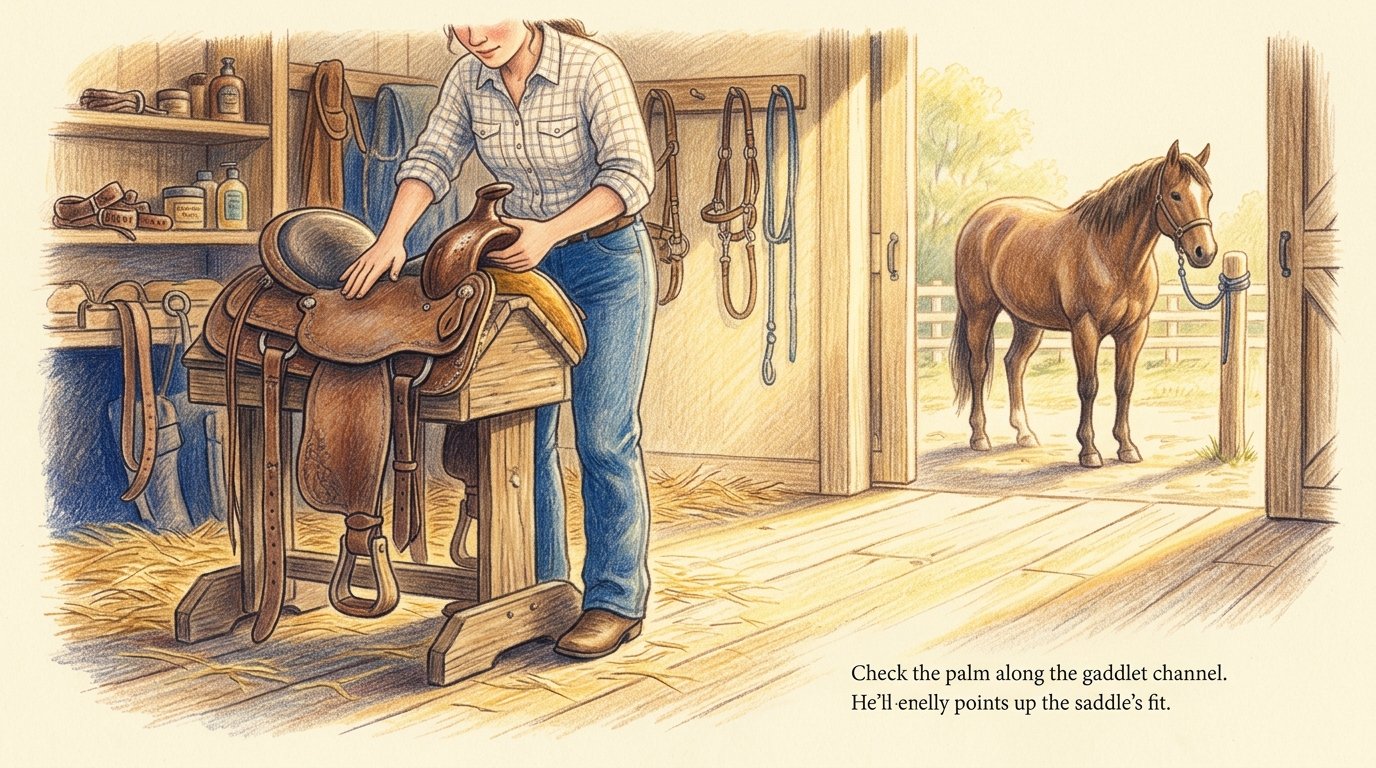
The gullet channel running down the center of the saddle must clear the horse’s spine completely, with at least two fingers of clearance on both sides of the spine along the entire length of the channel, not just at the front. Riders often check gullet clearance at the pommel and stop there. Run your fingers down the whole channel with the saddle in place, uncinched, and check the clearance the length of the panels. If it narrows or presses anywhere, that saddle is not fitting that horse.
If you are coming to western from an English background and want to understand the buying process on the English side for comparison, our English saddle buying guide walks through that process with the same level of detail.
Fitting the Saddle to Your Horse
The single most important measurement in western saddle fitting is gullet width, which is the measurement across the front of the saddle between the bars. Common sizes run from full Quarter Horse bars at roughly 5.75 inches to semi-Quarter Horse bars around 6.5 inches, with wide and extra-wide options for broader-backed horses. Narrow-withered horses and Thoroughbred types generally need narrower bars. Broad, flat-backed Quarter Horses and draft crosses need wide to extra-wide. Measuring your horse is non-negotiable. A gullet gauge tool is inexpensive and gives you a starting point, though a qualified saddle fitter or your trainer confirming the fit in person remains the gold standard.
Bar angle matters as much as bar width. If the bars are too steep for the horse’s back slope, the saddle rocks and bridges — meaning it contacts at the front and back but floats in the middle, concentrating pressure at the contact points. If the bars are too flat for a horse with a more pronounced wither angle, the saddle sits low on the withers and pinches. Bridging and wither pinch are the two most common fit problems in western saddles, and both show up as resistance, back soreness, girthiness, and reluctance to move forward freely.
Place the saddle on the horse’s back without a pad, slide it into its natural resting position — do not force it forward onto the shoulder — and check the following before you cinch: gullet clearance along the full length of the spine, even contact of the bars without rocking, clearance above the withers with a clinched fist fitting between pommel and wither with room to spare, and the back of the saddle not dropping below the loin. Then cinch it up snugly and check all of those again. Cinching changes the picture.
For a broader look at your horse’s physical needs and how soreness can show up, signs your horse is in pain is worth reading alongside this guide.
Fitting the Saddle to the Rider
Once you have confirmed the saddle fits the horse, the rider still has to fit the seat. Seat size in western saddles is measured in inches from the back of the swell to the front of the cantle. A properly sized seat leaves about four inches between the front of the rider’s body and the swell, and roughly four inches between the back of the rider and the cantle. Sit in the saddle and slide your hand behind your seat: you should be able to fit a flat hand with a little room, not jam it in, not have it fall through. Too small a seat crowds the rider and tips them forward. Too large a seat lets them slosh around and hunt for balance.
Seat depth and cantle height affect rider security as much as seat size does. A deep seat with a tall cantle holds a beginner more securely but can feel restrictive to an advanced rider who needs freedom of movement. Barrel racers and reiners often prefer a flatter seat for mobility. Trail and pleasure riders generally prefer more depth. Neither is wrong — they are designed for different riding.
Stirrup drop and fender swing matter too. If the fenders are stiff and do not allow the stirrups to hang naturally under the rider’s hip, the rider will fight the saddle every step. New fenders can be conditioned and worked to hang correctly, but heavily built fenders on a rigid saddle may never swing freely enough for a shorter-legged rider. Check the fender swing before you buy, not after.
The Saddle Pad Factor
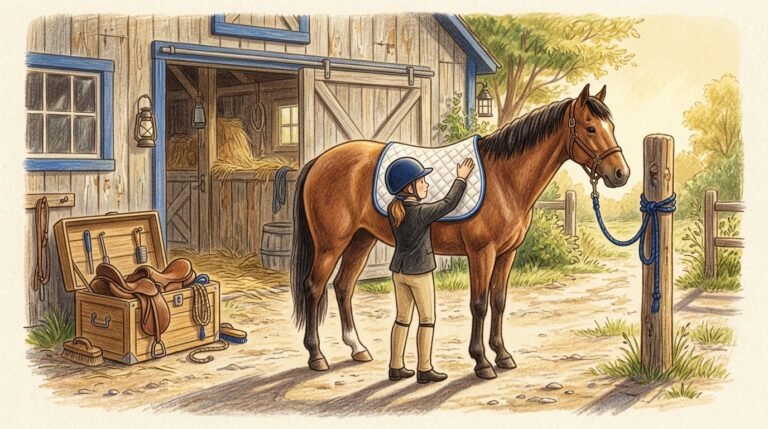
A saddle pad does not fix a saddle that does not fit the horse. That needs to be stated plainly because the temptation to shim or pad your way out of a fit problem is real, and it does not work long term. A pad adds some cushion and protection, but it also fills in gullet clearance. If your saddle barely clears the spine without a pad, it is pressing on the spine with one. Choose a pad appropriate for the saddle size — western saddles require a larger pad than English, generally 32 by 32 inches square or a contoured western pad of equivalent coverage — and choose pad thickness based on your horse’s back shape, not on trying to compensate for a misfit tree.
That said, a good quality western saddle pad is not optional. Wool felt pads and contoured foam-topped pads both have their advocates. We have used both. Wool felt conforms to the horse’s back over time and wicks moisture; foam-topped models offer more consistent cushion. The right answer depends on how often you ride and in what conditions. For solid guidance on how pads interact with fit, our article on how to fit a saddle pad goes deeper into that piece of the equation.
Specific Western Saddles Worth Knowing
If you are shopping for a trail or all-around western saddle and want somewhere concrete to start, a few real options have consistent reputations in the barn community. The Circle Y Park and Trail saddle is a longtime standard in the trail riding world — well built, comfortable for long hours, available in multiple bar widths, and holds up. For a more budget-accessible starting point that still holds its shape, the Wintec Western HART saddle uses a synthetic adjustable-gullet system that lets you change the gullet width plate as your horse’s back changes — genuinely useful for a growing horse or a horse transitioning weight seasonally. It is not a show saddle, but for a lesson or trail horse it is honest and practical.
For reputable guidance on saddle fit standards and horse welfare considerations in tack fitting, The Horse publishes vetted equine health and management content that is worth bookmarking if you are going deep into this subject.
Frequently Asked Questions
How do I know if my western saddle fits my horse correctly?
With the saddle placed in its natural position and cinched, you should have full gullet clearance along the entire spine, even bar contact without bridging or rocking, at least two to three fingers of clearance above the withers, and no saddle overhang behind the last rib. Your horse’s response tells you a lot too — a correctly fitting saddle produces a horse that moves freely, does not hollow its back, and does not show girthiness or ear-pinning when you tack up.
Can I use a saddle made for a Quarter Horse on a different breed?
Quarter Horse bars are built for the broad, flat-backed conformation that Quarter Horses typically have. A narrower horse — a Thoroughbred, an Arab, a Warmblood cross — will likely be pinched by full Quarter Horse bars. A wider horse like a draft cross may need wide or extra-wide. Buy for the horse in front of you, not for the breed category. Always fit the individual animal.
What seat size do I need in a western saddle?
Adult women typically ride 15 to 16 inch seats; adult men often go 16 to 17 inches; larger riders may need 17 or 18 inches. These are starting points only. Sit in the saddle and check the actual fit — four inches in front of you, four inches behind you is the standard guideline. Do not order a seat size based solely on your pants size or English saddle size. They do not translate directly.
How often should I recheck my saddle fit?
Check fit at least twice a year, and any time your horse changes weight significantly — coming off winter, returning from a layup, shifting into heavy conditioning work. Young horses especially change shape as they build topline muscle. A saddle that fit perfectly at the start of the summer may need reassessment by fall. This is not a one-time task.
Get It Right Before You Ride
Western saddle fitting is not glamorous. It does not trend on social media. But it is one of the most direct lines between what you invest in this sport and what your horse gets out of it. A well-fitted saddle is the foundation of a comfortable, willing horse and a rider who can actually sit correctly and learn something. A poorly fitted saddle undoes every other good choice you make — the good training, the quality feed, the conscientious hoof care. None of it overcomes a saddle that hurts.
We learned that the hard way, the way most barn families do. Now we check the fit every season and every time the horse’s weight shifts, because the saddle that fit last May does not automatically fit this September. That is not a burden — it is just part of the job.
If you want to keep all of this straight in one place, grab our free printable western saddle fitting checklist and explore the shop for more tools that make barn life a little more organized. Do the work before you cinch up. Your horse will tell you whether you got it right.