Trail Riding Tips for Beginners
What Every First-Time Trail Rider Needs to Know
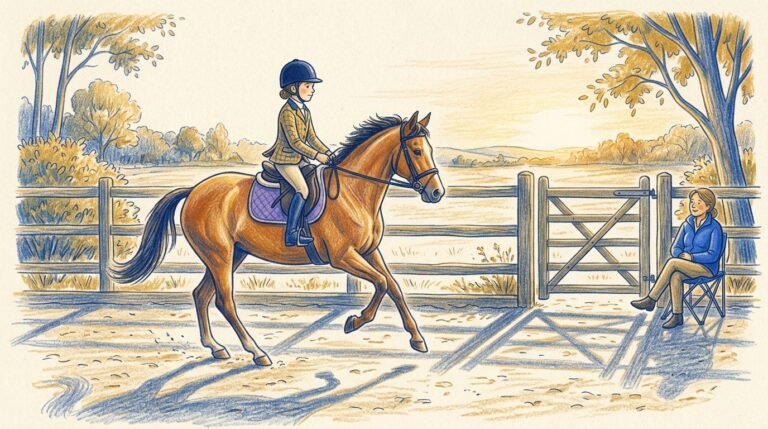
If you have been riding in an arena for a while and someone finally suggests taking it outside, trail riding tips for beginners are not optional reading — they are the difference between a good day and a genuinely dangerous one. The arena is controlled. The trail is not. The footing changes, the sightlines change, and your horse is suddenly dealing with wildlife, wind, unfamiliar smells, and the absence of the fence that used to define the edges of the world. None of that is a reason to stay inside forever. It is just a reason to go out prepared.
The Riding Life is reader-supported. When you buy through links on our site, we may earn an affiliate commission at no extra cost to you.
Trail Riding Tips for Beginners Start with the Right Horse for the Job
The single most important variable on your first trail ride is the horse underneath you. Not your seat. Not your gear. The horse. A seasoned trail horse with a quiet brain and a slow heart rate is worth more than any amount of riding skill when a plastic bag blows across the path at 10 miles an hour. If you are leasing or borrowing a horse for trail work, ask specifically whether that animal has been out on trail before, how recently, and how it behaves when it spooks. Those are not rude questions. They are the right ones.
Horses that are calm in the ring can be completely different animals on trail. Some get herd-bound and barn-sour the minute they turn toward home and the pace quickens. Some go up when they hit open field after a stretch of trees. None of that makes them bad horses. It makes them horses. Your job as a beginning trail rider is to be honest about where you are in your skills and to match that honestly to the animal you are riding. If you are not sure where you stand on the skills ladder, spend some time reading about horse care basics for beginners — understanding horse behavior on the ground carries directly into understanding it on trail.
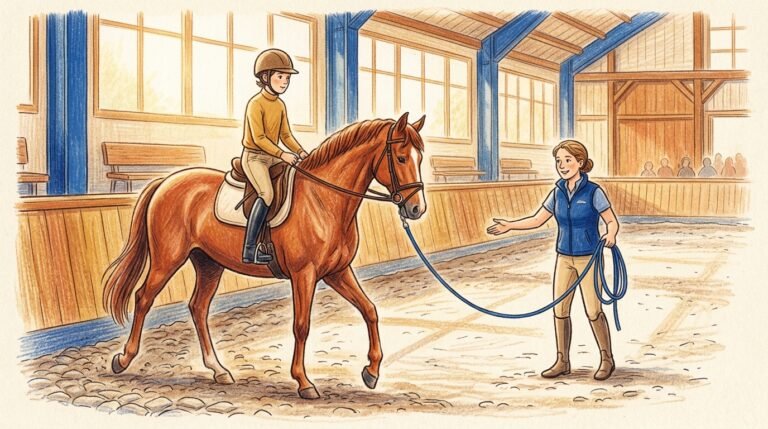
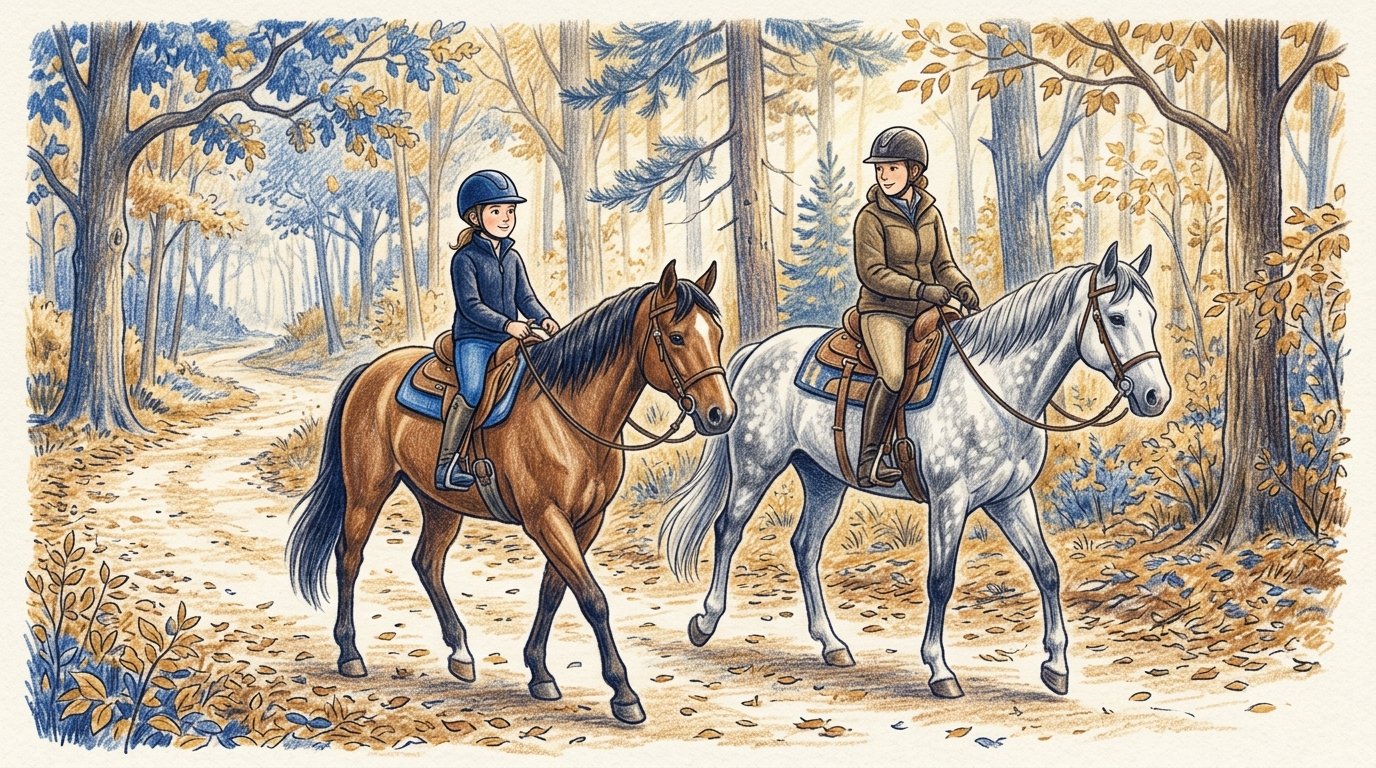
Go out with a buddy. This is not optional for your first few rides. Ride with someone on a horse you know is solid, and let that horse lead until your horse settles. Horses take confidence from each other, and a steady lead horse can get a nervous horse past a hundred things it would spin on alone.
Gear That Actually Matters on the Trail
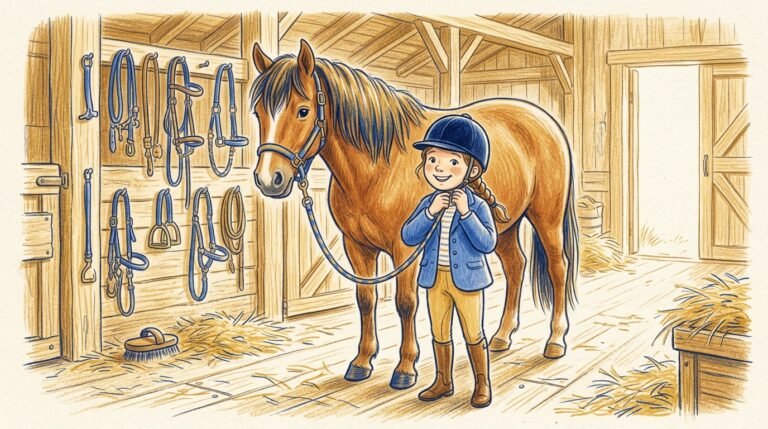
Gear talk can spiral fast in the horse world, so let us keep this practical. On trail, you need the same foundational gear you need in the arena, and you need it to fit correctly, because a loose helmet or a boot that slips through the stirrup does not get more forgiving when you are a mile from the barn.
Your helmet is non-negotiable and the fit matters more than the brand, though brand matters too. A helmet that sits too high or rocks side to side is not protecting you. If you are still riding in whatever you grabbed off the shelf when you started lessons, it is worth checking the fit before you take it off property. The best riding helmet for beginners guide on this site walks through what to look for in fit and certification.
Boots with a heel are not a style choice — they are a safety feature. Your foot needs to be able to clear the stirrup if you come off. Sneakers do not do that. On trail specifically, you also want ankle support and a sole that can handle walking on uneven ground, because there may be moments you need to dismount and lead. Half chaps or tall boots help with brush and branch contact on narrow trails. If you are still figuring out what fits your leg, how to choose half chaps is a useful starting point before you buy anything.
Sun protection, a small canteen or water bottle in a saddle bag, and a fully charged phone tucked somewhere accessible round out the basics. You do not need to arrive looking like an expedition. You need to arrive covered, hydrated, and reachable.
Reading the Trail and Managing Your Horse’s Energy
The arena gives you a predictable loop. The trail gives you variables, and your job is to read them ahead of time and manage your horse before problems develop, not after. That is the core skill of trail riding and it takes time to build, so give yourself room to learn it slowly.
Start with wide, well-maintained trails before you tackle anything narrow or technical. Open sight lines mean you can see what is coming. Your horse can too, and that matters. A horse that can see the scary thing from 50 feet away has time to assess it. A horse that rounds a blind corner into a mountain biker at close range has a different reaction entirely.
Watch your horse’s ears. Ears pinned forward hard and a body that gets tight underneath you are information. That horse is telling you something is ahead that it is not sure about. Sit quietly, close your leg, and let the horse look. Do not haul on the reins, which creates pressure and anxiety on top of whatever the horse was already feeling. If the horse needs to stop and look, let it stop and look. Then ask it to move forward from your leg when it relaxes. This is slower than pushing through, and it builds more trust.
Downhill terrain is where beginners get into the most trouble. The instinct is to lean back and pull, but leaning too far back throws your weight onto the horse’s hindquarters and makes balance harder for both of you. Stay centered over your stirrups, keep a light following contact, and let the horse pick its own footing line on rocky or rooted ground. The horse is better at navigating terrain than you are. Your job is to stay balanced and out of the way.
For more on recognizing when your horse is uncomfortable versus just reactive, signs your horse is in pain is worth reading before you head out, because pain and spookiness can look similar from the saddle.
Trail Etiquette and Safety Habits That Prevent Problems
Trail riding puts you in shared space, and there are real conventions that keep everyone safer. Some of them are obvious and some of them are not, so here is the short version of what actually matters.
Yield to hikers and yield to mountain bikers by stepping off the trail when you safely can and letting them pass. Not because horses are lower on the trail hierarchy — they are not — but because a controlled yield is safer than forcing a close pass on a nervous horse. Announce yourself to hikers from a reasonable distance so you do not startle them, because startled hikers startle horses. If you see cyclists coming at speed, get your horse off the trail and facing them. A horse that can see what is coming is easier to manage than one spinning away from something it barely glimpsed.
Ride single file on narrow trails. Do not let your horse crowd the horse in front — a kick from a shod horse is serious. Maintain at least one horse length of space between you and the rider ahead, especially on downhill sections where horses compress naturally as they slow.
Tell someone where you are going and when you expect to be back. Write it down if you are at a public trailhead. This sounds like overkill until it is not, and it takes thirty seconds.
For additional guidance on horse health fundamentals before a ride, The Horse is a reliable resource for understanding what normal looks like and when something is off.
Building Toward Longer Rides Over Time
Your first trail ride should be short. Thirty minutes of actual trail time is plenty. Your horse’s fitness for trail work is different from arena fitness, and your own body is going to discover muscles that flatwork never touched. The posting trot you learned in the ring does not translate directly to sitting the varied rhythm of trail terrain, and your hip flexors will let you know this the following morning.
Add distance and complexity gradually. After a handful of short rides on familiar trails, start extending. Add a water crossing when your horse is confirmed quiet on the basics. Try a trail with more elevation change. Work up to riding without the safety net of a lead horse. Each step builds the experience base that makes trail riding genuinely enjoyable rather than a white-knuckle exercise in survival.
Keep in mind that trail fitness is real for the horse too. Check in with Practical Horseman for conditioning guidance if you are planning longer rides or rougher terrain — pushing a horse past its current fitness level is a fast way to create soundness problems that will sideline you for weeks.
Frequently Asked Questions
Is trail riding safe for a beginner rider?
It can be, with the right horse and the right setup. A beginner on a seasoned, quiet trail horse with an experienced rider alongside is a reasonable starting point. A beginner on a green horse alone is not. The horse matters more than anything else at the beginning stage, so be honest about what you are getting on.
What should I wear for my first trail ride?
A properly fitted, certified helmet, boots with a heel, and riding pants or jeans that will not bunch against the saddle. Half chaps protect your lower leg from brush. Avoid loose clothing that can catch on branches or tack. Sunscreen and gloves round it out. Dress for function first — the trail does not care what you look like.
How long should a beginner’s first trail ride be?
Keep it short. Thirty minutes of trail time is a reasonable first outing. You are asking your body and your horse to handle new variables, and shorter rides that end well build more confidence than longer rides that go sideways from fatigue or overwhelm.
What do I do if my horse spooks on the trail?
Stay as quiet and still as you can. Close your leg, sit deep, and avoid jerking the reins, which adds pressure to an already stressed horse. If the horse is forward but manageable, give it a moment to assess the scary thing before asking it to move past. If the horse is beyond what you can manage, circle it to redirect the energy and get it focused back on you. And next time, go back to riding with a confident lead horse until your horse’s trail confidence builds.
Take Your Time and Take the Right Horse
Trail riding is one of the best things about having access to horses, but it earns its place in your riding life over time. The riders you see handling gnarly terrain calmly did not start there. They started exactly where you are, on a short loop with a buddy and a horse that had been out a hundred times before. Every one of those rides built something — horse confidence, rider feel, the instinct to read the trail ahead rather than react to what just happened.
Go short, go slow, go with someone who knows what they are doing, and pay attention to your horse the whole time. That is the honest version of trail riding tips for beginners, and it will take you further than any gear list or article ever could.
When you are ready for more, grab our free printable trail ride checklist and explore the shop for gear we actually use and recommend. It is all in one place, and none of it is fluff.