Horse Blanket Sizing Guide: How to Measure Your Horse and Get It Right
If you have ever pulled a blanket out of the tack room in October and stood there wondering whether it actually fits your horse, you are not alone. A horse blanket sizing guide sounds like the kind of thing you only need once, but in practice most of us get it wrong at least once before we get it right. The stakes are not trivial. A blanket that is too small will restrict shoulder movement and rub the withers raw. One that is too big will slide, twist, and end up under the horse by morning. Either situation means a cold, uncomfortable horse and an expensive piece of equipment that does not do its job. This guide walks you through how to measure correctly, what the numbers mean, how to check the fit once the blanket is on, and which products are worth your money.
The Riding Life is reader-supported. When you buy through links on our site, we may earn an affiliate commission at no extra cost to you.
How to Measure Your Horse for a Blanket
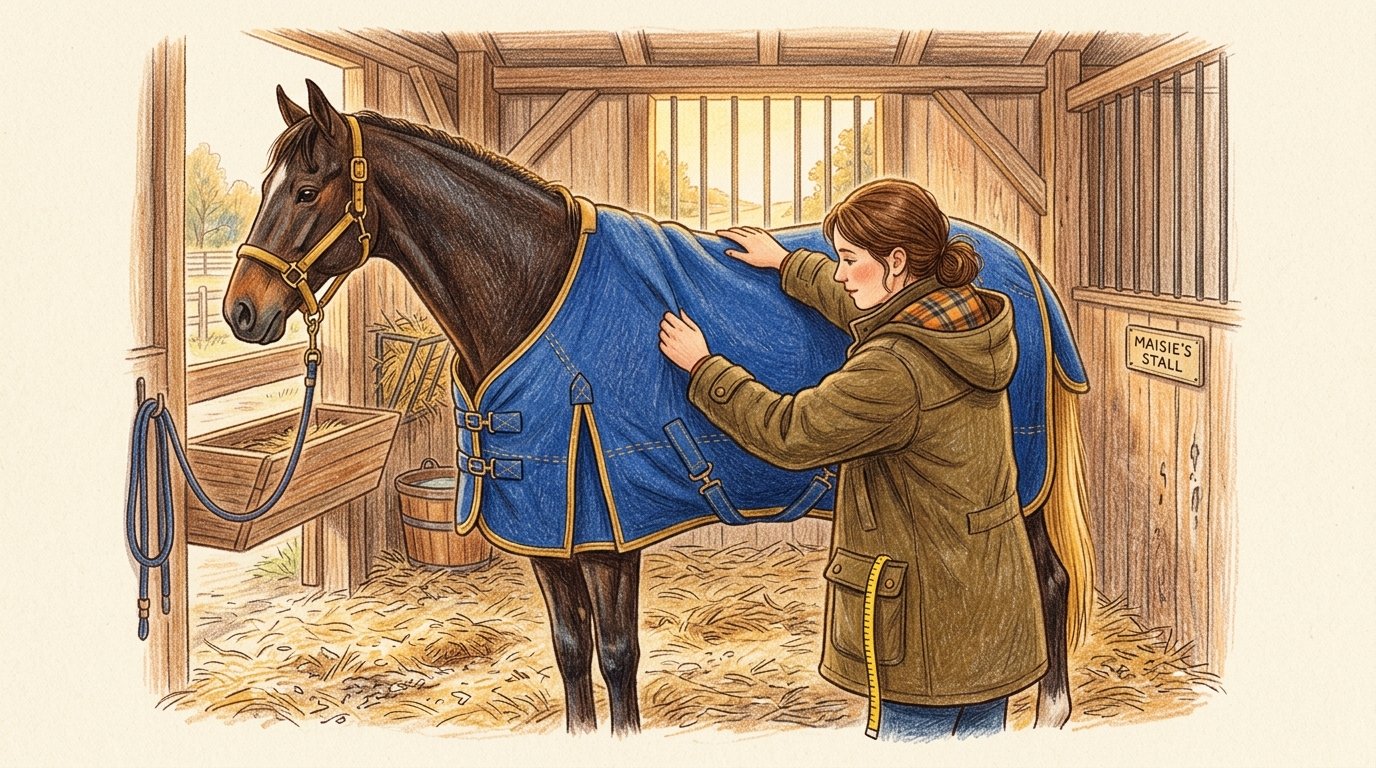
Horse blanket sizing is based on one measurement: the length of your horse’s body from the center of the chest to the point of the buttock, measured in a straight horizontal line. You need a soft measuring tape, a helper if your horse is wiggly, and a flat surface to stand on if your horse is taller than average.
Start at the center point of the chest, right where the two sides of the chest meet in front. Run the tape along the side of the horse, keeping it parallel to the ground, all the way to the point of the buttock. That bony prominence at the back of the hindquarter is your endpoint. Read the number in inches. That number is your horse’s blanket size.
Most horse blankets are sized in even increments: 72, 74, 76, 78, 80, 82, 84. If your horse measures 75 inches, you size up to 76. If your measurement lands exactly on an even number, that is your size, but it is worth knowing that fit can vary between brands, sometimes by an inch or two. A horse that wears a 78 in one brand might need a 76 or an 80 in another, so always check the brand’s fit notes before ordering online.
Ponies and miniatures follow the same method but may be sized differently by brand, sometimes in centimeters or in small, medium, large designations. Drafts and warmbloods sometimes need a brand that cuts blankets wider through the shoulder and barrel, because a blanket sized by length alone will not always account for a wide, heavy build.
Write the measurement down and keep it in your phone. The next time someone at the barn is selling a used blanket, you will know immediately whether it is worth trying.
Checking the Fit Once the Blanket Is On
A blanket can measure correctly and still not fit your individual horse. Once it is on, you need to check a few things before you trust it.
Start at the withers. Slide two or three fingers under the blanket at the wither. You should have that much clearance with no pressure on the spine. If the blanket is resting on the withers with no give, it will rub. If there is a large gap and the blanket is sitting well behind the withers, the shoulder cut is probably wrong and the front will creep back under movement.
Look at the shoulder seams. The seam should sit at or just behind the point of the shoulder, not on top of it. A blanket that cuts across the shoulder will restrict movement and cause rubs within a few nights. This is the single most common fit problem we see, and it is often not about the size number. It is about the shoulder cut, which varies between brands.
Check the neck opening. There should be enough room to get your fist through comfortably without the blanket gaping wide open at the front. Too tight and it pulls, too loose and it lets in cold air and can slide around.
Fasten the belly surcingles and leg straps. The belly surcingles should have a hand’s width of slack, maybe slightly more. Leg straps loop through each other in a figure-eight pattern and should hang loose enough that you can slide a hand through but not so loose that a hoof can catch. A leg strap that is too tight is a hazard. One that is dragging is also a hazard.
Put the blanket on and watch your horse move. Walk them in hand, ask for a trot if you can. Watch for any pulling at the shoulder, any shifting at the back, any signs of discomfort. A well-fitted blanket disappears on the horse. It moves with them.
Understanding Fill Weights and When to Use Them
Sizing gets you the right dimensions, but fill weight determines whether the blanket is the right tool for the temperature. This is where the horse blanket sizing guide conversation expands beyond inches into actual horse management decisions.
Blankets are generally divided into three categories: sheets, which have no fill and are used for rain protection or light cool weather or as a liner under a heavier blanket; medium weight blankets, typically 150 to 200 grams of fill, for cold but not brutal weather; and heavy blankets, 300 grams of fill and up, for genuine winter cold or for horses that are clipped or have thin coats.
Whether your horse needs a blanket at all is a separate question, and a genuinely contested one in the horse world. Horses that are unclipped and healthy with access to shelter and adequate forage generate significant body heat. Many horses in many climates do not need a blanket unless they are clipped, elderly, or have a condition that affects thermoregulation. Check out our winter horse care tips for a fuller breakdown of how to make that call based on your actual situation.
For horses that do need blanketing, the general rule is layering. A medium blanket plus a liner gets you more range than a single heavy blanket, because you can pull the liner as temperatures swing. In climates where the temperature drops forty degrees between morning and afternoon, that flexibility matters.
Waterproofing is non-negotiable for turnout blankets. Look for a denier rating, which measures fabric durability, and a waterproof rating in millimeters. For regular turnout in wet weather, you want at least 1200 denier and 2000mm waterproofing. Higher if your horse is hard on blankets.
Horse Blanket Sizing Guide: Products Worth Knowing
There are a lot of blankets on the market. These are the ones that come up consistently in barn conversations because they fit well, hold up, and are sized accurately enough that you can trust the measurement you took.
The Weatherbeeta Comfitec Essential Combo Neck Turnout is a reliable workhorse blanket. The shoulder cut is generous, which matters for horses with wide shoulders, and the 1200 denier outer is tough enough for a horse that walks through fencing like it is not there. Sizing runs true. It comes in multiple fill weights so you can buy the same fit across different weights and layer as needed.
The Rambo Original Turnout Blanket by Horseware is the one that barn managers at serious competition barns tend to reach for when asked what they trust. The front closure system eliminates the traditional front buckles in favor of a wrap-around design that reduces rubs at the chest and shoulder. It is not cheap, but it lasts, and the fit tends to be forgiving across different body types. Horseware sizing is consistent across their line, which helps when you already know your horse’s size in that brand.
For something more budget-conscious, the Tough 1 1200D Waterproof Poly Turnout Blanket performs well for the price. It is not as precisely cut as the higher-end options and can run slightly short on long-backed horses, so measuring carefully matters more here. But for a horse that tears through blankets, having a functional spare that did not cost a fortune is not a bad call.
For stable blankets or barn sheets, the Saxon 600D Medium Weight Stable Blanket is a solid mid-range option that holds up through a normal season without being precious about it. Good for overnight barn use and clipped horses.
For deeper reading on equine health decisions including blanket use and thermoregulation, The Horse has well-sourced articles on blanketing science and when horses actually benefit from it versus when we are blanketing to make ourselves feel better. Worth checking before you commit to a heavy blanket routine.
While you are thinking about your horse’s overall health and care routine, our common horse health issues page is worth a read. Blanket rubs that go unnoticed can lead to skin problems that become bigger issues through the winter.
Common Blanket Sizing Mistakes and How to Avoid Them
The most common mistake is measuring over a winter coat. Hair adds bulk, and if you measure in November when your horse is already fluffy, you may size up when you did not need to. Measure on a body that is close to what it will be when the blanket is in use.
The second most common mistake is buying used without measuring. A blanket labeled 78 by one brand might run as small as a 76 in practice. Always confirm the measurement fits your horse rather than trusting the label.
Third: buying for the horse you wish you had rather than the horse you have. A narrow-shouldered thoroughbred and a wide-barreled quarter horse can measure the same body length and need completely different blanket cuts. If your barn has horses that are hard to fit, ask the blanket company about their cut before you order. Reputable companies have customer service people who actually know their own product proportions.
Finally, do not forget to check blanket fit again mid-season. Weight changes, especially if a horse gains or loses condition over winter, can affect how a blanket sits. A blanket that fit in October might be pulling across a horse that has filled out by January, or gaping on a horse that has dropped weight.
A general horse care reference like horse care basics for beginners can help you stay on top of condition scoring and seasonal changes so blanket fit does not sneak up on you.
Frequently Asked Questions
What if my horse measures between two blanket sizes?
Always size up. A blanket that is one size too large can be adjusted at the surcingles and leg straps. A blanket that is one size too small cannot be made larger and will cause rubs and restrict movement, especially at the shoulder. The exception is a horse that already has a deep, round barrel and tends to have blankets slip back. In that case, fit through the shoulder and neck first, then check whether the extra length causes dragging issues at the back.
Do different styles of blankets, like turnout versus stable blankets, size the same way?
The measurement method is the same: chest center to point of buttock. But the cut is different. Turnout blankets are typically cut with more room through the shoulder and a longer drop at the sides to handle movement in a field. Stable blankets are often cut closer to the body. A horse that wears a 78 in a turnout might fit best in a 76 stable blanket from the same brand. When in doubt, check the brand’s size chart rather than assuming the number transfers.
How do I know if a blanket is causing rubs?
Check the wither, the shoulder points, and the chest daily during peak blanketing season. Rubs show up as hair loss first, then skin irritation. A white horse will show pink skin under a rub early. On a dark coat, you are looking for hair that is flat, scurfy, or missing. If you catch it early, a properly fitted blanket liner or a blanket bib at the chest can sometimes solve the problem without replacing the whole blanket. If the rub is at the wither, the blanket is probably sitting too tight across the back and needs to be replaced with a different cut.
Can I use a horse blanket on a pony or a draft horse?
Standard horse blankets are cut for standard horse proportions. A large pony or small horse that measures 68 to 72 inches can usually find a small horse size in most brands. True ponies and miniatures need pony-specific blankets that account for different body proportions, not just smaller measurements. Drafts and warmbloods often need blankets specifically marketed as draft or warmblood cut, which are wider through the shoulder and barrel. Trying to put a standard-cut blanket on a wide-bodied draft is one of the faster ways to end up with shoulder rubs and a blanket that will not fasten in front.
Getting Your Horse Blanketed Right This Season
A horse blanket sizing guide is only useful if you actually apply it before you buy, not after the box arrives and the blanket does not fit. Measure once, write it down, understand that the number is a starting point and the fit check is where you confirm it, and buy from brands with clear size charts and return policies when you can.
Blanketing is one of those barn tasks that feels simple until you have had a blanket slide off a horse in wet weather or watched a rub develop over two weeks because the shoulder seam was in the wrong place. The fundamentals here are not complicated, but they do require paying attention to the actual horse in front of you rather than just trusting a label.
If this helped you get your blanket situation sorted, grab our free printable checklist to keep your seasonal horse care organized from the first cold morning to the last muddy spring day. And if you are still putting together the rest of your horse care and gear routine, head over to the shop for more honest recommendations from one barn family to another.