How to Lunge a Horse
If you spend enough time at a barn, you are going to see someone lunging a horse before you ever try it yourself. You will watch them stand in the middle of a circle, horse moving around the outside, lunge line in one hand and a long whip in the other, and it will look either very simple or vaguely chaotic depending on the horse. Learning how to lunge a horse is one of those foundational skills that looks basic on the surface but has real depth to it, and doing it wrong is not just ineffective, it can make your horse worse. This guide covers the equipment, the technique, the mistakes people make, and the situations where lunging actually earns its place in your routine.
The Riding Life is reader-supported. When you buy through links on our site, we may earn an affiliate commission at no extra cost to you.
What Lunging Is and Why It Matters
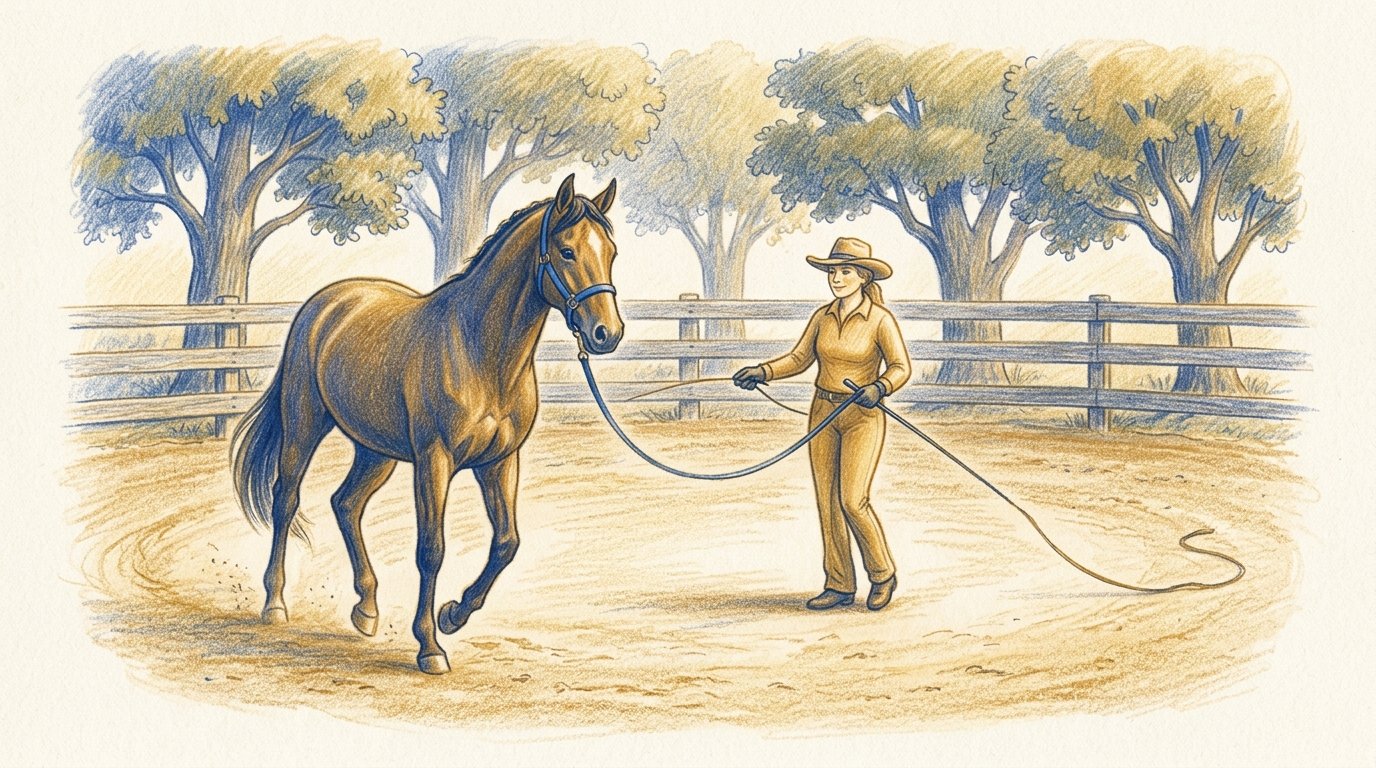
Lunging means working a horse in a circle around you on a long line, usually 20 to 30 feet, at whatever gaits you ask for. You are the center point. The horse moves around the outside. You use the line, your body position, and the lunge whip as your tools of communication.
People lunge for several different reasons and it helps to know which one applies to you, because the goal changes how you do it.
The most common reason at a busy lesson barn is burnishing the edge off a fresh horse before someone gets on. A horse that has been in a stall overnight or had a few days off can be bouncy. A few minutes of controlled movement on the lunge line gives you information about their mood and takes a little wind out of their sails. That is a practical, legitimate use.
The second reason is fitness and suppleness. Lunging lets you build a horse’s muscle, especially topline, and work on rhythm and balance without the added weight of a rider. This is why trainers working young horses or horses coming back from injury use it so heavily.
Third is training. Lunging teaches a horse to respond to voice commands and body language. A horse that lunges well is a horse that has learned to pay attention to you from the ground, and that carries over under saddle.
And fourth, honestly, is assessment. If your horse is moving funny and you are not sure what you are feeling from the saddle, watching them move on the lunge in both directions on a consistent circle gives you a clearer picture. Lameness often shows up more obviously when you can see the whole horse moving away from you.
The Equipment You Actually Need to Lunge a Horse
You do not need a lot of gear, but what you use matters. Here is what a basic lunging setup looks like.
Lunge line: A flat cotton or nylon line, 25 to 30 feet long, with a swivel snap at the end. The swivel matters because it keeps the line from twisting as the horse moves. You want something with enough weight to communicate through it but not so heavy it sags and drags on the ground constantly.
Lunge whip: Long enough to reach the horse’s hind end from the center of the circle. You are not hitting the horse with this. You are using it as an extension of your arm to direct and encourage forward movement. A good lunge whip has a long shaft and a long lash. If the whip is too short you will find yourself walking toward the horse to get their attention, which collapses the circle and defeats the purpose.
Halter or cavesson: Beginners usually lunge from a halter. A proper lunge cavesson, which is a padded noseband with rings on it specifically for lunging, is more effective for real training work because it allows more nuanced communication through the line without pulling on the horse’s face through a single ring. If you are just starting out and the horse already knows the job, a well-fitted halter works. For horses in active training, a cavesson is worth it.
Your gloves: Non-negotiable. A horse that spooks or bolts on the lunge line will run that line through your hands. Wear gloves every single time. This is not optional advice.
Appropriate footing: Lunge on a flat, safe surface. Arenas are ideal. Avoid hard, uneven ground or deep mud. The circle a lunging horse travels puts repetitive strain on their joints, and bad footing makes that worse.
If your horse is going to be worked more seriously on the lunge, polo wraps or splint boots on the legs offer some protection from the horse interfering with itself on the circle.
How to Lunge a Horse Step by Step
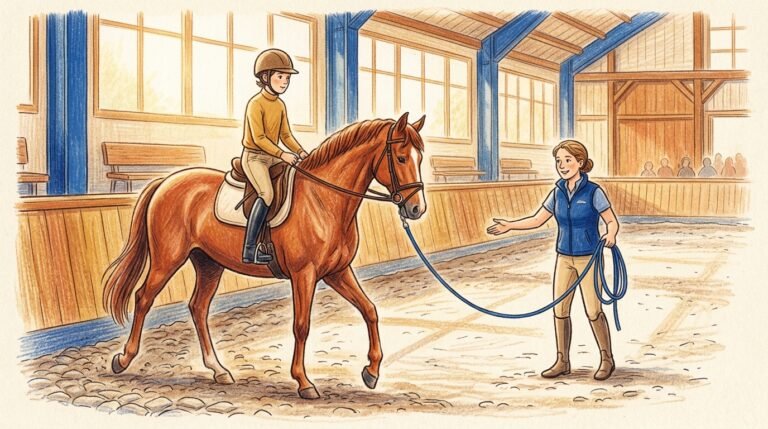
Start with the horse haltered and the equipment ready. Attach the lunge line to the halter ring under the chin, or the center ring of the cavesson if you are using one. Hold the lunge line in the hand on the same side the horse is circling. Hold the lunge whip in the other hand, pointed toward the ground and slightly behind the horse’s drive line, which is roughly the girth area.
Position yourself at the horse’s shoulder to start. To send the horse out and forward, step slightly behind that drive line and apply light pressure on the line while pointing or lifting the whip toward their hindquarters. Most horses that have been lunged before will walk or trot out at this. Horses new to it may need more encouragement and patience.
Your job once the horse is moving is to stay at the center of the circle. This sounds obvious and it is harder than it sounds. Beginners constantly walk toward the horse, drift off center, or get pulled around the circle by the horse instead of the horse going around them. Plant yourself. Pivot in place. Let the horse do the moving.
Keep steady, light contact on the lunge line. Not tight, not floppy. You want a gentle connection. Use voice commands consistently: walk, trot, canter, whoa. The horse learns these over time if you use them the same way every time.
To slow or stop, step slightly ahead of the drive line, lower the whip, relax your body, and say whoa. Do not haul on the line. Invite the transition down the same way you invite it under saddle: with your energy and your body before you use your hand.
Work both directions equally. Horses are typically stiffer one way than the other, just like people favor a hand. Equal work in both directions matters for their development.
Sessions do not need to be long. Fifteen to twenty minutes of quality work is plenty for most horses. Lunging in small circles is hard on joints, especially at the canter. Keep the circle as large as your line and space allow, and do not drill the canter endlessly.
Common Mistakes When Lunging
The biggest one is letting the circle collapse. When the horse drifts in, the handler usually just lets it happen or steps back to accommodate. The fix is to point the whip toward the horse’s shoulder and use it as a barrier. Your whip position shapes the circle as much as the line does.
Second mistake is chasing the horse instead of directing it. If you find yourself jogging to keep up or spinning in fast circles, the horse is driving the conversation, not you. Slow everything down. Stop if you need to. Reset from the shoulder, send the horse out again with intention.
Third is holding the excess line badly. You should fold it in loops in your hand, not wrap it around your hand or wrist. If the horse bolts, a line wrapped around your wrist will drag you. Folded loops drop free.
Fourth is using the lunge as a substitute for real work too often. Lunging a hot horse before every single ride so you can survive getting on is a band-aid on a training problem. Used occasionally it is practical. Used as the only strategy indefinitely, it just tells you the horse is not confident or fit enough for consistent work under saddle, and that needs a different answer.
For more on the basics of keeping a horse healthy and well-managed day to day, our horse care basics for beginners guide is a solid place to read alongside this one. And if your horse has been dealing with any soundness questions that came up during lunging, common horse health issues covers what to watch for and when to call the vet. For more in-depth reading on the biomechanics behind lunging and why it works the way it does, TheHorse.com has solid peer-reviewed equine health and training content worth bookmarking.
Frequently Asked Questions
How long should you lunge a horse?
Fifteen to twenty minutes is usually enough for a solid lunging session. If you are just taking the edge off before a ride, even ten minutes can do it. The circle is hard on joints, especially at canter, so longer is not better. Quality of movement and consistency of response matter more than time on the line.
Can you lunge a horse in a halter instead of a cavesson?
Yes, and most people starting out do. A halter works fine for a horse that already understands lunging. A proper lunge cavesson gives you more control and communicates more clearly through the line, especially with a young horse or one you are actively training. If you are going to lunge consistently as part of a training program, a cavesson is worth the investment.
Why does my horse cut in on the circle?
A few reasons. The horse may be unbalanced and finding the smaller circle easier. The horse may be drifting toward you because you are drifting toward them first. Or the horse may simply not yet understand that the circle shape is what you are asking for. Use the whip pointed at the shoulder as a soft barrier. Steady your own position. Give the horse time to figure out where you want them.
Is lunging good exercise for a horse?
It can be, but it is not a replacement for ridden work in most cases. Lunging builds rhythm, balance, and topline, and is genuinely useful for horses coming back from time off or recovering from an injury under veterinary guidance. The circle is harder on legs than straight line work, so watch your footing, keep the circle large, and do not overdo canter work especially on tight circles.
Lunging Is a Skill Worth Taking Seriously
We have watched a lot of horses get lunged over the years, from the rail and from the center of the arena ourselves. The ones handled well move out with purpose, listen to voice and body, and come back in soft and attentive. The ones lunged carelessly get more wound up, not less, or learn to tune out the handler entirely.
It is not complicated, but it requires consistency and some honest assessment of your own position and timing. Like most things with horses, the horse will tell you pretty quickly whether you are communicating clearly or making noise.
If you are still getting oriented to barn life and what the whole picture costs and looks like, our piece on how much horseback riding lessons cost breaks down the real numbers at every stage of involvement.
Ready to keep going? Grab our free printable checklist to build your lunging routine from scratch, and head over to the shop for more gear guides and resources put together by barn families for barn families.