What to Expect at Your First Horse Show
The Riding Life is reader-supported. When you buy through links on our site, we may earn an affiliate commission at no extra cost to you.
If you have been wondering what to expect at your first horse show, you are not alone. Walking into a showground for the first time can feel overwhelming — trailers everywhere, horses braided and gleaming, riders in spotless show coats, and a loudspeaker rattling off class numbers you have never heard before. The good news is that every single competitor in that ring was once exactly where you are now, equal parts excited and terrified. This guide will walk you through everything from arrival to awards so that your debut at the ring feels a whole lot less like a mystery and a whole lot more like an adventure.
Understanding the Schedule and Logistics Before You Arrive
One of the biggest surprises at a first horse show is how early the day starts. Most shows publish a detailed prize list and class schedule well in advance, and your trainer or barn manager will likely register you for specific classes ahead of time. Study that schedule carefully so you know roughly when your division will be called. Arrive at the showground with plenty of buffer time — horses need to be unloaded, settled, groomed, warmed up, and sometimes braided before you ever enter the ring.
Walk the showground as soon as you can. Find the show office where you will pick up your back number, locate the warm-up rings, identify the show ring itself, and spot the bathrooms and concessions. Knowing the layout removes one layer of mental chaos on a high-adrenaline day. Many larger shows governed by organizations like USEF post their schedules and rules online, so you can familiarize yourself with the format even before you load the trailer.
Keep a paper copy of the schedule in your tack trunk or jacket pocket. Class orders can shift, especially at local schooling shows, and you never want to miss your division because you were at the snack stand when your number was called.
What to Wear and What to Pack
Proper attire matters both for safety and for following show ring etiquette. For most English disciplines at schooling and rated shows in 2026, the standard look includes a fitted show coat or hunt coat, white or tan breeches, tall boots or paddock boots with half chaps, a show shirt with a choker or stock tie, and an approved helmet. If you are still putting together your show wardrobe, check out our guide on how to choose half chaps to make sure your leg gear is both polished and comfortable for long show days.
Your helmet is the single most important piece of equipment you will wear. An SEI-certified, ASTM-rated helmet is required at most sanctioned shows, and many schooling shows follow the same standard. The Charles Owen AYR8 is a popular choice among show riders because it combines sleek show-ring style with serious impact protection — real details matter when you are competing rather than just hacking at home. If you are newer to buying helmets, our best riding helmet for beginners guide breaks down the top options to help you choose confidently.
Beyond clothes, pack a tack trunk or show bag stocked with grooming supplies, a spare set of reins, hoof pick, extra safety pins for your number, sunscreen, water, snacks, and a basic first aid kit for both you and your horse. Bring layers because showgrounds can be blazing at noon and chilly by late afternoon. A show checklist will save you from that sinking feeling of realizing you left your show gloves on the kitchen counter — which is exactly why we have a free printable version available for you at the end of this article.
What Happens in the Ring at Your First Horse Show
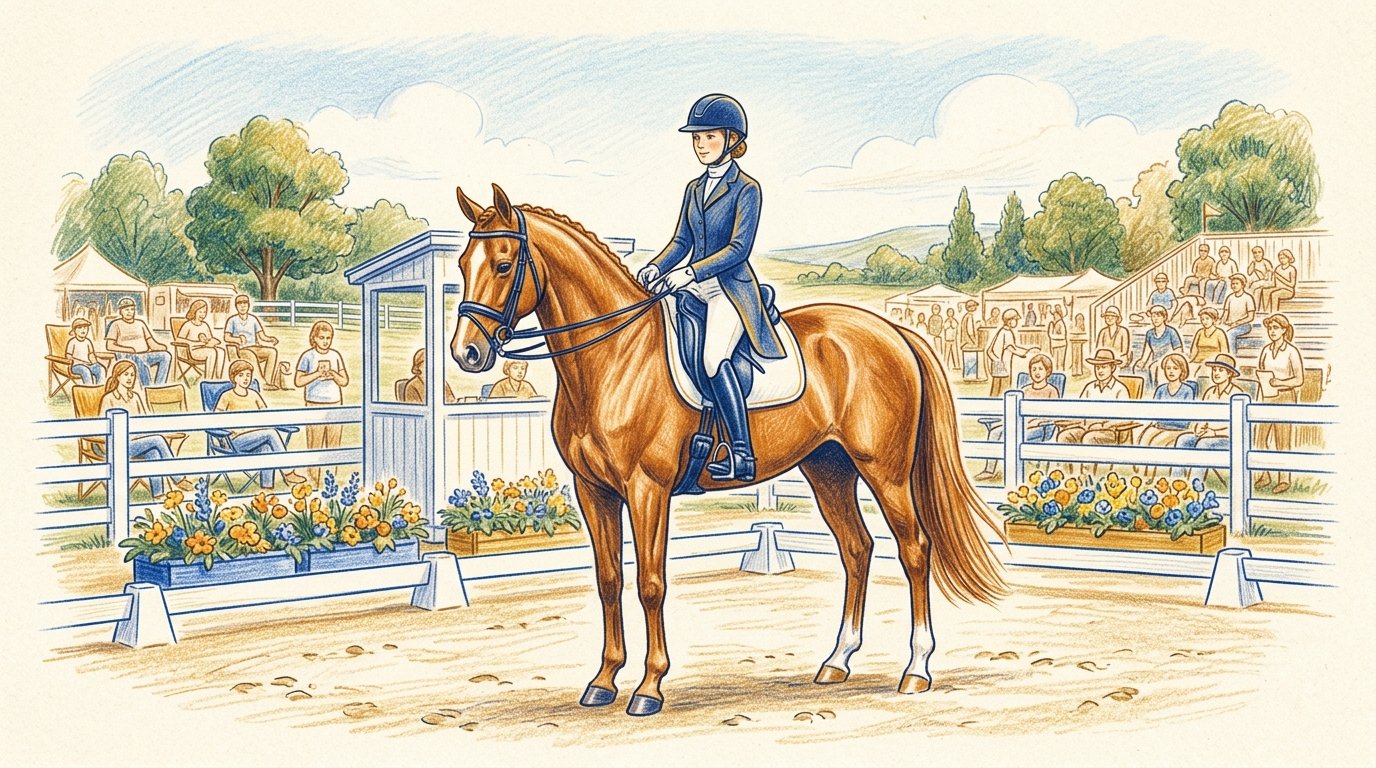
Walking into the show ring for the first time is a genuine thrill and a genuine heart-pounding moment all at once. Before you enter, you will warm up in a designated schooling area. Use that time wisely — your warm-up is not just about loosening your horse’s muscles, it is about settling your own nerves and finding your rhythm together. Keep your circles and transitions organized, stay aware of other riders in the warm-up ring, and follow the unspoken rule of passing left shoulder to left shoulder.
Inside the show ring, a judge seated ringside will evaluate your round. In hunter classes, they are looking for smooth, consistent pace, accurate distances to fences, and a calm, obedient horse. In equitation, the judge evaluates your position, aids, and effectiveness as a rider. In dressage, movements are scored individually on a scale from zero to ten. For western disciplines, judges assess cadence, softness, and partnership. Whatever your class, listen to the ringmaster or in-gate steward, enter and exit promptly, and acknowledge the judge with a nod if you catch their eye — it is a small courtesy that experienced competitors do automatically.
When the class ends, the ribbon presentation is a moment to savor. Whether you earn a blue or a participation ribbon, walk quietly to the ribbon area, accept your award graciously, and cheer for your barn mates. Sportsmanship is taken seriously in the horse world, and how you handle both wins and tough rounds tells other competitors everything about the kind of equestrian you are becoming.
Managing Nerves and Setting Realistic Expectations
Nerves at a first horse show are not just normal — they are practically a tradition. Even seasoned professionals feel the pre-class flutter. The key is channeling that energy rather than letting it hijack your body. Deep breathing, a consistent warm-up routine, and a brief pep talk from your trainer can shift nervous energy into focused alertness. Horses are incredibly sensitive to their rider’s emotional state, so the calmer and more deliberate you can be in your body, the steadier your horse will feel beneath you.
Set your expectations clearly before you walk through the gate. Your first show is a learning experience, full stop. You are there to practice showing, not to win. Observe how more experienced riders handle course walks, warm-ups, and transitions. Ask your trainer questions between classes. Take mental notes about what felt good and what you want to improve. The riders who grow fastest in this sport are the ones who treat every show as a training opportunity rather than a performance review.
If you are still figuring out the overall cost and commitment involved in competitive riding, our breakdown of how much horseback riding lessons cost can help you plan a budget that includes show fees without financial stress.
Show Etiquette and Barn Culture
Horse shows have a culture all their own, built on mutual respect, safety awareness, and a shared love of horses. Some etiquette rules are written, like following traffic patterns in warm-up rings and keeping aisles clear. Others are unspoken but just as important: do not walk directly behind a strange horse, do not distract a horse and rider about to enter the ring, and always congratulate competitors on a good round even if they beat you.
Your barn community will likely be your anchor at a show. Barn families set up a shared stabling area or a row of stalls together, cheer loudly for every rider in their group, and pitch in to help with tasks ranging from grooming to hauling water buckets. Lean into that community. Offer to hold a horse while a barn mate adjusts their stirrups. Share your extra safety pins. Learn the names of the other horses in your group. The relationships formed at horse shows often last for years and become some of the most meaningful friendships in the equestrian world.
Resources like Practical Horseman are also excellent for brushing up on discipline-specific ring protocol before your debut, from hunter pace etiquette to dressage arena letters.
Frequently Asked Questions
Do I need a horse of my own to enter a show?
No — many riders lease horses specifically for the show season or borrow a school horse from their barn. If you are weighing the cost and commitment of having a horse available for competition, our article on leasing a horse versus buying explores both options in depth at theridinglife.com/leasing-a-horse-vs-buying.
How much does it cost to enter a horse show?
Entry fees vary widely depending on whether the show is a local schooling show or a rated competition. Schooling shows can run as low as ten to twenty-five dollars per class, while rated shows sanctioned by national organizations can cost fifty to one hundred fifty dollars or more per class, plus stabling fees, office fees, and membership dues. Always read the prize list carefully so there are no billing surprises.
What if my horse spooks or refuses in the ring?
It happens to everyone at some point and it is not the end of the world. Stay calm, use your aids quietly, and try to continue the course or movement if safety allows. If you are in a hunter or equitation class over fences and your horse refuses, you may circle and re-approach, though it will affect your score. The judge has seen it all. What matters most is how you handle the situation with patience and skill.
Can family members come and watch?
Absolutely — and most horses and riders love the cheering section. Ask your barn manager or show office about spectator areas and parking before the day of the show so your family arrives knowing where to go. Remind them to stay quiet near the warm-up ring and to avoid sudden movements or loud noises near unfamiliar horses in the barn aisle.
You Are Ready for the Ring
Knowing what to expect at your first horse show transforms the experience from a stressful unknown into an exciting milestone. You will be nervous, your horse may have opinions, and something unexpected will probably happen — that is just showing. What you will also find is a community of people who share your passion, a judge who is genuinely rooting for you to do well, and a ribbon that will feel absolutely earned no matter what color it is.
The best thing you can do right now is start preparing. Review your attire, check your tack, and talk through your class list with your trainer. Then grab our free printable show day checklist so nothing gets left at home, and explore the shop for more gear guides and equestrian resources designed to help you compete with confidence at every level. Your first show is just the beginning.