Western vs English Riding Differences Every Horse Family Should Know
If you are new to the horse world and trying to figure out where your rider fits, the western vs English riding differences question comes up fast. Someone at the barn mentions hunters, someone else says their kid does reining, and you are standing at the rail nodding like you know what any of it means. You do not yet, and that is fine. These are two broad traditions with different equipment, different body mechanics, different competitive formats, and different cultures, but they share one foundation: you still have to learn to sit a moving horse before any of it matters.
The Riding Life is reader-supported. When you buy through links on our site, we may earn an affiliate commission at no extra cost to you.
The Basic Western vs English Riding Differences in Seat and Equipment
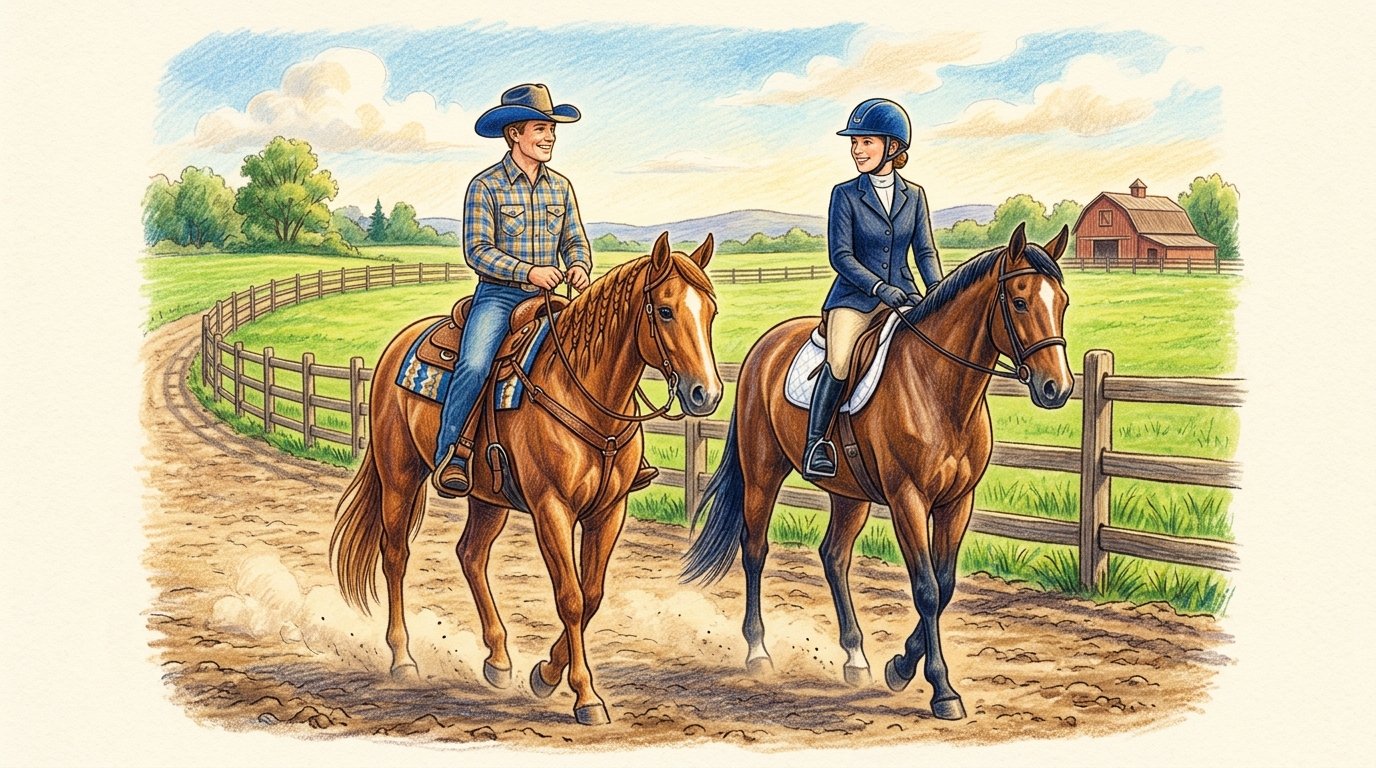
Start with what you can see from the rail, because the equipment tells most of the story. A western saddle is large, deep-seated, and built around a horn at the front. It distributes weight across a wider surface area, which is part of why it was designed for long days of ranch work. The rider sits deep in the seat with a longer stirrup, a more upright leg, and a relaxed, following posture. The reins are held in one hand, loosely, and the horse is guided by neck reining, meaning the rein lays against the neck to cue direction rather than direct contact with the mouth from both hands.
An English saddle is smaller, flatter, and closer to the horse. There is no horn. The rider’s leg is longer and angled, the contact with the horse’s mouth is two-handed and more continuous, and the overall posture is more forward and active depending on the discipline. Jumping requires a shortened stirrup and a two-point position. Dressage sits deep and tall with long legs and a very still upper body. The saddle is the clearest visual dividing line, and fitting it correctly matters for both. If you end up going the English route, our English saddle buying guide walks through what to look for. If western is the direction, western saddle fitting covers the key points so you are not guessing.
The gear differences extend to footwear and leg protection too. Western riders typically wear a cowboy boot with a defined heel. English riders often wear tall boots or paddock boots with half chaps, and the fit of that combination matters more than most beginners expect. Our guide on how to choose half chaps covers why the right fit protects the leg and improves communication with the horse.
How the Skills and Communication Differ Between the Two Traditions
Both traditions require the same foundational work. You have to learn to sit without gripping, move with the horse, and stay balanced before you can do much of anything useful. That part does not change whether there is a horn in front of you or not.
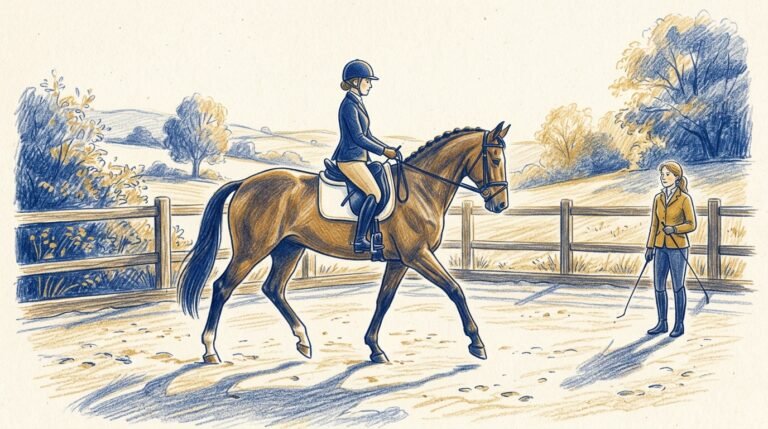
Where they diverge is in how the rider communicates with the horse once the basics are solid. English riding, particularly hunter-jumper and dressage, relies heavily on bilateral rein contact. Both hands are always engaged, the rider is in a conversation with the horse’s mouth through even, steady pressure, and leg aids are layered on top of that. The horse learns to work into the contact. Dressage takes this to an extreme level of refinement, where the aids become nearly invisible from the outside.
Western riding, especially reining and trail, moves toward a lighter and more independent horse. The goal is often a horse that responds to minimal cues, works off a loose rein, and can be guided with subtle weight shifts and neck rein pressure. Ranch riding and roping have their own practical demands layered on top of that. Western pleasure, which is a competitive discipline judged on smoothness and manners, puts a premium on an extremely quiet, cadenced horse that almost appears to barely be moving.
Neither approach is easier. They are different skill sets that develop differently. What we have seen at the rail over the years is that kids who start with good English basics, meaning a correct position, independent seat, and soft hands, often have an easier time adapting to western later. The reverse is also true. A solid western foundation teaches a quiet, following seat. These traditions borrow from each other more than the equipment suggests.
Disciplines Within Each Tradition and What They Require
Western covers a wide range: reining, cutting, barrel racing, western pleasure, trail, ranch riding, roping, and more. Reining is probably the most athletic and technical, requiring horses and riders to perform precise patterns of spins, sliding stops, and lead changes. Barrel racing is speed-focused and appeals to riders who want adrenaline. Western pleasure is slower and more polished. Trail classes test the horse and rider’s ability to navigate obstacles calmly.
English disciplines are equally varied. Hunter-jumper is what most lesson barns introduce first, and it splits into hunters, which are judged on style and manners, and jumpers, which are judged purely on speed and faults. Dressage is a discipline of its own and could fill a separate article. Eventing combines dressage, cross-country jumping, and stadium jumping into a three-phase format. Hunt seat equitation is a judged division focused on the rider’s position and effectiveness rather than the horse.
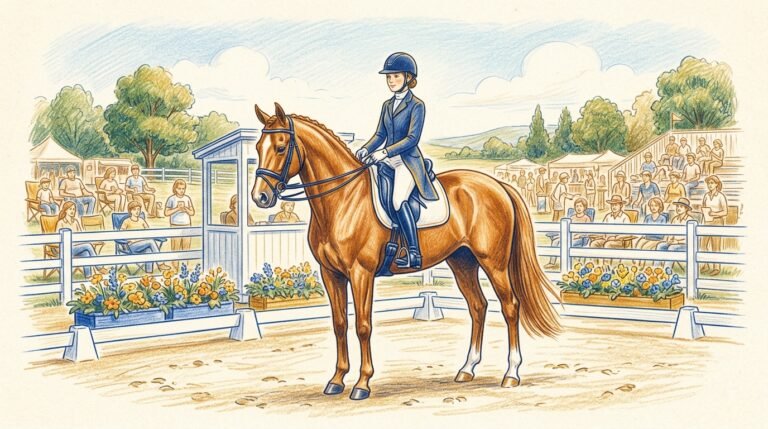
At the show level, the formats are also different. English show hunters are judged subjectively on the horse’s way of going and style. Jumpers are objective, faults and time. Western reining is scored on execution of pattern elements. If you are just starting to think about shows, it helps to know what you are signing up for. Our piece on what to expect at your first horse show is useful regardless of discipline.
Cost and Commitment Across Both Traditions
The honest answer is that neither tradition is cheap, and the costs are more similar than people expect once you account for everything. Lessons run roughly the same, around a hundred dollars a week in most markets, paid monthly whether you show up or not. Shows run in the range of three to four hundred dollars for a local one-day event. Transport, entry fees, and gear costs exist in both worlds.
What does differ is the specific gear investment. English show attire, especially for hunters and equitation, can get expensive fast. A correct show coat, breeches, tall boots or paddock boots with gaiters, and a properly fitted helmet add up. Western show attire has its own cost structure with show shirts, pants, boots, and hats. Neither side is doing this on a shoestring once you are competing regularly.
The horses themselves can lean in cost by discipline. A well-trained western reining prospect and a made hunter-jumper horse are both expensive. The breed preferences differ, with Quarter Horses dominating western disciplines and Warmbloods, Thoroughbreds, and sport horse crosses common in English, but quality costs money in any direction. Understanding the full financial picture before you commit to a path is worth the time. Our piece on how much horseback riding lessons cost is a good starting point, and for families thinking ahead about leasing or ownership, leasing a horse vs buying lays out the decision clearly.
For reputable competitive information on English disciplines, the USHJA is the governing body for hunter-jumper, and their website is worth bookmarking if your rider is heading that direction.
How to Decide Which Tradition Is Right for Your Rider
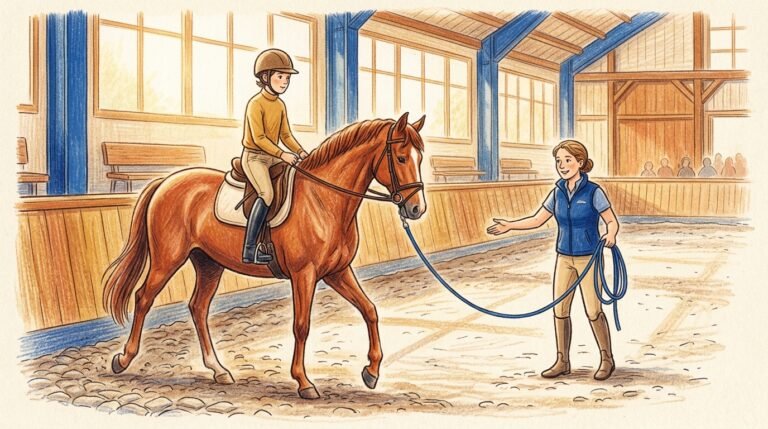
Most lesson barns have a tradition they teach, and the honest answer for most families starting out is that the choice gets made for you by geography and barn availability. If the barn you found does English, your rider learns English. That is not a problem. The foundation is transferable.
If you do have a choice, watch your rider’s instincts. Some kids gravitate toward the speed and athleticism of jumping almost immediately. Others are more comfortable in a deep seat with a quiet horse under them. Some are drawn to the precision and artistry of dressage or reining from the beginning. Those instincts are worth paying attention to, but they are not permanent. Riders change disciplines all the time, and crossing over teaches things you cannot learn by staying in one lane.
What we would tell any new barn family is not to over-plan the discipline question in year one. Get the basics in place first. Get a properly fitted helmet, get the right footwear, learn the barn routine, and let the horse tell you a few things before you decide where this is all going. The horse rarely cares which tradition you picked. It cares whether you show up, pay attention, and learn to listen. That part is the same in every arena.
Frequently Asked Questions
Is western riding easier than English riding for beginners?
Not really, though it is a common assumption because the western saddle has a horn to grab and a deeper seat. The basics are the same in both traditions. You still have to learn balance, position, and how to communicate with the horse. Neither is a shortcut.
Can a rider switch from western to English or vice versa?
Yes, and many do. The foundational skills overlap significantly. Riders who have a solid seat and quiet hands in one tradition usually adapt well to the other. Gear changes, and some technique adjustments are needed, but the core horsemanship carries over.
Do western and English riders use the same horses?
They can, though breed preferences differ by discipline. Quarter Horses are the most common western breed. Warmbloods, Thoroughbreds, and sport horses dominate English show rings. But plenty of horses cross over, and a well-trained horse with good basics can often work in multiple disciplines.
What gear do I actually need to start lessons regardless of discipline?
Start with a properly fitted ASTM-certified helmet and a boot with a small heel, at least an inch, so the foot does not slide through the stirrup. Everything else comes later as you figure out where your rider is headed. Do not overbuy at the beginning.
Where to Go From Here
The western vs English riding differences come down to equipment, communication style, disciplines, and culture, but they share the same foundation. Both ask the rider to show up consistently, develop a quiet and effective seat, and learn to listen to the horse. Both traditions have their version of the work that makes a good rider, and the horse is not impressed by which saddle you use until you know how to sit in it properly.
Whether your barn goes English or western, the investment is real, the learning curve is genuine, and the reward, watching a rider grow confident and capable on horseback, is worth every early morning and muddy boot. If you want a practical starting point for getting organized, grab our free printable checklist to make sure you have what you actually need from day one, and explore the shop for gear recommendations that hold up in real barn conditions.