How to Improve Your Riding Position
If you have spent any time at a barn, you have heard the same corrections shouted across an arena week after week: heels down, eyes up, shoulders back, sit tall. Learning how to improve your riding position is not a one-lesson fix. It is a project measured in months and years, and it touches everything else you do in the saddle. The way you sit affects how your horse moves, how clear your aids are, and whether the animal underneath you trusts your balance or spends energy compensating for it. That is the part most beginner riders do not hear early enough, and it is worth saying plainly.
The Riding Life is reader-supported. When you buy through links on our site, we may earn an affiliate commission at no extra cost to you.
Why Position Comes Before Everything Else
From the parent chair, you watch a lot of riders. You watch the brand-new lesson kids grip the saddle with their knees and tip forward every time the horse trots. You watch intermediate riders get frustrated because their horse is not responding correctly, when the real answer is that their own body is sending five different signals at once. Position is not cosmetic. It is functional.
A balanced, correct position puts the rider in alignment: ear, shoulder, hip, and heel roughly on the same vertical line. When that line is solid, the rider moves with the horse instead of against it. The horse can do its job without carrying a passenger who is constantly catching up to the movement. When that line is broken, everything gets harder. The horse gets tense or hollow. The aids get muddled. The whole conversation between horse and rider starts falling apart.
This is true at every level. A beginner who learns to sit balanced from the first month builds on something real. A rider who is years in and never addressed a chair seat or tipped shoulders will hit a ceiling they cannot explain. Position problems do not disappear on their own. They have to be worked on deliberately, and usually with help.
The Most Common Position Problems and What They Actually Mean
There are a handful of position faults that show up over and over regardless of the discipline or the barn. Understanding what is causing them matters more than just trying harder to fix them.
The chair seat. This is when the rider’s leg slides forward and the hip angle opens, so the rider looks like they are sitting in an armchair. It usually comes from gripping with the back of the thigh or locking the knee. The fix involves relaxing the hip flexor, allowing the weight to drop through a long, soft leg into the heel, and letting the heel carry some weight rather than the toe.
Tipping forward. Common in jump riders, common in beginners, common in nervous riders. The upper body comes ahead of the motion. This often comes from looking down, from anticipating the movement, or from core weakness that makes it hard to stay upright when the horse accelerates. Eyes up is not just a cliche. Where your eyes go, your body follows.
Gripping with the knee. The knee acts like a pivot point when it grips, pushing the lower leg back and backward and popping the seat out of the saddle. A soft knee allows the weight to travel down the leg properly.
Collapsed hip or uneven shoulders. Usually a sign that the rider is favoring one side. Horses will tell you about this before your trainer does. A horse that drifts consistently to one side, that is harder to bend one way, or that feels uneven in the contact is often responding to asymmetry in the rider.
Stiff, fixed hands. Hands that do not follow the horse’s movement are hands that are bracing on something, usually the rider’s own lack of balance. When the rider is not secure enough to let the hands be independent, the rein becomes a fifth leg. The fix for stiff hands is almost never about the hands themselves. It is about the seat.
How to Actually Work on Your Riding Position
Knowing what is wrong is not the same as fixing it. Position work requires patience, repetition, and good feedback.
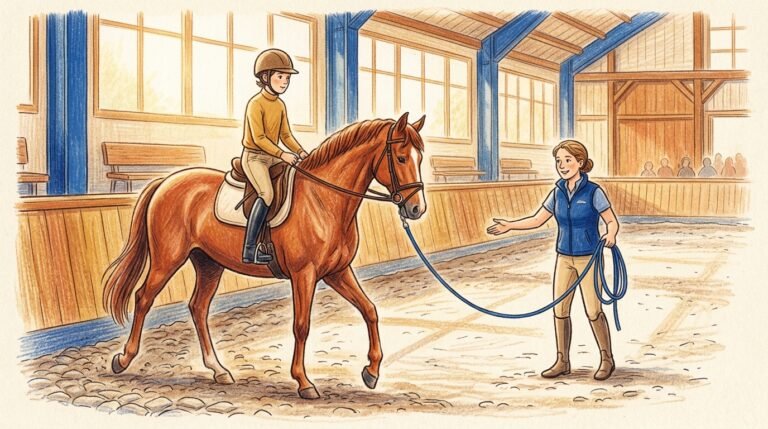
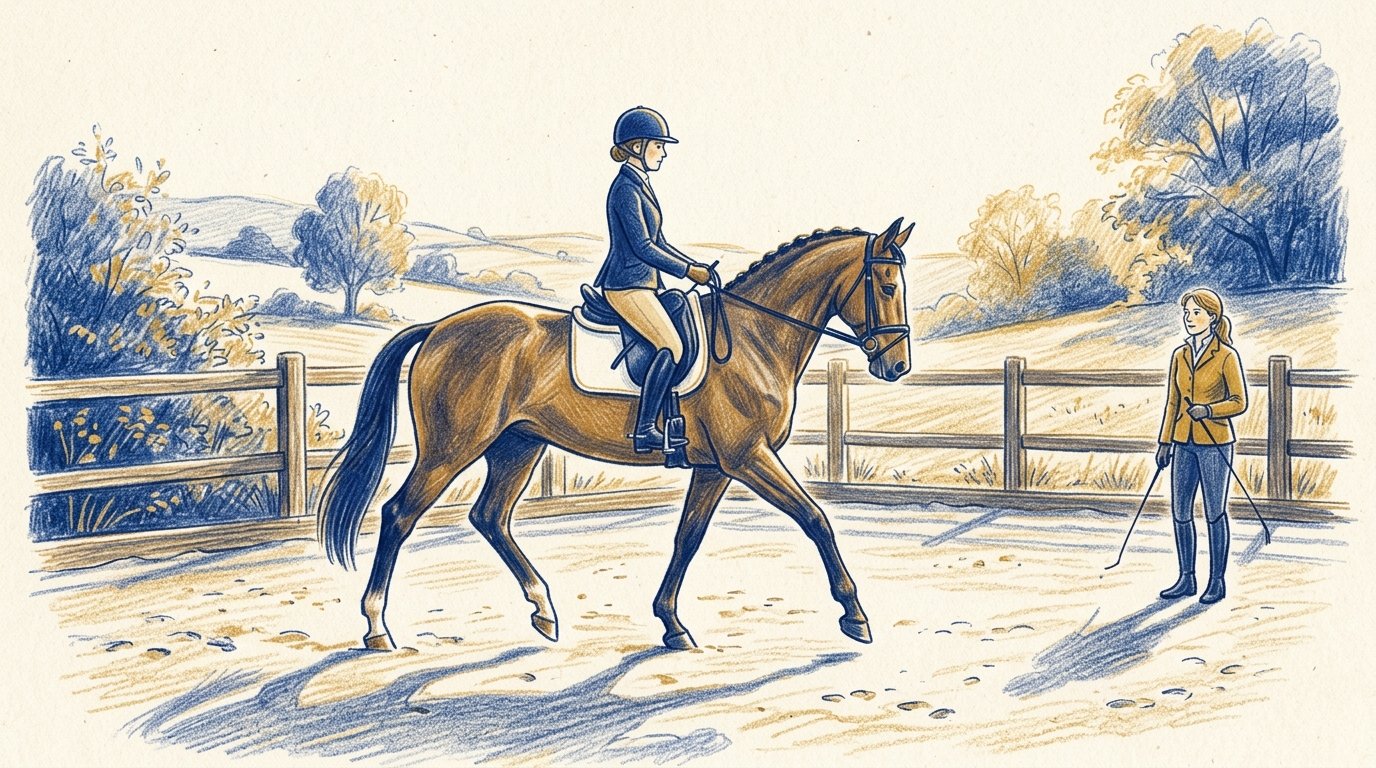
Lunge lessons are the fastest tool available. When you take away the horse’s steering and put a rider on the lunge line, they lose the job of directing the horse and can focus entirely on their own body. Riding without stirrups on the lunge, or with arms out or hands clasped behind the back, forces the core and the seat to do the work they are supposed to do. It is uncomfortable. It builds the muscle memory nothing else builds as quickly.
Mirrors and video are the next best thing when lunge lessons are not available. Most riders have no accurate sense of what their body is doing in the saddle. They feel straight and they are not. They think their leg is underneath them and it is six inches forward. Watching yourself, even on a phone video propped against a fence post, shows you things no amount of verbal correction fully communicates.
Exercises off the horse also matter. Yoga, Pilates, and core work all translate directly to the saddle. A rider with a strong, mobile core and open hip flexors will find it easier to sit correctly than one who is tight and weak in those areas, no matter how many lessons they have had. It is not a replacement for riding time, but it is a real complement to it.
For riders working on sitting the canter specifically, we have a separate piece that goes deep on that particular skill: how to sit the canter. If the trot is the issue, particularly the posting mechanics, how to post trot covers that in detail.
How Your Gear Affects Your Position
This is the part that does not always get enough attention. The equipment you ride in has a direct effect on how easy or hard correct position is to achieve.
Saddle fit matters enormously, both for the horse and the rider. A saddle that puts the rider into a chair seat, tips them forward, or pinches them into a narrow twist changes what the rider can do regardless of how much they practice. If you are working with a lesson barn, the saddle is usually chosen for you. If you are leasing or own a horse, it is worth having a saddle fitter evaluate whether what you are sitting in is working for your body as well as your horse’s back. Our English saddle buying guide covers what to look for.
Footwear also changes the picture. A boot with a proper heel keeps the foot from sliding through the stirrup and supports the weight-into-heel mechanics that correct position depends on. Tennis shoes are a genuine safety hazard, but beyond safety, they make correct leg position harder to achieve. A boot with at least a one-inch heel and a smooth sole is the minimum for real riding work.
Half chaps and riding tights that fit correctly reduce the friction and bulk that can interfere with leg feel. These are not luxury items. They are functional. A pair of quality half chaps that fit the rider’s leg properly makes it easier to feel the horse and keep the leg stable. If that purchase is coming up, our guide on how to choose half chaps walks through the sizing and material decisions honestly.
The Long Game: What Progress Actually Looks Like
Position work is slow. That is the honest answer. A rider who commits to lunge lessons, watches video, does the off-horse work, and has a good trainer correcting them consistently will still be working on position years from now. Not because they are failing, but because the details get finer as the riding gets more advanced. What counts as correct position for a beginning walk-trot rider is not the same as what counts as correct position for a rider working a horse in a frame at the canter.
From the rail, what you watch is the accumulation. A small child who needed a hand on the saddle pad to balance. A rider who finally put together a whole trot circle with a quiet leg and soft hands. Those moments are not dramatic. They are the whole point. Position is the thing that makes everything else possible, and improving it is work that never really ends.
For a broader look at what riding well costs in time and money at each stage, Practical Horseman covers position and training topics at a high level worth bookmarking.
Frequently Asked Questions
How long does it take to improve your riding position?
There is no fixed timeline, but most riders see meaningful change within three to six months of consistent, focused work if they are riding at least weekly and getting regular feedback. Lunge lessons accelerate the process significantly. Small corrections compound over time, and the riders who improve fastest are usually the ones who are willing to feel uncomfortable in the short term to build better habits.
Can I improve my position without a trainer?
Video and mirrors help, and off-horse exercises like Pilates and yoga build the physical foundation. But position work without outside eyes has real limits. It is genuinely hard to feel what your body is doing accurately when you are also managing a moving animal. Even experienced riders benefit from regular check-ins with a trainer who can see what the rider cannot feel. If lessons are a financial stretch, even occasional sessions are worth prioritizing over none.
Does saddle fit affect my riding position?
Yes, directly. A saddle that does not fit the rider correctly will put them in a compromised position regardless of how hard they work on their alignment. A too-deep seat, a too-flat seat, a twist that is too wide or too narrow all change where the rider sits and how easily they can achieve balance. If you have been working hard on position and not seeing results, saddle fit is worth investigating.
What exercises help most for a better position in the saddle?
Core work, hip flexor stretching, and anything that builds pelvic mobility translate directly. Pilates is consistently recommended across disciplines for exactly this reason. Lunge lessons without stirrups are the most effective in-saddle tool. Posting trot without stirrups, two-point position held for increasing amounts of time, and sitting trot work all build the muscle memory and strength that position depends on.
Start Building Your Position Today
Improving your riding position is not a shortcut project. It is the kind of work that shows up quietly over months and years, in better contact, a more willing horse, and the occasional ride where everything clicks and you feel what all of it is supposed to feel like. That is what you are working toward.
If you are just starting to think seriously about this, the best moves are simple: ask your trainer for a lunge lesson, get someone to record you riding, and take an honest look at whether your gear is helping or getting in the way. Then do it again next month. And the month after that.
Grab our free printable checklist to track your position goals and progress, and head over to the shop for the gear and resources our barn actually uses. Small steps, done consistently, are what this whole thing is built on.