How to Sit the Canter Without Gripping Bouncing or Bracing
If you are trying to figure out how to sit the canter, you are in good company. This is the single thing we have watched more riders struggle with than any other gait. The trot gets all the early attention because posting gives beginners something mechanical to do. But the canter asks something different from you. It asks you to stop fighting and start following, and that is harder than it sounds when you are new to it and the ground feels very far away.
The Riding Life is reader-supported. When you buy through links on our site, we may earn an affiliate commission at no extra cost to you.
Why the Canter Feels So Hard to Sit
The canter is a three-beat gait with a moment of suspension, which means the horse’s back swings in a rolling, wave-like motion underneath you. Every stride has a lift and a drop. Your seat has to absorb that without tensing up and without bouncing off the saddle like a pinball.
The instinct when you feel that motion is to grip. You grab with your thighs, you brace your lower back, you perch forward or tip back, and suddenly you are working against the horse instead of with it. The horse feels the tension. A sensitive horse will hollow its back in response, which makes the canter harder to sit, which makes you grip more. You can see how fast that spiral goes.
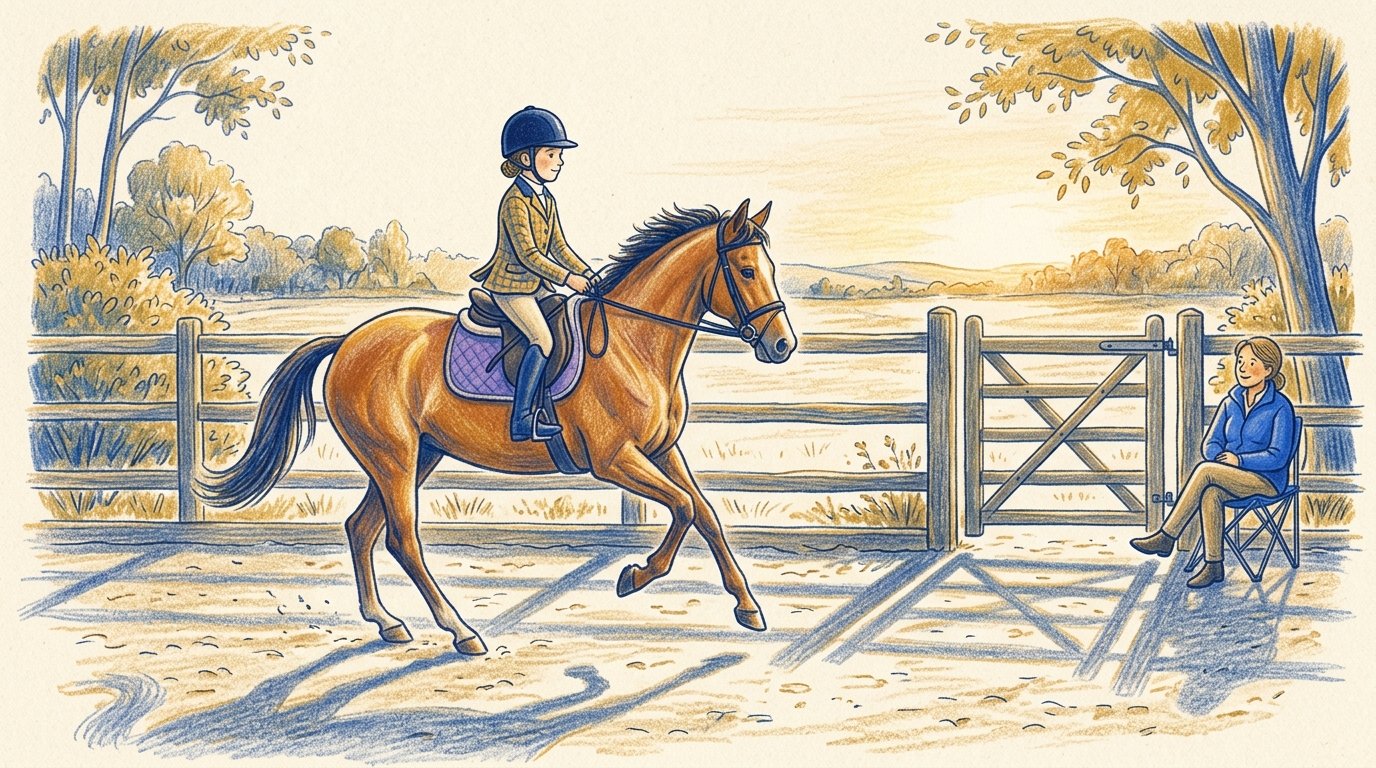
From the rail, it looks like bouncing. From the saddle, it feels like you have no control and no stability. Both of those observations are partly true, but they are symptoms, not the problem. The problem is bracing, and the fix is learning to let your hips move.
How to Sit the Canter with a Following Seat
Your hips are the engine of this whole thing. At the canter, your pelvis needs to follow the horse’s back in a forward-and-down, scoop-and-rock motion. Think less about sitting still and more about going with. If you imagine your hips tracing a small oval or figure-eight in the saddle, you are closer to the right feeling than if you are trying to plant yourself and hold on.
Here is what actually helps, in the order we have seen riders work through it:
Soften your lower back. A stiff lower back is the most common culprit. If you are locked there, the motion has nowhere to go and it bounces you up. Let your lumbar spine move. Not slumped, not overarched, just soft enough to absorb.
Drop your weight into your heels. This is not new advice, but it matters here specifically because a weighted heel stabilizes your leg and gives your hip something to work against. When the heel comes up, the hip usually grips. Keep that heel down and let the leg hang long.
Relax your inner thigh. The thigh should drape, not clamp. You are not squeezing the horse into submission. You are wrapping around it. There is a difference in the muscle engagement, and once you find it, the sitting canter gets noticeably easier almost immediately.
Keep your chest open and your shoulders back, softly. When riders get nervous at the canter, they curl forward. That tips your weight onto the horse’s forehand and shortens your hip angle, which makes the following motion almost impossible. Sit up, breathe, and let your body be a passenger for a moment before you worry about anything else.
The first time a rider finds this, you can usually see it from fifty feet away. The bounce stops. The horse relaxes. The whole picture softens. That moment takes some people a few weeks to find and others a full year. There is no shortcut, but there is a right direction to work in.
Exercises That Actually Help You Learn to Sit the Canter
Talking about softening your hips is one thing. Getting your body to actually do it under pressure, on a moving horse, is another. These exercises are the ones we have seen trainers use with real results, not just theory.
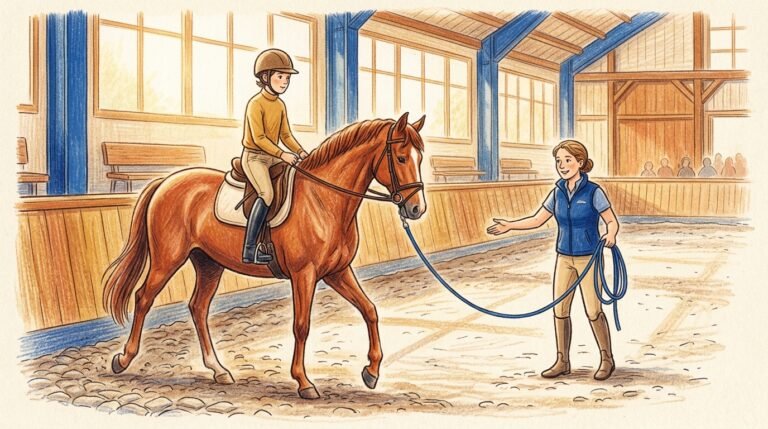
The lunge line canter. If your barn offers lunge lessons, take them. When you are not responsible for steering or speed, you can put all of your attention on your seat. This is where most riders find the following hip motion for the first time. You can close your eyes, drop the reins, cross your arms, and just feel the gait without managing anything else. It is genuinely one of the most useful things a developing rider can do. If you want to understand how the lunge fits into a broader training picture, our article on how to lunge a horse covers the mechanics.
No stirrup work at the walk and trot first. Before you try to sit the canter without stirrups, build your independent seat at the slower gaits. Riders who do this consistently have more hip mobility and less tension when the canter comes.
The posting canter. This sounds contradictory, but some trainers use a slow, rhythmic post at the canter to help riders find the motion before they try to sit it. You exaggerate the hip movement until you feel the swing of the gait, then gradually sit deeper into it.
Body position check every few strides. Pick something to check at regular intervals, heels, shoulders, hands, inner thigh. Rotation of attention keeps you from fixating on one thing and bracing everywhere else.
If you are newer to the saddle and still sorting out the basics of your position, it helps to make sure your tack is actually working with you. A well-fitted saddle keeps you in a neutral position without fighting you. Our English saddle buying guide walks through what to look for if you are in that stage.
What the Horse Needs from You at the Canter
This part does not always get enough attention in the how-to articles, so we will say it plainly. The horse is doing half the work here. A horse that is tense, hollow, or rushing cannot offer you a canter that is easy to sit. And a rider who is tense, gripping, and bracing cannot let a good canter feel good even when the horse is offering it.
When a horse hollows its back, it stiffens the gait. When it rushes, the stride shortens and quickens, which makes the motion choppier and harder to absorb. A horse that is moving forward with relaxation and a swinging back gives you something soft to sit on. This is why your trainer may say things like ride the horse forward and you think, but it already feels fast. Forward and fast are not the same thing. Forward means energy moving through a relaxed, swinging back. That is what you want under you.
From the parent chair, we have watched this relationship click for riders and it is always the same sequence: the rider relaxes, the horse relaxes, the canter gets better, and then the rider relaxes more because the canter is better. It goes the other direction too, just as fast.
For more on reading when something is physically off in your horse, TheHorse.com covers equine health and biomechanics in real depth and is worth bookmarking.
Frequently Asked Questions
Why do I keep bouncing at the canter even when I try to sit still?
Trying to sit still is usually the problem. The canter is a moving gait and your seat has to move with it, not hold against it. Focus on following the motion through soft hips and a relaxed lower back instead of trying to plant yourself. Stillness comes as a result of following, not from bracing.
How long does it take to learn to sit the canter comfortably?
It depends on how often you ride and whether you have lunge line time available. Riders who take a lesson a week and do some lunge work typically find the following seat within a few months. Some riders click with it faster, some take longer. There is no wrong timeline, only consistent practice.
Should I use a different saddle or saddle pad to help me sit the canter?
Tack matters, but it will not fix a position problem. A saddle that fits both horse and rider and puts you in a neutral, balanced position is the baseline. A saddle that tips you forward or pinches your thigh will make sitting the canter harder. Fix the fit first, then work on the seat.
Is it easier to sit the canter on some horses than others?
Yes, significantly. A big-moving warmblood with a lot of suspension is harder to sit than a shorter-striding quarter horse with a flatter canter. Neither is better or worse, but they ask different things from your seat. If you are learning, a horse with a quieter, more rhythmic canter is a better teacher.
The Bottom Line on Sitting the Canter
Learning how to sit the canter is not a technical fix you find once and keep forever. It is a skill you build ride by ride, and it lives in your body, not your head. Soft hips, a following seat, a weighted heel, an open chest. Those are the pieces, and they work together. When you find it, even for a few strides, you will know it. The whole thing quiets down and the horse moves under you like it was always this easy.
That handful of good canter strides is what this whole thing is about. The early mornings, the muddy boots, the hours of trot work that came before. It adds up to moments like that, and they are worth every bit of it.
Grab our free printable checklist to take to your next ride, and head over to the shop to explore more gear and guides for every stage of the riding life.